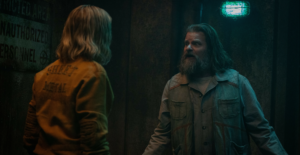
Pourquoi un silo ? Et surtout, pourquoi des silos ? Que s’est-il réellement passé dehors 300 ans plus tôt ? Était-ce réellement il y a 300 ans ? Comment l’extérieur est-il mortel ? Qu’est-ce que le retour de la providentielle Juliette implique-t-il pour notre silo ? Et comment a-t-elle survécu à l’incinérateur ? Cette saison ne reprend pas exactement là où elle nous avait laissé en introduisant à la fois une ellipse auprès des personnages de ce silo et en remontant le temps pour révéler les origines des silos.
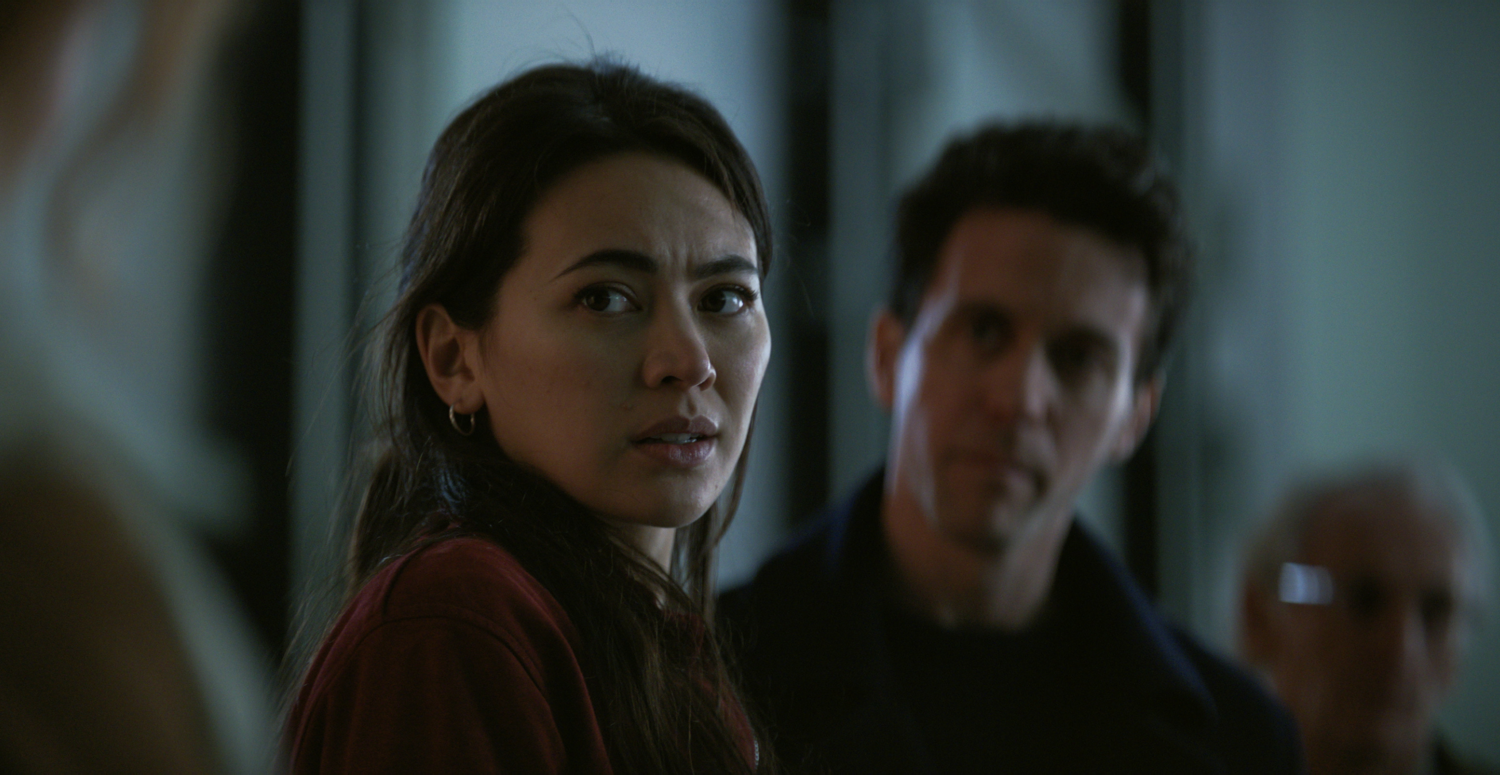
Si la saison précédente se divisait en deux trames simultanées entre deux silos voisins, cette fois on a deux trames chronologiques, le présent et le passé, qui se répondent à travers deux enquêtes. D’un côté on a Juliette qui cherche à la fois à comprendre ce qui lui est arrivé et à déterminer comment sauver son silo. De l’autre on a de nouveaux personnages évoluant à Washington de nos jours avec une journaliste (Jessica Henwick) et un député (Ashley Zuckerman) enquêtant auprès d’une pilote de l’US Navy (Jessica Brown-Findlay) sur une mystérieuse opération ratée au large de l’Iran. La thématique centrale est alors celle de la mémoire en tant qu’élément constructif de notre identité aussi bien individuelle que sociétale.
Et tout commençait bien avec un premier épisode où cette trame du passé semblait presque même plus intrigante que l’histoire de Juliette tant le spectre des possibilités était large. Mais cet horizon s’est très rapidement refermé avec d’un côté une enquête mise sous le tapis pour aboutir à une révélation on ne peut plus bancale sur des enjeux financiers de nanotechnologies, et une origin-story finalement très maigre que les scénaristes ont décidé d’étirer bien plus que de raison (au point de passer deux épisodes entiers – non pas un complet mais bien deux – en trajet avec nos nouveaux personnages – l’un en voiture et l’autre en avion). Sans compter des dialogues assez faibles, des scènes peu crédibles et une réalisation (certes très différente puisque l’on sort du silo) mais sans la moindre idée et qui – qui plus est – casse l’atmosphère oppressante et claustrophobe typique de la série, l’ensemble apparaît forcément très inégal – au mieux.
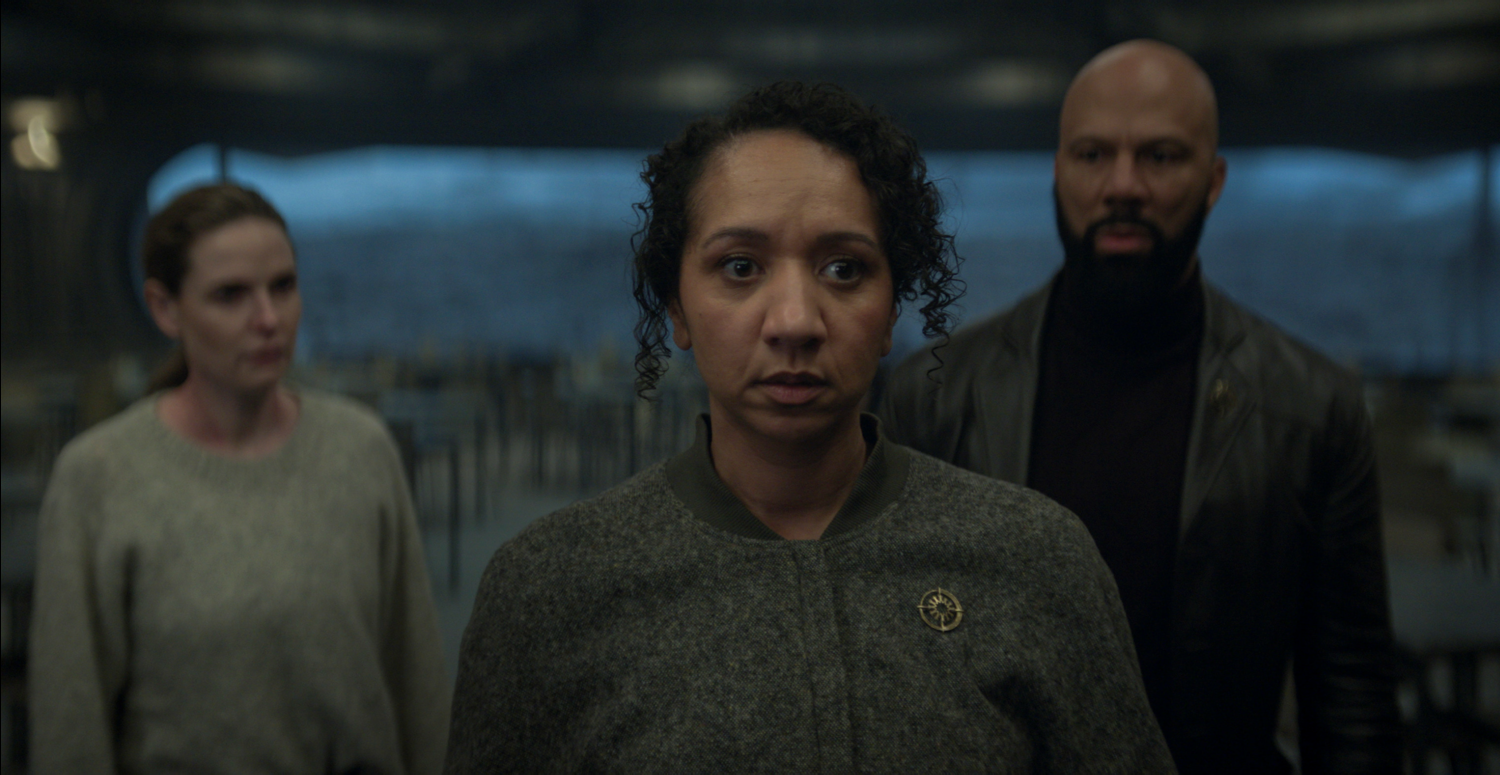
Mais de l’autre côté si l’amnésie de Juliette est intéressante pour refléter le flou de l’intrigue du passé, c’est au prix du recyclage des enjeux de première saison – du moins au début de celle-ci – avant que les enjeux ne basculent à nouveau vers la survie du silo. Mais le conflit le plus intéressant devient alors celui au sein du couple Sims entre un Robert (Common) nuancé et une Camille (Alexandria Riley) qui gagne en importance et en complexité mais sans que la saison ne lui donne le temps pour étoffer cette complexité. Résultat cette trame non-linéaire a besoin d’un épisode de mi-saison entier pour tout expliquer en flash-back, le rendant certes très satisfaisant puisqu’il enchaîne les révélations mais au prix d’une richesse diluée dans les autres épisodes. Là où une linéarité aurait sûrement plus servi l’ambivalence des personnages et organisé le mystère différemment.
Mais cette structure a surtout été choisie pour aboutir sur un ultime épisode de grande qualité qui change de style et propulse la série dans une tout autre dimension bienvenue grâce à une inversion du point de vue et l’introduction de toute une nouvelle série de mystères. Cette saison 3 offre ainsi enfin des réponses à des personnages en quête de vérité depuis le départ, mais sa double narration ne propose pas toujours des réponses de grand intérêt et son choix de structure aboutit certes à deux excellents épisodes de révélations mais dont la conclusion ressemble finalement plus à une introduction. Elle crée donc une certaine attente pour la prochaine et ultime saison, mais s’impose comme une étape de transition à des années-lumière de la qualité de sa première saison.
Why a silo? And more importantly, why multiple silos? What really happened outside 300 years ago? Was it really 300 years ago? What makes the outside world so deadly? What does the return of the providential Juliette mean for our silo? And how did she survive the incinerator? This season doesn’t pick up exactly where it left off, introducing a time jump for the characters in this silo while also going back in time to reveal the origins of the silos.
While the previous season was divided into two parallel storylines set in two neighboring silos, this time there are two chronological storylines – the present and the past – that intertwine through two separate investigations. On one hand, there’s Juliette, who is trying both to understand what happened to her and to figure out how to save her silo. On the other, we have new characters in present-day Washington, including a journalist (Jessica Henwick) and a congressman (Ashley Zuckerman) who are investigating, alongside a U.S. Navy pilot (Jessica Brown-Findlay), a mysterious failed operation off the coast of Iran. The central theme, then, is memory as a foundational element of our identity – both individual and societal.
And it all started off well with a first episode where this plotline from the past seemed almost more intriguing than Juliette’s story, given how wide the range of possibilities was. But that horizon closed in very quickly, with, on one hand, an investigation swept under the rug that led to a revelation that couldn’t have been more flimsy about financial stakes in nanotechnology, and an ultimately very thin origin story that the writers decided to stretch far beyond reason (to the point of spending two entire episodes – not just one, but two – traveling with our new characters – one by car and the other by plane). Not to mention the rather weak dialogue, the implausible scenes, and the direction which, while certainly very different since we’re leaving the silo, lacks any real vision and, what’s more, shatters the oppressive and claustrophobic atmosphere typical of the series, the whole thing inevitably comes across as very uneven – at best.
But on the other hand, while Juliette’s amnesia is an interesting way to reflect the mystery surrounding the past, it comes at the cost of rehashing the storylines from the first season – at least at the beginning of this one – before the focus shifts back to the silo’s survival. But the most interesting conflict then becomes the one within the Sims couple, between a nuanced Robert (Common) and a Camille (Alexandria Riley) who gains in importance and complexity, though the season doesn’t give her enough time to flesh out that complexity. As a result, this non-linear narrative requires an entire mid-season episode to explain everything through flashbacks – which is certainly very satisfying, given the succession of revelations, but at the cost of diluting the substance of the other episodes. A linear approach would surely have better served the characters’ ambivalence and structured the mystery differently.
But this structure was chosen above all to culminate in a spectacular final episode that shifts gears and propels the series into a whole new – and exciting – dimension, thanks to a reversal of the point of view and the introduction of a whole new set of mysteries. Season 3 thus finally offers answers to characters who have been searching for the truth from the very beginning, but its dual narrative doesn’t always provide particularly compelling answers, and its structural choice certainly results in two excellent episodes of revelations – though the conclusion ultimately feels more like an introduction. It therefore builds anticipation for the next and final season, but stands as a transitional phase that’s light-years away from the quality of its first season.