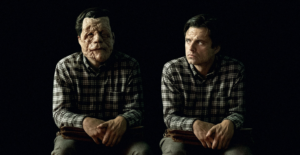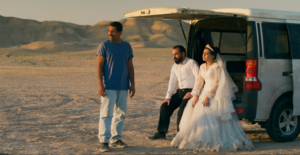
Anatomie d’une gifle.
Comme dans « R.M.N. » ou « 4 mois, 3 semaines et 2 jours » (déjà auréolé d’une Palme d’Or), il est à nouveau question de vivre-ensemble, de l’intérêt général et de choc des cultures dans un monde globalisé dans ce nouveau film de Cristian Mungiu. Le cinéma du réalisateur roumain primé à Cannes s’intéresse aux conflits humains & intérieurs et observe la manière dont une société fabrique ses propres impasses, sans jamais donner de leçons, plutôt en donnant à réfléchir. L’objectif étant de ne pas confirmer les idées que le spectateur pouvait avoir avant de voir le film, de le débarrasser de ses a priori & certitudes, et le pousser à penser contre lui-même. Avec « fjord », il questionne ici l’éducation, dont les règles et sanctions varient en fonction des cultures nationales et idéologiques à travers le parcours d’une famille roumano-norvégienne qui s’installe dans une petite ville près d’un fjord. Ils sont chrétiens évangéliques. Et leur pays d’accueil est très progressiste. Étant constituées d’eau salée et d’eau douce, les eaux des fjords se mélangent peu ou mal …
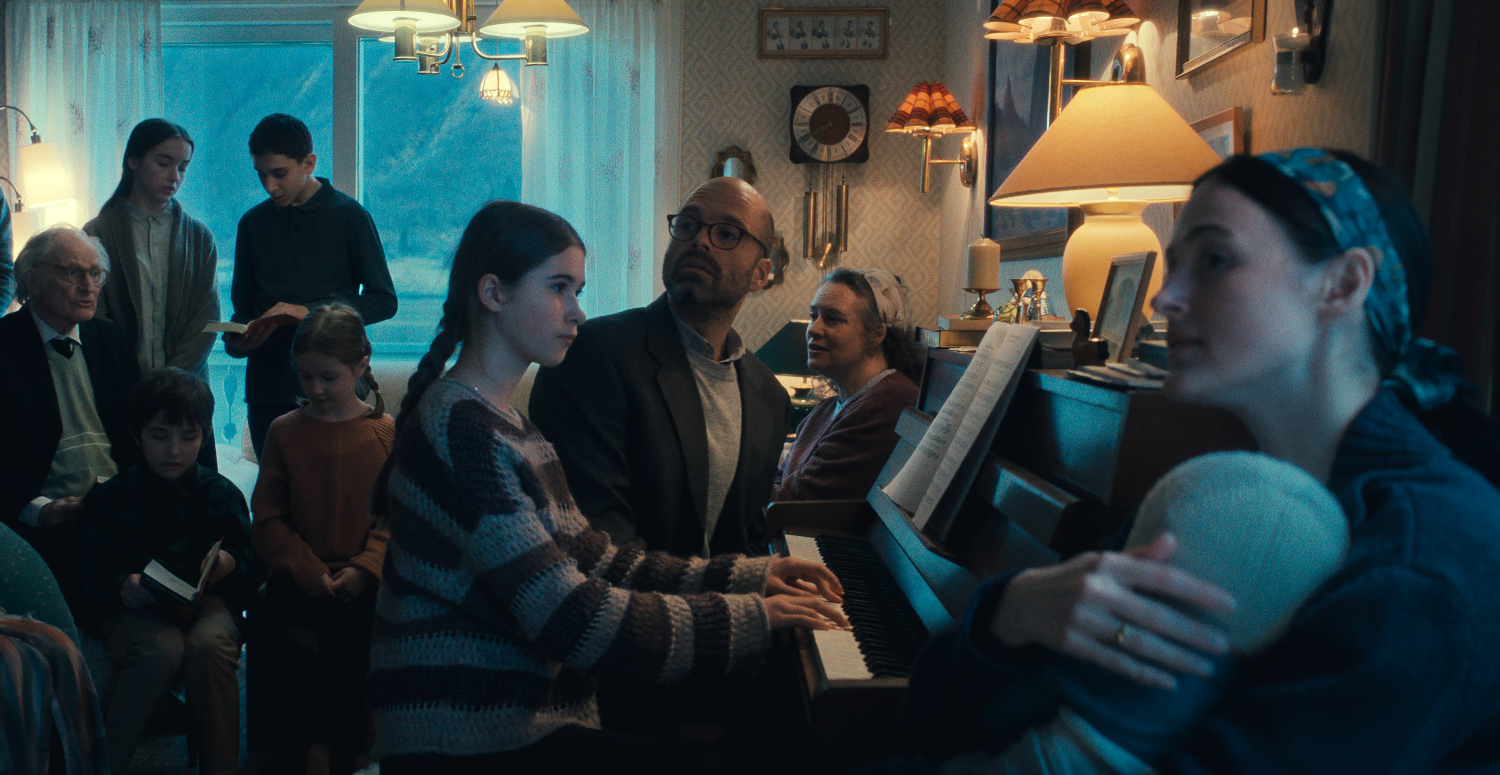
C’est un film d’opposition entre deux idées, deux modes de vie qui se reflètent dans une mise en scène dont le rythme lent prend le temps de s’attarder sur de nombreux détails et spécificités dans chaque camp (des intérieurs des maisons aux voitures en passant par des gestes dérobés) au gré de longs plans nous plongeant dans ce microcosme. Mungiu fait preuve d’un vrai sens du cadre où la dynamique de la scène est transmise par une caméra fixe lorsque l’opposition est de mise et légèrement instable lorsque la donne est sur le point de basculer. Bouclant parfaitement la boucle entre un premier plan prémonitoire de l’issue finale et un dernier plan symbolique d’un progressisme transcendant la religion, sa mise en scène très maîtrisée laisse les paysages dialoguer avec la froideur des institutions et des relations de personnages.
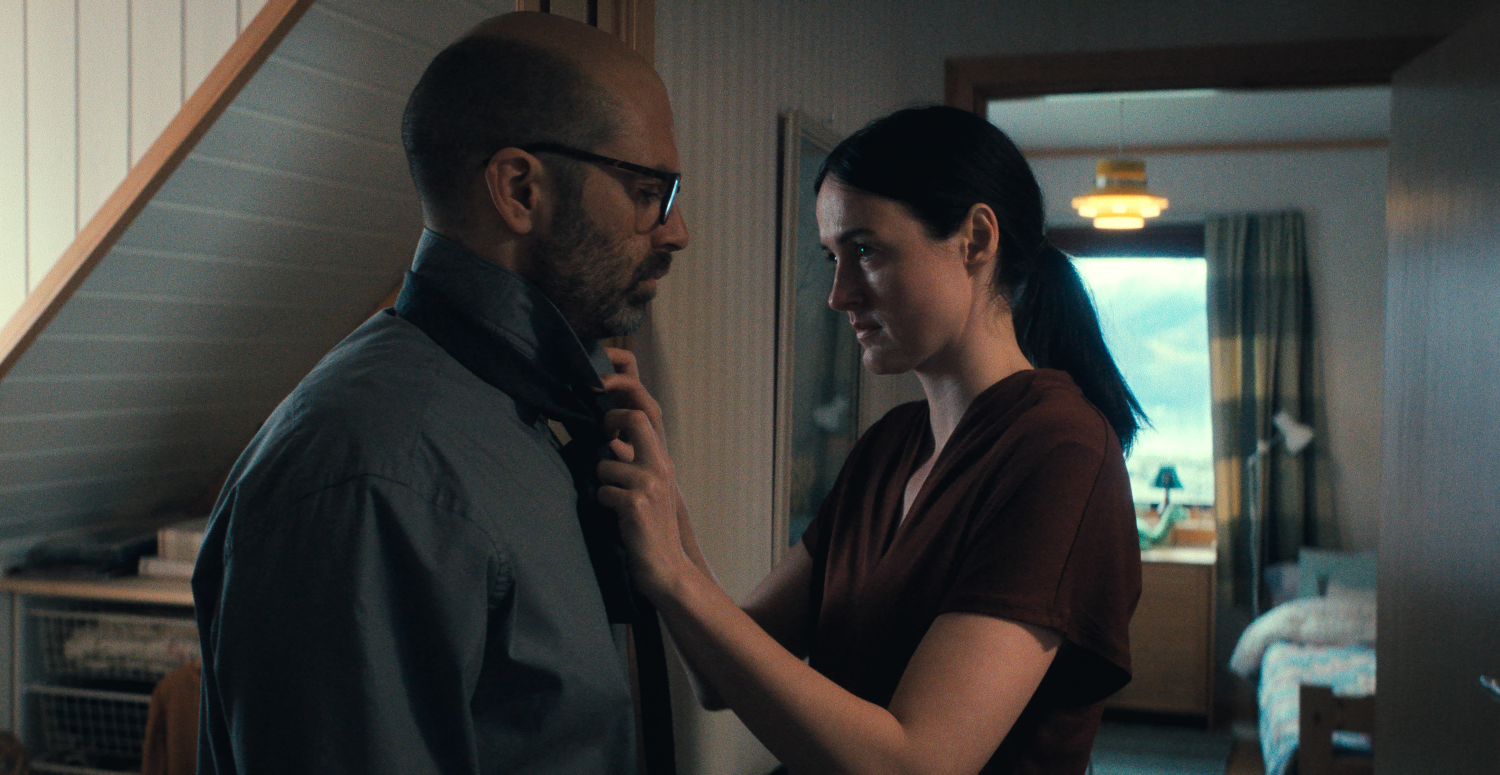
Un froid norvégien qui se traduit par un point de vue résolument extérieur au point de rester de dos lors des scènes d’émotions et de ne laisser Sebastian Stan et Renate Reinsve n’offrir aucun effet démonstratif dans un jeu (trilingue) où tout se joue dans l’attitude – bien loin des rôles qu’ils partageaient dans « A Different Man ». Que l’on suive le point de vue des parents ou celui des enfants, le spectateur reste donc tout du long à l’extérieur des événements pour laisser constamment planer un doute et surtout ne pas s’attacher à un personnage d’un camp ou d’un autre. Car même si l’on suit cette histoire sous l’angle d’une famille, c’est un film assez équilibré qui ne veut pas orienter son spectateur. Si le scénario élaboré réussit à nous happer dans ses événements, il ne cherche donc pas à générer d’émotion auprès de ses personnages, ce qui ne facilite pas l’attachement, mais s’avère particulièrement cohérent pour un film à débat.
Jusqu’où la certitude d’agir pour le bien peut-elle aller avant de devenir une forme de violence ? Car même armé des meilleures intentions, on peut tous mal agir. Qu’est-ce qui doit donc prévaloir : la protection de l’enfant ou la présomption d’innocence ? « Fjord » explore ainsi une bataille de valeurs où la conviction a plus de poids que la vérité. En soulignant les limites des deux camps, il développe chacun selon son prisme et n’en fige aucun entre victimes et coupables. Sans jamais nous imposer une vérité, il montre deux camps qui s’abritent tous deux derrière leur vérité, l’un derrière des convictions rigoristes et l’autre derrière une liberté procédurale. Chaque camp allant jusqu’à l’abus et une forme de violence au nom de sa croyance. En attaquant autant la xénophobie du progrès que l’exploitation politique du drame, le film interroge ainsi au final l’acte de croire et l’ambiguïté de la liberté. Car derrière les fessées, au fond, c’est bien l’endoctrinement religieux qui pose le plus problème au niveau social : dans un pays aussi progressiste que la Norvège, on peut parler de genre très librement (et très tôt), mais pas de foi … ? Est-ce que la liberté peut alors aller jusqu’à la liberté d’interdire ?
Véritable film de dialectique et d’irrésolution qui laisse son spectateur unique juge, « fjord » s’impose comme une charge contre les certitudes sur les dérives de la responsabilité en opposant au final plus que deux idéologies, deux situations asymétriques entre le spécifique (la fessée / le foyer) et le général (la gifle / la société) pour livrer un constat désabusé sur la fragilisation du vivre-ensemble par la radicalisation des opinions, qu’elles soient conservatrices ou modernistes.
Raphaël Sallenave
Anatomy of a slap.
As in “R.M.N.” or “4 Months, 3 Weeks and 2 Days” (which already won a Palme d’Or), Cristian Mungiu’s new film once again explores themes of communal living, the common good, and cultural clashes in a globalized world. The films of this Cannes-award-winning Romanian director explore human and internal conflicts, observing how society creates its own dead ends – never by lecturing, but rather by provoking thought. The goal is not to confirm any preconceptions the viewer might have had before seeing the film, but to free them from their assumptions and certainties, and to challenge them to think against their own beliefs. In “Fjord,” he examines childhood education – whose rules and discipline vary according to national and ideological cultures – through the story of a Romanian-Norwegian family that settles in a small town near a fjord. They are evangelical Christians. Their host country is very progressive. And as they are formed of saltwater and freshwater, the waters of the fjords rarely mix well, if at all…
This film explores the contrast between two ideas, two ways of life, reflected in a slow-paced narrative that takes the time to linger on numerous details and nuances on each side – from the interiors of homes to cars to subtle gestures – through long takes that allow us to delve into this microcosm. Mungiu demonstrates a true sense of composition, where the scene’s flow is conveyed by a steady camera when the conflict reigns and becomes slightly unsteady when the balance of power is about to shift. Seamlessly closing the loop between an opening shot that foreshadows the final outcome and a closing shot symbolizing a form of progressivism that transcends religion, his finely crafted direction allows the landscapes to interact with the coldness of the institutions and the characters’ relationships.
A Norwegian chill that translates into a decidedly external perspective, to the point of keeping the camera turned away during emotional scenes and denying Sebastian Stan and Renate Reinsve the chance to offer any overt displays of emotion in a (trilingual) performance where everything is conveyed through attitude – a far cry from the roles they shared in “A Different Man”. Whether we follow the parents’ perspective or the children’s, the viewer therefore remains on the outside of the events throughout, allowing doubt to linger constantly and, above all, preventing us from becoming attached to a character on one side or the other. For even though we follow this story from a family’s perspective, it is a fairly balanced film that does not seek to sway its audience. While the elaborate screenplay succeeds in captivating us through its story, it does not seek to spark emotion toward its characters – which makes it harder to connect with them but proves particularly fitting for a film that invites debate.
How far can the certainty of acting for the greater good go before it becomes a form of violence? For even with the best of intentions, we can all do wrong. What, then, should take precedence: the protection of the child or the presumption of innocence? “Fjord” thus explores a clash of values in which conviction carries more weight than the truth. By highlighting the limitations of both sides, it examines each one through its own lens and refrains from categorizing either as victims or perpetrators. Without ever imposing a single truth on us, it depicts two sides that both hide behind their own truths – one behind rigid convictions and the other behind procedural freedom. Each side goes so far as to commit abuse and a form of violence in the name of its beliefs. By attacking both the xenophobia of progress and the political exploitation of tragedy, the film ultimately questions the act of believing and the ambiguity of freedom. For behind the punishments, at its core, it is religious indoctrination that poses the greatest social problem: in a country as progressive as Norway, we can talk about gender very freely (and at a very early age), but not about faith…? Can freedom then go so far as the freedom to prohibit?
A true film of dialectic and indecision that leaves the viewer as the sole judge, “fjord” stands as a critique of certainties regarding the excesses of responsibility, ultimately pitting against one another not just two ideologies, but two asymmetrical situations, the specific (the slap on the butt / the family home) and the general (slaps / the society), to offer a disillusioned assessment of how the radicalization of opinions – whether conservative or modernist – is eroding our ability to live together.
Raphaël Sallenave