Encore un film sur Robin des Bois ? Dix ans après la précédente interprétation, ce n’aurait pas été étonnant qu’Hollywood produise une énième version de ses grands classiques. Mais ce film n’est pas sur Robin des Bois, il est tout au plus sur la légende de Robin des Bois, et plus spécifiquement encore, il est réellement sur l’écriture même d’une légende. Il n’y a qu’à voir le poster qui montre bel et bien la stature du héros avec son arc caractéristique mais pas son visage (alors qu’un film héroïque profiterait évidemment du visage reconnaissable de Hugh Jackman pour sa promotion). Ce n’est pas sans raison … qui est-il ? Qui est cet homme ? Qui était l’homme derrière la légende ? Qui est-il (ou était-il) réellement ? De même le titre ne fait pas que reprendre le célèbre nom du héros des pauvres (dans un titre français pour une fois plus approprié que l’original), « On l’appelait Robin des Bois » renvoyant au(x) récit(s) raconté(s) sur cet homme, cette figure mythique. C’est un film de mythe qui déconstruit la légende et questionne la véracité des récits racontés à travers le temps. En cela il est plus à mettre en relation avec l’interprétation du mythe scandinave d’Amleth dans « The Northman » ou la relecture de la légende arthurienne dans « The Green Knight ».
Le réalisateur de « Pig » Michael Sarnoski met donc ici en scène un Robin des Bois dépeint comme voleur et brigand sanguinaire sans pitié. A supposer que ses joyeux compagnons aient jamais existé (dans cette histoire ou la réalité), ils se sont séparés depuis des lustres. Pas de Dame Marianne ou de Shérif de Nottingham, on ne croise ici que Petit Jean sous un autre nom. La grandeur de la légende n’est ici qu’un mensonge, à laquelle même Robin lui-même ne croit plus (ou ne veut plus croire). Le statut de figure altruiste gravé dans l’imaginaire collectif disparaît ainsi au profit d’un monstre irrationnel, d’un homme vieillissant attendant une mort digne après des années de dette de sang qui ne peut venir que des descendants de ses innocentes victimes venus perpétuer un cycle infernal de vengeance où violence n’appelle que violence.
Un tel monstre ne peut être pardonné par personne (ni les autres ni lui-même) par une ultime bonne action, et cette prise de conscience ne peut que le rendre plus vulnérable encore à l’insurmontable montagne qu’une reconstruction de sa vie à ce moment-là représente. Peut-il alors exister une forme de rédemption pour un tel homme ? Aux confins du monde celtique, « On l’appelait Robin des Bois » offre à la fois une étude de personnage et une étude de mythe à travers un beau portrait empreint d’humanité mettant en lumière la part d’ombre, de regrets et de souffrances d’une telle figure, et un anti-conte immaculé démystifiant la légende avant de s’ouvrir sur une nouvelle vie … qui sera faite de rédemption ou de pénitence ?
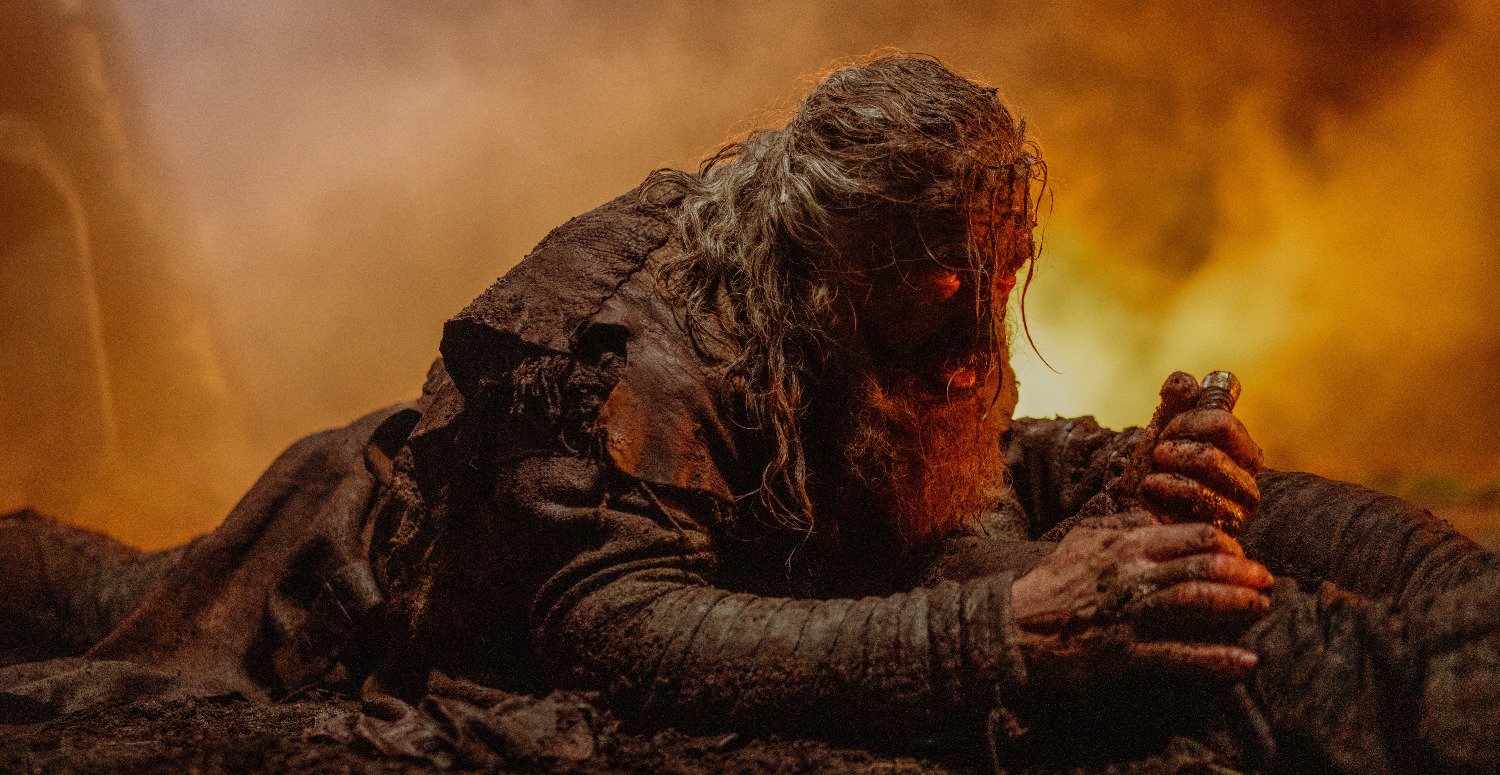
Dans une rupture de ton assez désarçonnante, le film se divise en effet en deux parties distinctes à mesure que l’histoire évolue de l’action à la réflexion. Là où la première captive son spectateur, la seconde approfondit son sujet. L’on passe ainsi d’un premier acte stimulant dans une brutalité et une cruauté rares où une impressionnante puissance nihiliste fait de la violence le seul horizon, à un second plus introspectif dans un drame de chambre où l’on discute de son âme et de son état, l’horizon s’ouvrant vers une (impensable ?) réconciliation avec soi-même pour un protagoniste qui a du mal à accepter que son passé de violence et son renouveau de paix puisse coexister. Et la transition entre ces deux univers se fait progressivement lors d’un trajet en mer où le cadre s’élève progressivement de l’homme rampant dans la boue, affrontant ses démons et cherchant littéralement la mort à un homme qui peut peu à peu se tient debout, cherchant à saisir sa vie et à regarder plus loin. Ce changement de format d’image du large et serré 2 :39 au 1 :66 en hauteur créée une transition entre l’univers du hors-la-loi et celui de l’homme, entre un monde de conflits et de sang où l’on subsiste par les légendes et un de guérison et de paix où l’on existe par la réparation. En d’autres mots, le premier acte raconte la réalité de la légende quand le second raconte le mythe que ce récit fait de cette légende. Un simple choix technique qui raconte subtilement tout le cœur de l’histoire.
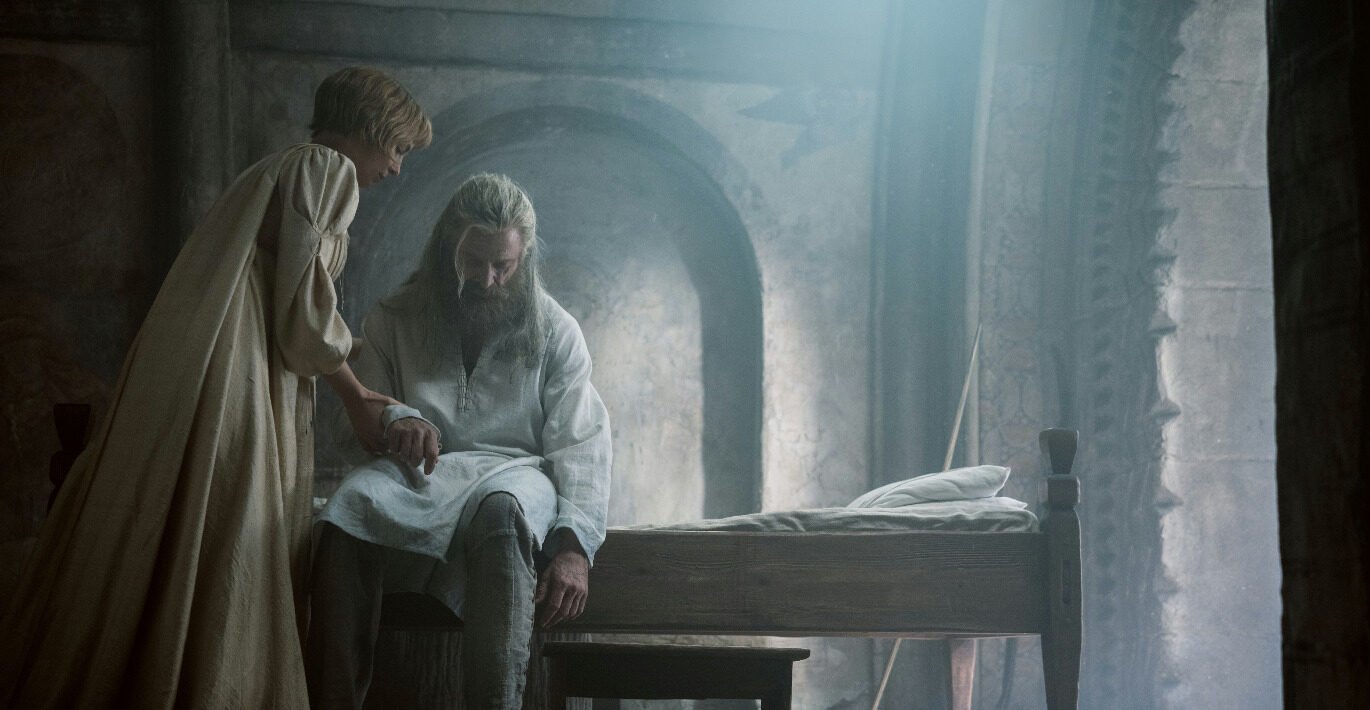
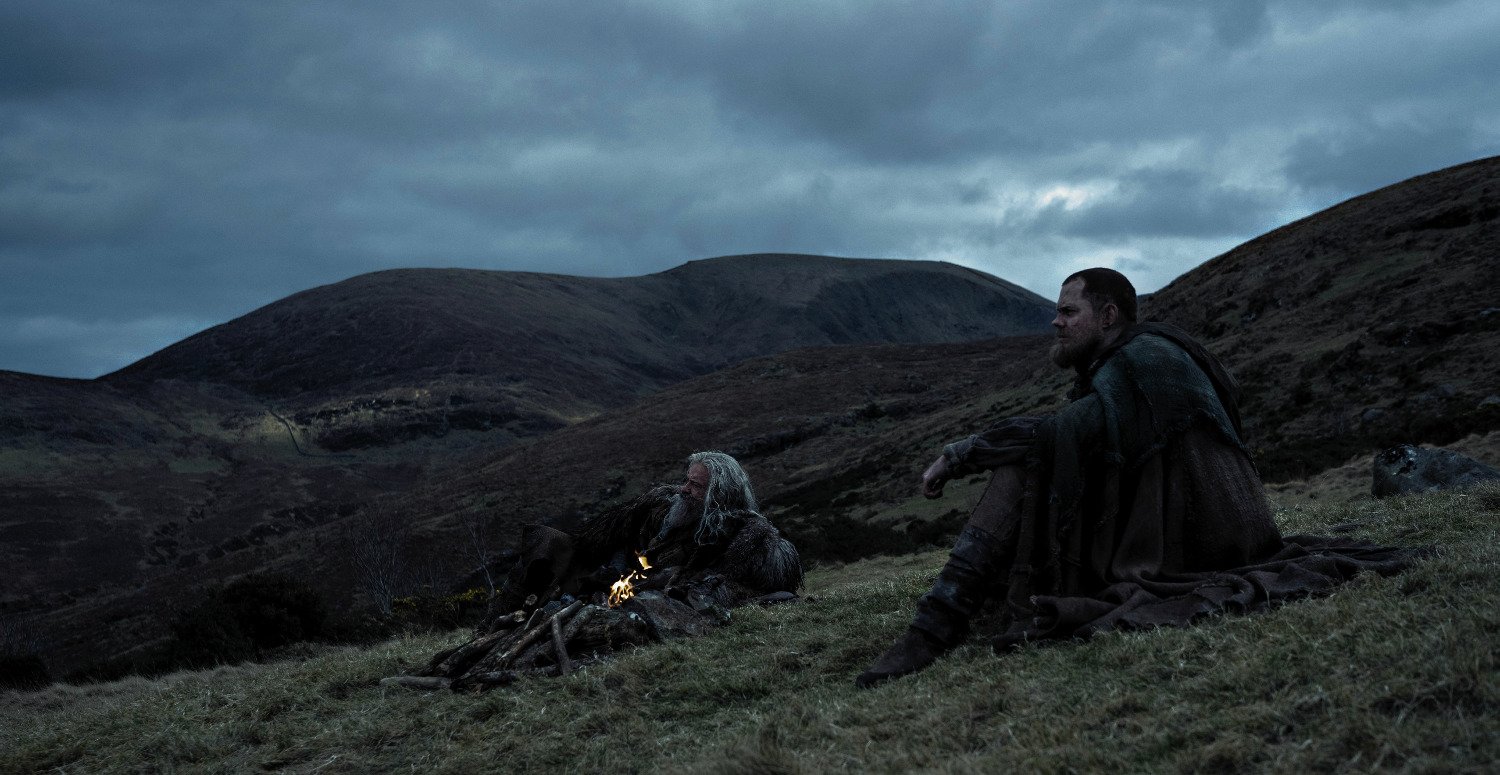
Cette transition se ressent d’autant plus à travers la mise en scène de Sarnoski qui crée un fort contraste entre l’atmosphère crépusculaire de paysages battus par les vents et la brume du désespoir, et cette île-refuge baignée de lumière qu’on ne quittera plus en pleine agonie. Dans un récit éclairé de feu et de sang, la crasse et la rage laissent place à la symétrie de plans semblables à des tableaux, tel un voyage d’un enfer à un paradis dans de magnifiques décors nord-irlandais bercés par les musiques et chants celtiques qui nous embarquent dans cet univers à la beauté froide et sombre. Jouant sur le réalisme d’une légende anglaise, le film joue de ses personnages aux forts accents celtiques à commencer par un Bill Skarsgård (Nosferatu ; Ça) offrant une interprétation bestiale de l’humanité aux antipodes de celle paisible de Jodie Comer (Killing Eve ; The Last Duel) face à un excellent Hugh Jackman (Prisoners ; The Son ; et Wolverine bien sûr) qui réussit à incarner un personnage aussi détestable qu’attachant de la dimension agressive de ce meurtrier à la générosité qu’il peut dissimuler.
Les mythes sont faits pour être revisités. Alors pourquoi ne pas proposer une version remettant en question la conception partagée d’une légende ? Plus qu’une interprétation décalée de Robin des Bois, Michael Sarnoski explore la notion même de légende à travers sa construction au gré d’inventions et de rumeurs pour interroger les récits qu’on se raconte parfois à soi-même ainsi que l’origine des mythes fondateurs.
Raphaël Sallenave
Another Robin Hood movie? Ten years after the last one, it wouldn’t have been surprising if Hollywood had made yet another version of one of its great old classics. But this movie isn’t about Robin Hood; at most, it’s about the legend of Robin Hood, and more specifically, it’s really about the very process of creating a legend. Just look at the poster, which clearly shows the hero’s imposing stature with his signature bow but not his face (even though a heroic film would obviously capitalize on Hugh Jackman’s famous face for its promotion). There’s a reason for this… who is he? Who is this man? Who was the man behind the legend? Who is he (or was he) really? Similarly, the title does more than simply refer to the famous name of the champion of the poor (in a French title that, for once, is more appropriate than the original); (lit.) “They Called Him Robin Hood” alludes to the story(ies) told about this man, this mythical figure. It is a film about myth that deconstructs the legend and questions the veracity of the stories passed down through the ages. In this respect, it is more closely related to the interpretation of the Scandinavian myth of Amleth in “The Northman” or the reimagining of the Arthurian legend in “The Green Knight.”
Michael Sarnoski, the director of “Pig”, thus portrays Robin Hood here as a bloodthirsty, merciless thief and bandit. Assuming his merry men ever existed (in this story or in reality), they parted ways ages ago. There’s no Lady Marian or Sheriff of Nottingham; here, we only meet Little John under a different name. The grandeur of the legend is nothing but a lie here – one that even Robin himself no longer believes (or no longer wants to believe). His status as an altruistic figure, carved into the collective imagination, thus gives way to that of an irrational monster – an aging man awaiting a dignified death after years of blood debt that can only be settled by the descendants of his innocent victims, who have come to perpetuate a hellish cycle of vengeance where violence breeds only more violence.
No one – neither others nor himself – can forgive such a monster through one final good deed, and this realization can only make him even more vulnerable to the daunting prospect of rebuilding his life at that moment. Can there, then, be any form of redemption for such a man? In the far reaches of the Celtic world, “The Death of Robin Hood” offers both a character study and an exploration of myth through a beautiful, deeply human portrait that highlights the darkness, regrets, and suffering inherent in such a figure, as well as a pristine anti-fairy tale that demystifies the legend before opening up to a new life… one that will be shaped by redemption or penance?
In a rather disconcerting shift in tone, the film is clearly divided into two distinct parts as the story evolves from action to reflection. While the first part captivates the viewer, the second delves deeper into its subject. We thus move from a thrilling first act of rare brutality and cruelty, where an impressive nihilistic force makes violence the only horizon, to a more introspective second act that takes the form of a chamber drama in which the protagonist grapples with his soul and his state of being, with the horizon opening toward an (unthinkable?) reconciliation with oneself for someone who struggles to accept that his violent past and his newfound peace can coexist. And the transition between these two worlds occurs gradually during a sea journey, as the setting shifts progressively from a man crawling through the mud – confronting his demons and literally seeking death – to a man who can gradually stand on his own two feet, seeking to take hold of his life and look ahead. This shift in aspect ratio – from the wide, tight 2:39 to more vertical 1:66 – creates a transition between the world of the outlaw and that of the man, between a world of conflict and bloodshed where people survive through legends, and a world of healing and peace where people live through atonement. In other words, the first act depicts the reality of the legend, while the second act depicts the myth that this narrative creates from that legend. A simple, small technical choice that subtly conveys the very essence of the story.
This transition is all the more palpable through Sarnoski’s direction, which creates a stark contrast between the twilight atmosphere of windswept landscapes and the mist of despair, and this light-drenched island refuge that we will never leave, even in the throes of agony. In a narrative lit by fire and blood, grime and rage give way to the symmetry of shots reminiscent of paintings – like a journey from a hell to a paradise set against magnificent Northern Irish backdrops, infused with Celtic music and songs that draw us into this world of cold, dark beauty. Drawing on the realism of an English legend, the film showcases its characters with strong Celtic accents, starting with Bill Skarsgård (Nosferatu; It), who delivers a bestial portrayal of humanity, the polar opposite of Jodie Comer’s (Killing Eve; The Last Duel), alongside an excellent Hugh Jackman (Prisoners; The Son; and Wolverine, of course), who manages to embody a character who is as hatred-worthy as he is endearing – ranging from the murderer’s aggressive nature to the generosity he can conceal.
Myths are meant to be revisited. So why not offer a version that challenges the widely accepted conception of a legend? More than just an unconventional interpretation of Robin Hood, Michael Sarnoski explores the very notion of legend, how it is constructed through fabrications and rumors, to examine the stories we sometimes tell ourselves, as well as the origins of founding myths.
Raphaël Sallenave