The Northman
2022
FR EN
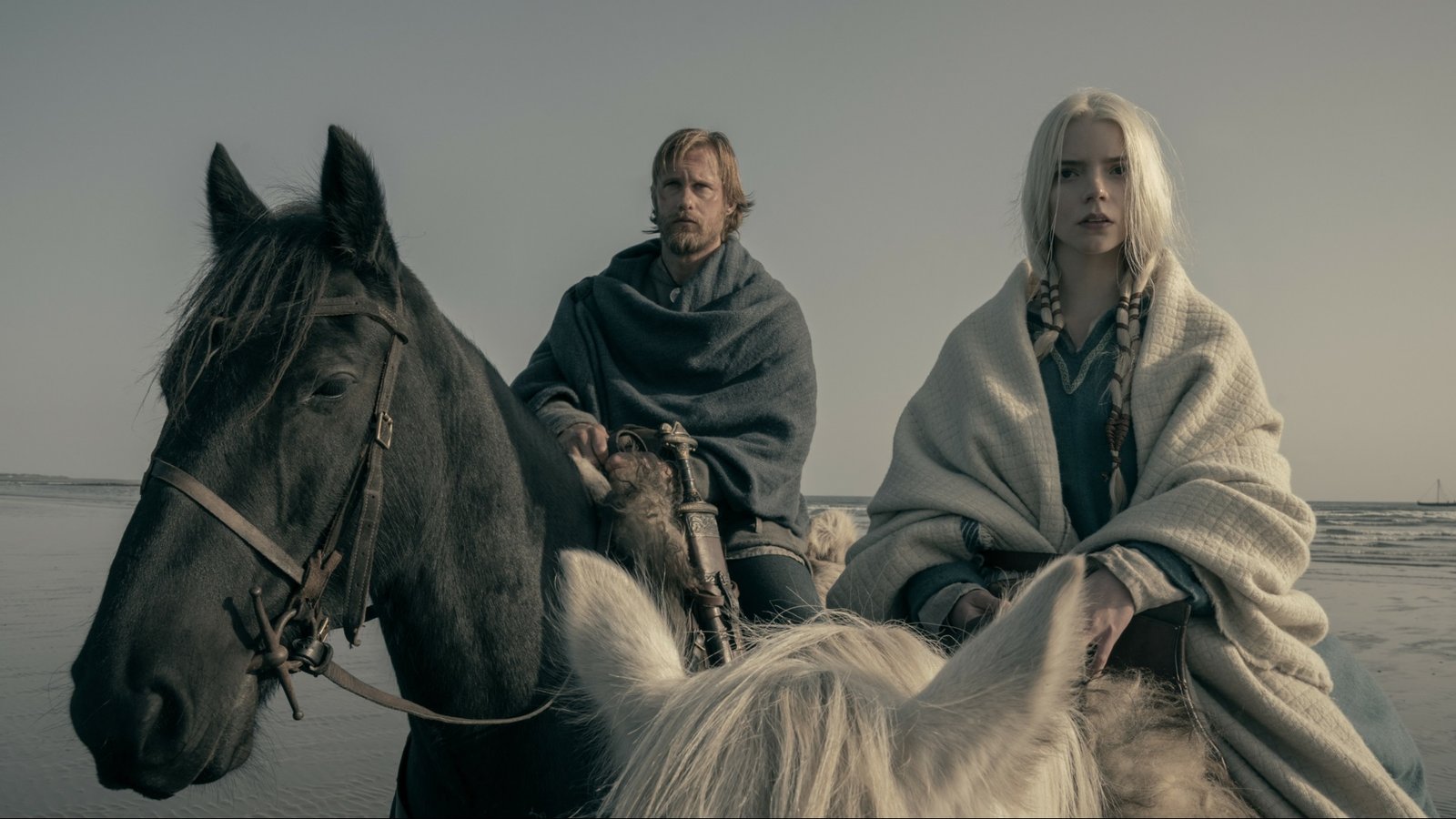
Après « The Lightouse » et ses personnages aliénés, Robert Eggers explore avec une certaine vigueur les territoires nordiques entre barbarie et mysticisme. Au cœur d’un fascinant huis-clos insulaire, « The Northman » déploie avec entrain toute la panoplie du Viking viriliste. Un film qui divise les spectateurs dans sa focalisation géographique et qui pourtant subjugue par ses visuels mythologiques que le réalisateur américain exploite avec précision.
Alors que son père rentre blessé de campagne, le jeune Amleth est tout destiné à prendre le flambeau du royaume de son père. Mais le demi-frère du roi se dresse face au destin d’Amleth assassinant son père. Forcé à l’exil face à une mort certaine, le prince déchu jure de revenir sur ses terres pour accomplir sa vengeance.
Si la première demi-heure du film s’enchaîne dans un rythme étrange qui entrave notre attachement aux protagonistes, « The Northman » parvient tout de même dans ses deux tiers à exploiter la rage d’un homme que la vengeance aveugle. Une vengeance que Robert Eggers parvient à retourner en une seule séquence délaissant la réparation d’un honneur patriarcal au profit d’une postérité. Cette postérité, incarnée par Anya Taylor-Joy, apporte au film cet écrin sentimental si précieux qui permet au récit de ne pas basculer dans une énième et inepte intrigue de vengeance. L’héroïsation d’un père entaché par une brutalité et une sauvagerie conjugale entrave avec nécessité un récit tout tracé. La mort ne se justifie plus par la vengeance, elle en devient sale et ne débouche que sur les tréfonds d’un absurde nihilisme.
« The Northman » épouse donc les formes d’un récit shakespearien. Un conte qui aurait dû pousser le fantasmagorique bien plus loin conjuguant le réel et le mythe en un conte surnaturel. Si les interventions mythiques comme celle de la Walkyrie sont remarquables, Robert Eggers aurait dû amener son film au-delà de lieux communs. « The Northman » reste cependant une merveille cinématographique qui démontre à nouveau l’engouement et la maîtrise de Eggers pour les films d’époques et la folie des hommes.
Sacha Garcia
After “The Lighthouse” and its alienated characters, Robert Eggers explores with some vigor the northern territories between barbarism and mysticism. At the heart of a fascinating insular closed-door setting, “The Northman” lively displays all the panoply of the virile Viking. A film that divides viewers in its geographical focus and yet captivates with its mythological visuals that the American director exploits with detail.
As his father returns home wounded from battle, young Amleth is destined to take over his father’s kingdom. But the king’s half-brother stands in the way of Amleth’s destiny by murdering his father. Forced into exile in the face of certain death, the fallen prince vows to return to his lands to carry out his revenge.
If the first half hour of the film moves at a strange pace that hinders our attachment to the protagonists, “The Northman” still manages in its two thirds to exploit the rage of a man who is blinded by revenge. A vengeance that Robert Eggers manages to turn around in a single sequence, abandoning the restoration of a patriarchal honor in favor of posterity. This posterity, embodied by Anya Taylor-Joy, brings to the film this valuable sentimental case that allows the story not to fall into an umpteenth and pointless plot of revenge. The heroization of a father tainted by marital brutality and savagery necessarily hinders a straightforward narrative. Death is no longer justified by revenge; it becomes dirty and only leads to the depths of an absurd nihilism.
“The Northman” thus takes the form of a Shakespearean tale. A tale that should have taken the phantasmagorical much further, combining reality and myth in a supernatural tale. If the mythical interventions such as the Valkyrie are remarkable, Robert Eggers should have pushed his film beyond the commonplace. However, “The Northman” remains a cinematographic marvel that demonstrates once again Eggers’ passion and command of period films and the madness of men.
Sacha Garcia