
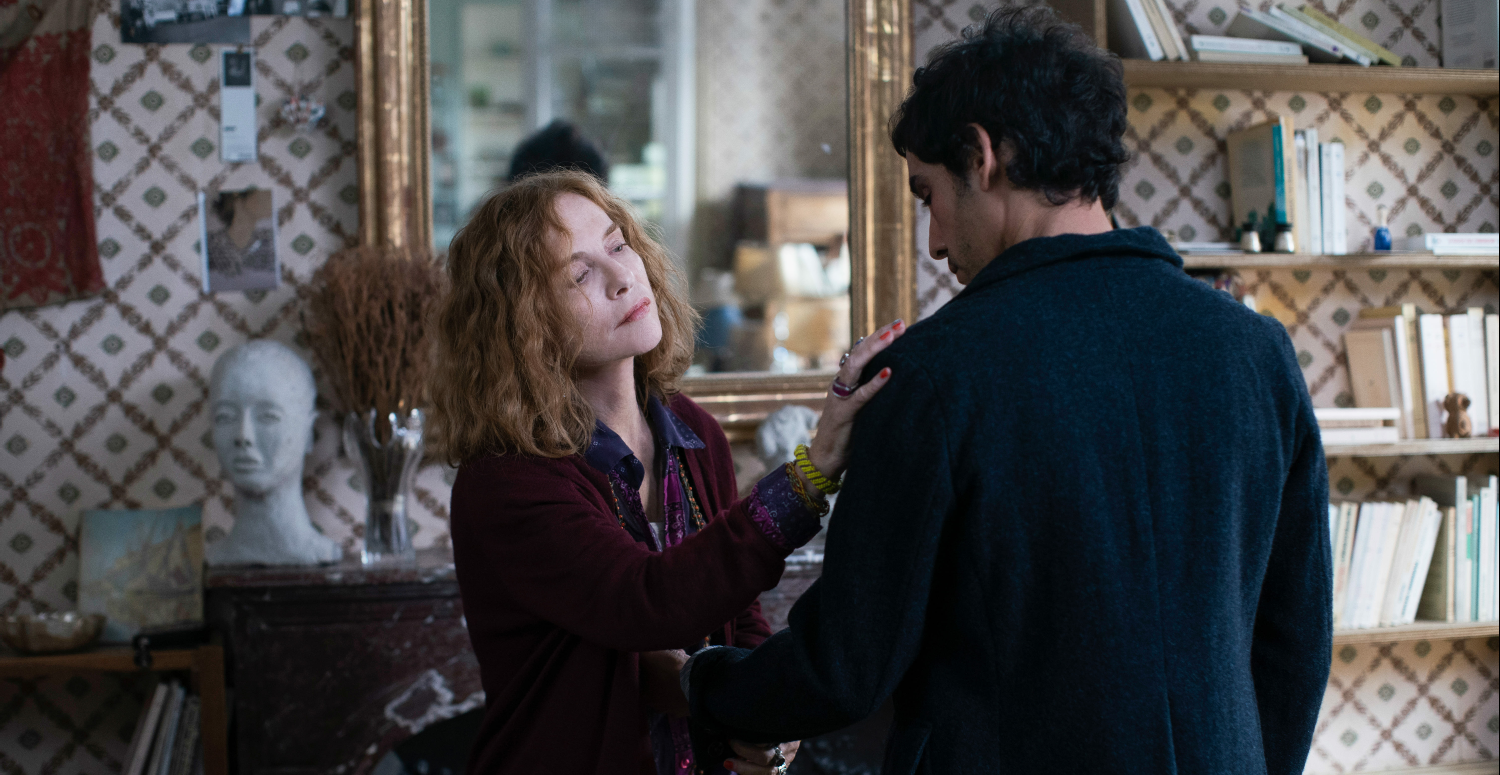
Sélectionné en compétition au Festival de Cannes, composé d’un casting de rêve et réalisé par un Iranien à la réputation internationale, « Histoires Parallèles » semble beaucoup diviser, autant pour sa forme que pour son fond. Intrigant ou ennuyeux ? Innovant ou déjà-vu ? Riche ou pauvre ?
Librement inspiré de l’un des épisodes du « Décalogue » de Krzysztof Kieślowski (rien que ça), « Histoires Parallèles » narre le voyeurisme d’une autrice (Isabelle Huppert) qui écrit un roman à partir de l’espionnage de ses voisins d’en face (Virginie Efira, Vincent Cassel et Pierre Niney), jusqu’à ce qu’elle rencontre un homme mystérieux (Adam Bessa) qui va faire s’entremêler fiction(s) et réalité(s).
Le propos du long-métrage est on ne peut plus clair : l’imaginaire verse dans le réel et vice-versa. Un poncif qu’Asghar Farhadi (« Une Séparation », « Le Passé », « Un Héros ») met en scène de façon à la fois très sobre – très peu de couleur, très peu de musique, beaucoup de silence – et très intellectuelle – avec une espèce de « triptyque image-son-écriture » (citons-le) censé illustrer l’inter-influence de la création et du réel (les textes, les bruitages, les détails).
En ressort une intrigue (en fait, deux ensembles d’intrigues) au rythme lent avec des personnages banals, peu développés ou carrément insondables qui n’aident pas vraiment à rentrer dans les enjeux flous voire confus que laisse poindre le film : un faux triangle amoureux, un voyeurisme vieux jeu, une vaine créativité, une usurpation d’identité(s) ?
« Histoires Parallèles » ne se veut certes pas vide : naît une petite curiosité pour les protagonistes, leurs quelques actions, réactions et interactions, mais le film semble passer à côté des interrogations que le scénario esquisse. Quel est le but fondamental du personnage d’Adam Bessa ? Pourquoi cette romancière persiste-t-elle à dépérir dans son appartement ? Comment le trio observé peut-il imploser suite à de présumées fausses révélations ? Autant de questions qui se perdent dans une réflexion absconse, perplexe mais non inintéressante autour de nos projections sur le monde et les gens, de fait inconnus, qui nous entourent.
Axel Chevalier
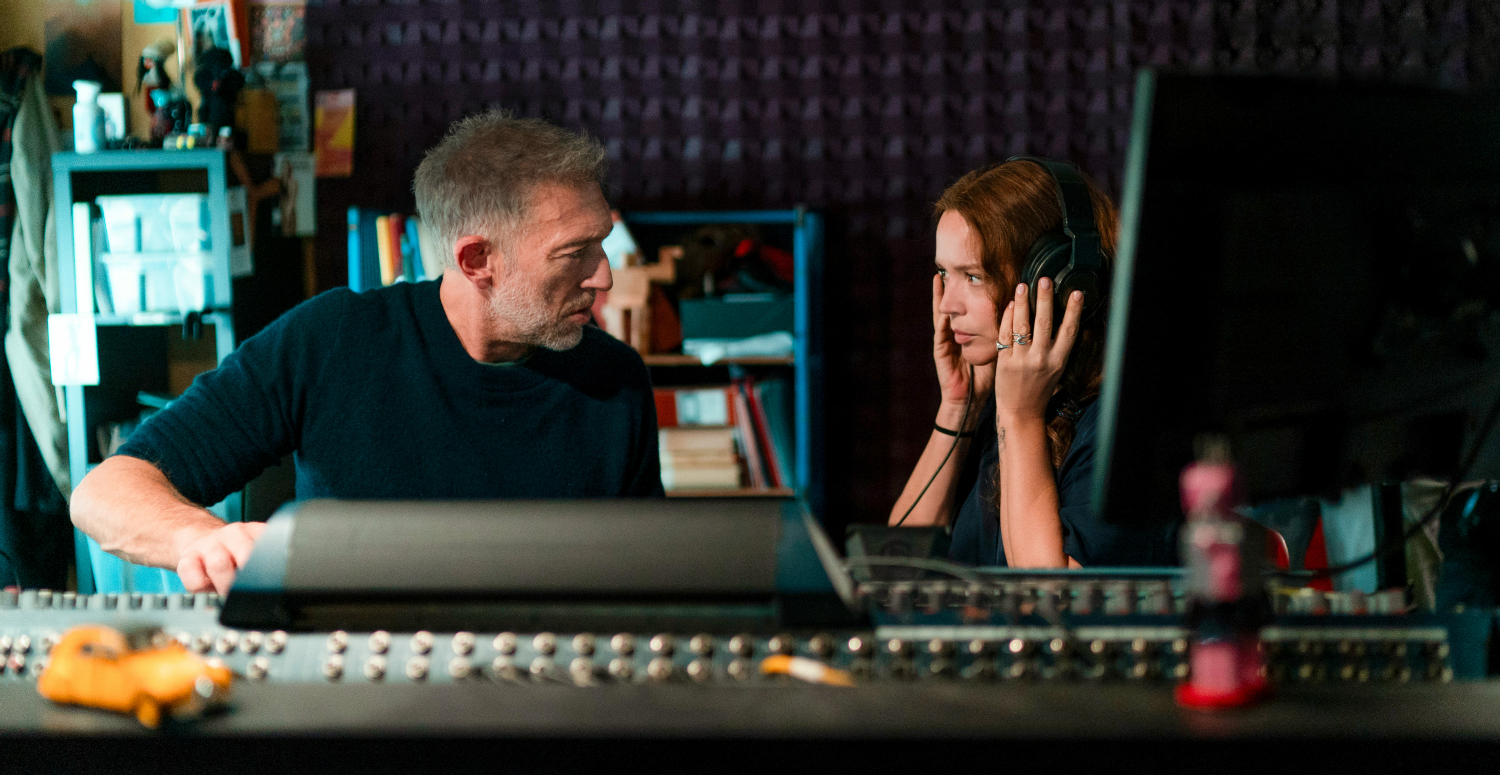
Second film français du réalisateur iranien qui a participé à populariser le cinéma iranien (moderne) dans nos salles treize ans après l’excellent « Le Passé » avec Tahar Rahim et Bérénice Bejo, « Histoires Parallèles » marque la première exploration d’une direction plus conceptuelle et artificielle dans la filmographie très riche d’Asghar Farhadi, mais jusque-là avant tout portée par une dynamique de réalisme social. Il joue ici sur l’entremêlement entre fiction et réalité en questionnant jusqu’où l’imagination peut aller. A quel point l’imaginaire peut non seulement se nourrir du réel (jusqu’au voyeurisme voire à l’espionnage) mais aussi nourrir le réel (jusqu’à en influencer des décisions) … ?
Si le film souffre de quelques longueurs, en particulier dans un début assez laborieux, il s’avère quand même réussi dans l’ensemble grâce à une bonne écriture (qui joue des éléments d’artificialité jusqu’au métier de bruiteur), à un superbe casting (notamment avec une superbe Virginie Efira à la fois belle, mouvante et émouvante dans ses personnages), et une très bonne construction (qui fait notamment le parallèle entre sa première et dernière scène en faisant évoluer son protagoniste de son statut de voleur à celui d’écrivain à travers cette étrange sensation de connivence au milieu d’inconnus). Mais le fait est qu’il y a en réalité deux protagonistes, d’abord Isabelle Huppert, puis Adam Bessa (Les Fantômes) à mesure que le livre change d’auteur, ce qui aboutit à une seconde partie progressivement plus prenante et intrigante.
Or, si la fiction d’une romancière acariâtre peu à peu dépassée par sa propre création est intéressante, l’intrigue aurait pu être plus forte en confrontant plus fiction et réalité et en jouant plus subtilement sur les indices d’artificialité (cheveux, bagues, tatouages) pour enrichir la dimension mystérieuse du film et introduire plus de doute chez le spectateur, histoire de le questionner et de l’accrocher plus. Jouer sur les points de vue divergents d’un même roman écrits à quatre mains aurait ainsi pu être plus palpitant pour explorer cette interrogation : si l’art imite la vie, est-ce que la vie imite l’art ?
Raphaël Sallenave
Selected for the main competition at the Cannes Film Festival, featuring a star-studded cast and directed by an internationally renowned Iranian filmmaker, “Parallel Tales” seems to be polarizing audiences, both in terms of its style and its substance. Intriguing or boring? Innovative or déjà vu? Profound or shallow?
Loosely based on one of the episodes of Krzysztof Kieślowski’s “Decalogue” (no less), “Parallel Tales” chronicles the voyeurism of a writer (Isabelle Huppert) who pens a novel based on spying on her neighbors across the street (Virginie Efira, Vincent Cassel, and Pierre Niney), until she meets a mysterious man (Adam Bessa) who will blur the lines between fiction(s) and reality.
The film’s message could not be clearer: the imaginary spills over into reality and vice versa. A trope that Asghar Farhadi (“A Separation”, “The Past”, “A Hero”) presents in a manner that is both very understated – very little color, very little music, a lot of silence – and very intellectual – with a sort of “image-sound-writing triptych” (to quote him) meant to illustrate the mutual influence of creation and reality (the texts, the sound effects, the details).
The end result is a slow-paced plot (actually, two sets of plots) with mundane, underdeveloped, or downright inscrutable characters who don’t really help the viewer get to grips with the vague, even confusing issues the film hints at: a fake love triangle, old-fashioned voyeurism, futile creativity, identity theft?
“Parallel Tales” is certainly not empty: a slight curiosity arises regarding the protagonists, their few actions, reactions, and interactions, but the film seems to miss the mark on the questions the screenplay raises. What is the fundamental purpose of Adam Bessa’s character? Why does this novelist persist in languishing in her apartment? And how can the trio we observe implode in the wake of supposedly false revelations? These are all questions that get lost in an obscure, perplexing yet not uninteresting reflection on our projections onto the world and the people – in fact, perfect strangers – who surround us.
Axel Chevalier
The second French film by the Iranian director who was instrumental in bringing (modern) Iranian cinema to European audiences, thirteen years after the excellent “The Past” starring Tahar Rahim and Bérénice Bejo, “Parallel Tales” marks the first venture into a more conceptual and artificial approach in Asghar Farhadi’s extensive filmography, which until now has been driven primarily by a spirit of social realism. Here, he plays with the intertwining of fiction and reality, questioning just how far the imagination can go. To what extent can the imagination not only feed off reality (to the point of voyeurism or even espionage) but also feed into reality (to the point of influencing decisions) …?
While the film drags a little in some places, particularly in a rather slow-moving first half, it is nonetheless a solid piece of work overall, thanks to strong writing (which plays with elements of artifice, right down to the sound effects technician’s craft), a superb cast (including a fantastic Virginie Efira, who is at once beautiful, captivating, and moving in her roles), and a very strong narrative structure (which draw parallels between the first and last scenes by evolving the protagonist from a thief to a writer through this strange sense of complicity amidst strangers). In fact, there are actually two protagonists: first Isabelle Huppert, then Adam Bessa (Ghost Trail) as the novel shifts authors, resulting in a second half that becomes progressively more gripping and engaging.
However, while the premise of a cantankerous novelist gradually being overtaken by her own creation is interesting, the plot could have been stronger by pitting fiction against reality more directly and by playing more subtly on clues to artificiality (hair, rings, tattoos) to add to the film’s mystery and make the viewer doubt things more, just to get them thinking and keep them hooked. Playing with the different perspectives of the same novel written by two authors could have therefore been a more thrilling way to explore this idea: if art imitates life, does life imitate art?
Raphaël Sallenave