La Tour
(The Tower)
2023
FR EN
« Ça fait quoi de mourir ? — Rien. Ça fait rien. » Morale frappante, presque traumatisante, extraite de « La Tour », dernier long-métrage signé Guillaume Nicloux et à l’atmosphère oppressante au possible. Le synopsis est simple mais innovant : une tour d’habitation et ses occupants se retrouvent mystérieusement entourés d’un brouillard opaque qui empêche toute possibilité de sortie…
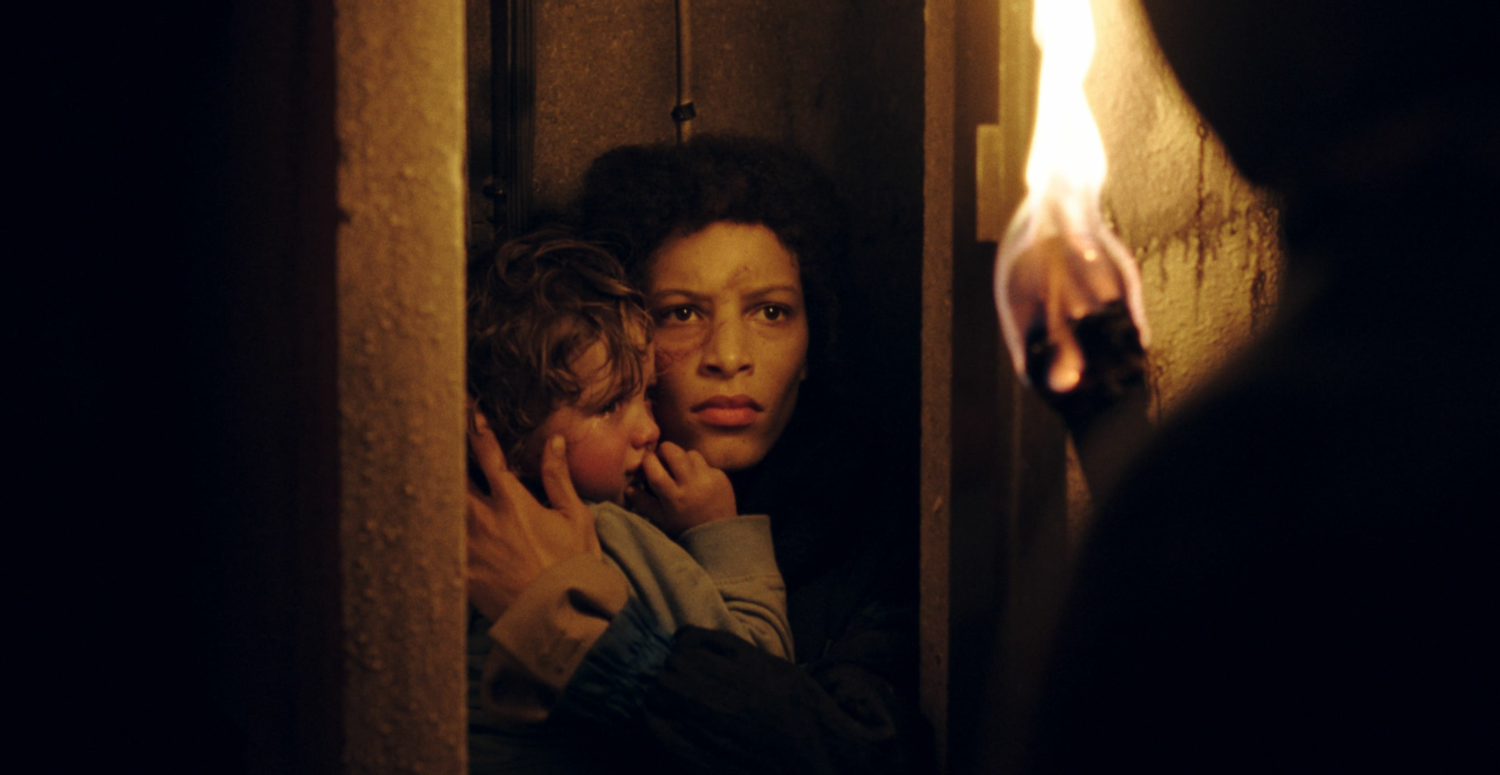
S’inspirant clairement des codes et implications du confinement en les poussant à l’extrême, le film constitue un angoissant huis clos où règne l’incertitude et où se révèle progressivement l’absurdité de la condition humaine. À ce nihilisme cauchemardesque s’ajoute ainsi un climat de violence augmenté par la peur et le désespoir des protagonistes. La sempiternelle obscurité qui obombre la tour assombrit aussi les multiples personnages qui ne font que subir leur sort malgré leurs vaines luttes. L’histoire d’Assitan (Angèle Mac) – véritable fil rouge du film – est de loin la plus touchante et la plus humaine dans cet environnement délétère et cruel.
Il est vrai que « La Tour » paraît présenter quelques lacunes qui donnent l’impression d’un film inabouti. Les nombreuses ellipses temporelles surenchérissent un sentiment déjà prégnant de confusion générale – aussi liée au grand nombre de personnages. La « facile » formation des différents groupes et cohortes dans la tour instaure une ségrégation à la limite de l’apartheid et qui donc dérange toute personne a minima sensible aux questions de racisme. Enfin, malgré une considération de la dégradation du bâtiment (messages, graffiti, quasi œuvres d’art apparaissant sur les murs), plusieurs énigmes pratico-pratiques demeurent : sur l’eau, l’électricité et bien sûr ces ténèbres impénétrables autour de la tour.
En revanche, le long-métrage perturbe dans sa manière de nous présenter les dérives de la nature humaine. Outre la violence spontanée voire gratuite de certains, le désir de se réfugier dans des croyances ou des semblants d’ordre accroît la folie des habitants. Seule la présence d’Assitan nous rappelle que l’humanité peut rester bienveillante. Même si elle ne croit plus en rien. Surtout si elle ne croit plus en rien.
Axel Chevalier
« How does it feel to die? – Nothing. It does nothing. » A striking moral, almost traumatizing, extracted from “La Tour”, the latest feature film by Guillaume Nicloux and with an atmosphere as oppressive as possible. The plot is simple but innovative: a high-rise building and its occupants find themselves mysteriously surrounded by an opaque fog that prevents any possibility of escape…
Clearly inspired by the codes and implications of lockdown and pushing them to the extreme, the movie creates an anguishing closed-door environment where uncertainty reigns and where the absurdity of the human condition is gradually revealed. To this nightmarish nihilism is added a climate of violence increased by the fear and the despair of the protagonists. The endless darkness that shrouds the tower also darkens the multiple characters who only suffer their fate despite their vain struggles. The story of Assitan (Angèle Mac) – the main thread of the film – is by far the most touching and the most human in this noxious and cruel environment.
It is true that “The Tower” appears to have some flaws that give the feeling of an unfinished film. The numerous time jumps add to an already pervasive feeling of general confusion – also linked to the high number of characters. The « easy » formation of the different groups and factions in the tower establishes a segregation bordering on apartheid and therefore disturbing to anyone who is even remotely sensitive to racism. Finally, despite a consideration of the degradation of the building (messages, graffiti, quasi works of art appearing on the walls), several practical enigmas remain: about water, electricity, and of course the impenetrable darkness around the tower.
On the other hand, the film is disturbing in the way it shows us the excesses of human nature. In addition to the gratuitous violence of some, the desire to take refuge in beliefs or semblance of order increases the madness of the inhabitants. Only the presence of Assitan reminds us that humanity can remain benevolent. Even if it no longer believes in anything. Especially if it no longer believes in anything.
Axel Chevalier