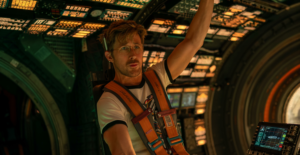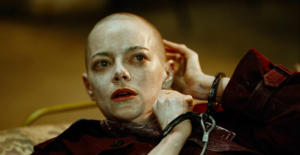
Spielberg est de retour ! Et de retour en grandes pompes avec un grand spectacle comme il en a tant fait lui qui a marqué l’histoire du cinéma américain avec une filmographie variant les genres et les styles dans un impressionnant éclectisme sans fausse note. On pourrait même dire que le monsieur n’a jamais fait de mauvais film en soi, ils ne sont peut-être pas tous des chefs d’œuvre, mais ses films offrent tous au minimum une certaine qualité toujours garantie. Pour l’occasion, il revient à la science-fiction dans un domaine qu’il connaît bien après avoir exploré les thématiques extra-terrestres sous plusieurs tons, du plus enfantin et magique dans « E.T. » au plus belliqueux et catastrophiques dans « La Guerre des Mondes », en passant bien sûr par l’une de ses pierres fondatrices « Rencontres du troisième type ». Et l’ambition n’est autre ici que de faire avancer le genre en s’interrogeant sur les implications d’une potentielle réelle existence des aliens. Qu’est-ce que cela créerait-il comme réactions et comportements à l’heure des désinformations, de la perte de confiance envers les gouvernants et de la réémergence d’une suprématie de la foi ?
Quelle immense déception ! Que ce film qui n’est que l’ombre de lui-même dans une trame de 2h30 où l’intérêt ne survient que dans le dernier quart d’heure pour finalement être laissé en plan sans véritable aboutissement. Jamais vraiment captivant, c’est un film dont la tension et le mystère reposent sur un scénario complotiste maladroit qui a besoin de grosses scènes explicatives pour relier une trame manichéenne assez vide suite à une scène d’ouverture particulièrement ratée, aussi bien d’un point de vue narratif que visuel. Il faut dire que si Spielberg est connu pour sa science des plans et la fluidité dans ses placements de caméra, on ne retrouve jamais une mise en scène digne de ce qu’il a su proposer dans tous ses précédents films. Et même entouré de ses fidèles acolytes avec Janusz Kamiński (« West Side Story » et « The Fabelmans » récemment) à l’image, David Koepp (« The Insider » & « Presence » rien que l’an dernier) au scénario et John Williams à la musique, la magie ne prend jamais.

« Disclosure Day » pose pourtant l’intrigante question de la divinité et de la foi dans ce contexte plausible. Comment les gens sont-ils censés concilier leur croyance en Dieu avec l’existence si elle était avérée des extraterrestres ? Une telle révélation pourrait totalement ébranler de profondes convictions. Mais après deux conversations d’un personnage secondaire introduisant cette thématique, cette dernière est tout bonnement laissée sous le tapis au profit d’une autre thématique également intéressante, et également d’actualité … la bataille pour la vérité !
Mais là encore il n’en est rien tant il laisse notre imagination à la porte de l’univers laissant toutes les intrigantes questions et les intéressants enjeux pour le générique de fin quand une présentatrice télé doit réagir à ces fameuses révélations. D’autant plus qu’en mêlant ses deux thématiques (Dieu et la vérité), le film crée un parallèle constant entre les aliens et la divinité, entre la croyance religieuse et la croyance en des extra-terrestres, où la vérité pourrait ainsi s’assimiler à la foi (dans un prolongement qui pourrait même s’avérer un peu dangereux si on allait plus loin que le film sur ce point) à l’image du petit oiseau qui sert d’oracle annonçant la présence alien aux humains et qui n’est autre qu’un cardinal.
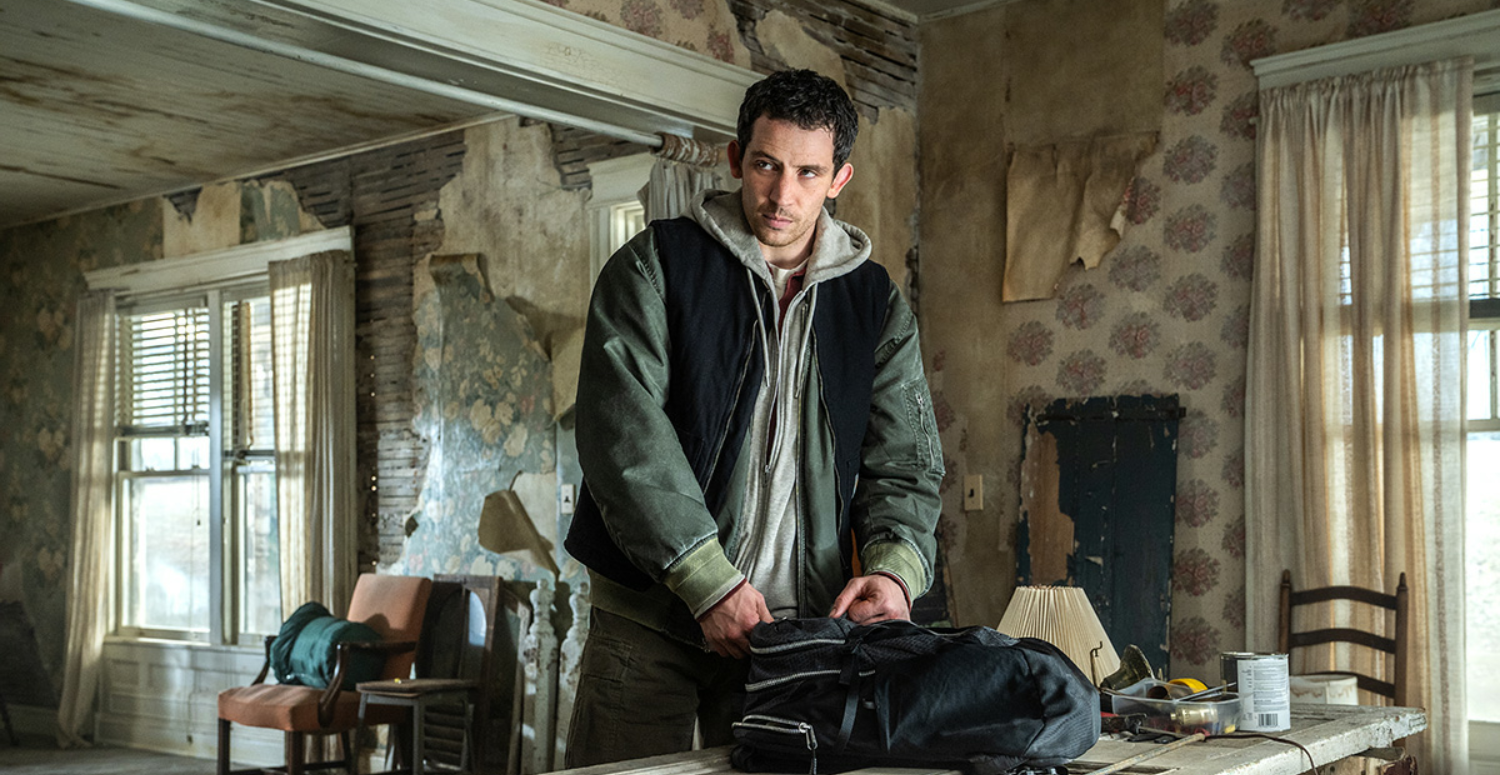
L’objectif de nos deux héros est donc de révéler la vérité à l’humanité face à une agence anti-vérité – dirigée par un Colin Firth caricatural au possible – qui se veut au-dessus du gouvernement (tout en restant bien sûr uniquement américaine, puisqu’en 50 ans les aliens ont eu le temps d’explorer notre vaste monde … états-unien seulement). C’est donc l’histoire de deux élus, une femme et un homme. L’un est doué scientifiquement quand l’autre est doué humainement. C’est le Yin et le Yang de la compréhension ultime qui ne crée qu’empathie, sincérité et bonté entre un Josh O’Connor un peu inexistant et une Emily Blunt qui réussit à bien s’en tirer avec un personnage d’abord drôle dans son introduction (aux côtés d’un Wyatt Russell comique) puis émouvante dans son évolution. Cela crée d’abord une trame inégale entre deux protagonistes pas aussi intéressants l’un que l’autre avant qu’ils ne puissent rejoindre un Colman Domingo qui les attendaient depuis 2h pour faire démarrer le film.
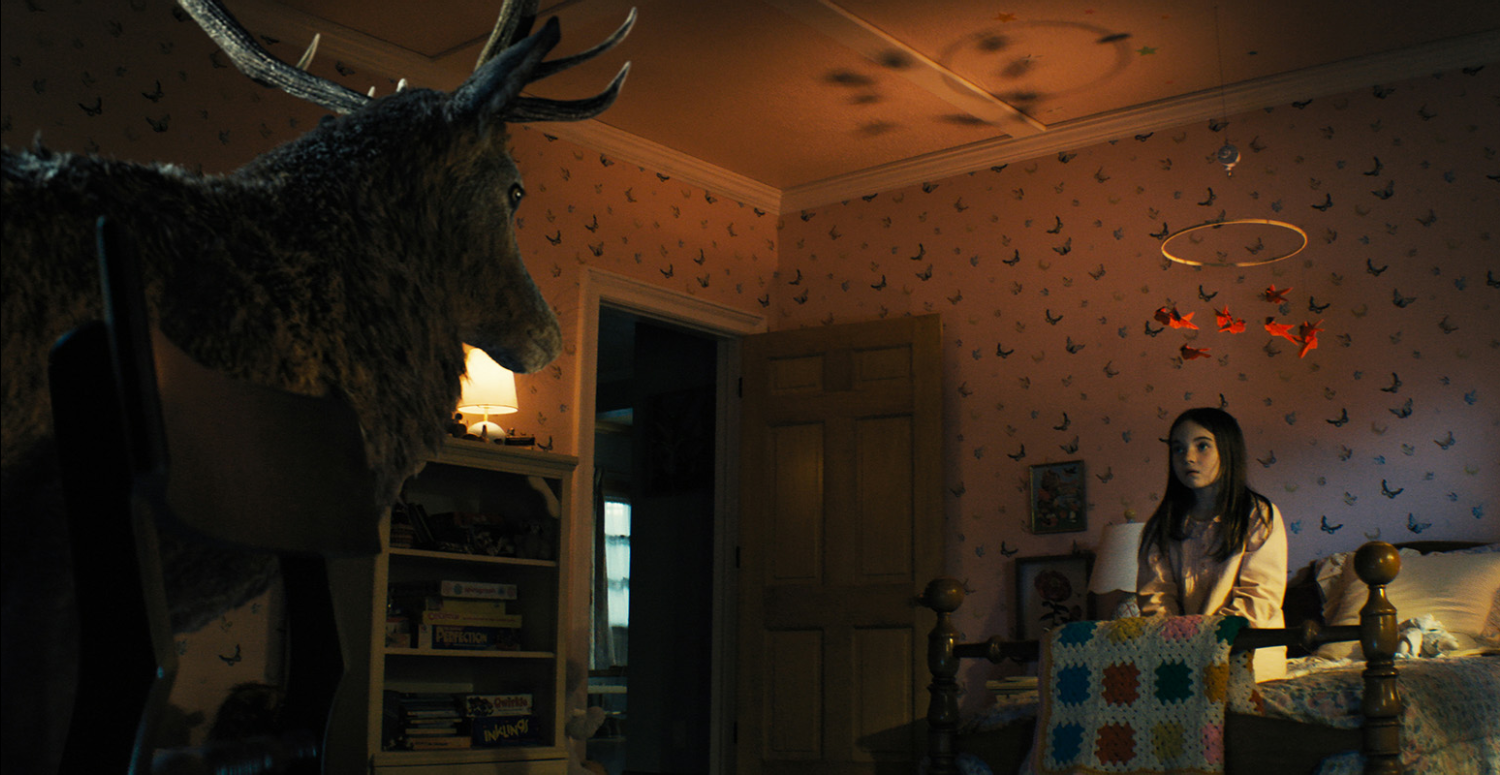
Alors oui il y a bien quelques scènes réussies, notamment la séquence d’invisibilité où l’on touche du bout des doigts la magie spielbergienne, et le message humaniste du film résonne actuellement en rappelant que pour apaiser les tensions (dans un monde encore plus divisé qu’aujourd’hui, au bord de la troisième guerre mondiale, bien que ces tensions ne soient jamais palpables dans le film), il suffit de réapprendre à s’écouter. Mais cet optimisme enfantin se limite à une dimension féérique un peu datée qui oublie le cœur de son sujet pour s’imposer finalement et assurément comme le plus faible film de son cinéaste, et probablement même son seul et unique mauvais film.
Raphaël Sallenave
Spielberg is back! And he’s back in grand style with a blockbuster spectacle – just the kind he’s made so many times before – having written his name into the history of American cinema with a filmography that spans genres and styles with impressive versatility and without a single misstep. One could even say that the man has never made a bad movie per se; they may not all be masterpieces, but his films all offer, at the very least, a certain standard of quality. This time around, he takes us back to science fiction – a genre he knows well, after exploring extraterrestrial themes in a variety of tones, from the most childlike and magical in “E.T.” to the most warlike and apocalyptic in “War of the Worlds”, not to mention, of course, one of his seminal works, “Close Encounters of the Third Kind”. And the ambition here is none other than to push the genre forward by questioning the implied consequences of the potential real existence of aliens. What kind of reactions and behaviors would this trigger in an era of misinformation, loss of trust in governments, and the resurgence of faith supremacy?
What a huge disappointment! This film is merely a shadow of what it could have been, stretching out over 2 hours and 25 minutes, with the only interesting moments coming in the final 15’ – only to be left hanging without any real pay-off. Never truly captivating, this is a film whose tension and mystery rest on a clumsy conspiracy-theory plot that relies on heavy-handed exposition scenes to tie together a rather hollow, black-and-white narrative following a particularly disastrous opening scene – both narratively and visually. Although Spielberg is known for his mastery of shot composition and fluid camera work, the film never achieves the level of direction he has delivered in all his previous films. And even surrounded by his trusted collaborators – with cinematographer Janusz Kamiński (“West Side Story” and “The Fabelmans” recently), screenwriter David Koepp (“Black Bag” and “Presence” just last year), and legendary composer John Williams – the film never quite sweeps you away.
“Disclosure Day,” however, raises the fascinating question of divinity and faith in this hypothetical context. How are people supposed to reconcile their belief in God with the existence – if proven – of extraterrestrials? Such a revelation could completely shake the foundations of deeply rooted beliefs. But after two conversations by a supporting character raising this issue, it is simply brushed aside for the sake of another equally interesting and timely theme… the battle for truth!
But once again, this turns out not to matter, as the film leaves our imagination at the gates of the universe, saving all the intriguing questions and interesting issues for the end credits, when a TV anchor must react to these famous revelations. All the more so because, by intertwining these two themes (God and truth), the film draws a constant parallel between aliens and deity, between religious belief and belief in extraterrestrials, where truth could thus be equated with faith (in an extension that might even prove a bit dangerous if we were to take this idea further than the film does) – much like the little bird that serves as an oracle announcing the aliens’ presence to humans and which is none other than a cardinal.
The goal of our two heroes is therefore to reveal the truth to humanity against an “anti-truth” agency – led by a Colin Firth who couldn’t be more of a caricature – that claims to be above the government (while, of course, remaining exclusively American, since in 50 years the aliens have had time to explore the whole of our vast world… but only in the United States). So, this is the story of two chosen ones, a woman and a man. One is scientifically gifted, while the other is emotionally gifted. It’s the yin and yang of ultimate understanding, which fosters nothing but empathy, sincerity, and kindness between a somewhat lackluster Josh O’Connor and an Emily Blunt who manages to pull it off well with a character who is initially funny in her introduction (alongside a comical Wyatt Russell) and then moving as she evolves. This initially creates an uneven storyline between two protagonists who aren’t equally interesting until they join Colman Domingo, who’s been waiting for them for two hours to get the film kicked off.
So yes, there are indeed a few well-executed scenes, especially the invisibility one where we get a glimpse of that Spielberg magic, and the film’s humanistic message resonates today by reminding us that to ease tensions (in a world even more divided than our own, on the brink of World War III – though these tensions are never tangible in the film), all we need to do is learn to listen to one another again. But this childlike optimism is limited to a somewhat dated fairy-tale dimension that loses sight of the heart of its matter, ultimately and undeniably establishing itself as the filmmaker’s weakest film… and probably even his one and only bad one!
Raphaël Sallenave