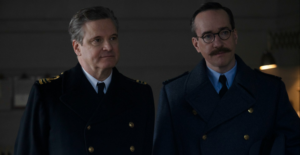
Voilà un projet inhabituel dans le paysage cinématographique français qui affiche une ambition rare. Cette grosse prise de risque venant de Pathé ressemble à un film que les Français n’ont presque jamais tenté, d’autant plus à cette échelle avec deux films à la suite pour un budget cumulé de plus de 70M€. L’objectif n’est autre que de raconter l’histoire de notre pays dans un grand spectacle à gros budget au cours d’une fresque jouant sur le double sens de son titre, à la fois portrait d’un homme, d’une nation et d’une idée : raconter la naissance de la France libre comme une grande épopée populaire.
Polytechnicien devenu diplomate puis scénariste de la BD et du film « Quai D’Orsay » (réalisé par Bertrand Tavernier) avant de passer derrière la caméra avec l’excellent « Le Chant du Loup », Antonin Baudry met déjà le pied dans le monde des blockbusters à la française. Mais qui dit gros moyen, dit volonté assumée de rechercher un large public. Or le scénariste qui avait trouvé un très fin équilibre entre comique et sérieux, entre profondeur et légèreté dans son portrait de Dominique de Villepin peut-il reproduire le même juste milieu sur une figure comme celle de De Gaulle, lorsqu’il s’agit de raconter les pages de l’histoire de notre nation ? Autrement dit, peut-on réellement faire une hagiographie critique ? Qui plus est lorsqu’on ambitionne aussi de raconter l’idée d’une France libre qui se répand …
A mi-parcours, la réponse ne peut être que partielle, mais elle semble au minimum mitigée, voire particulièrement bancale. Sur l’ensemble le principal point d’interrogation reste ce décalage moins savamment dosé entre comique et sérieux qui repose ici plus sur certains personnages que sur des situations, à l’image d’un personnage inventé véritable comic relief, figure propre aux blockbusters américains, dont le but est d’alléger toutes les scènes dans lesquelles il se trouve sans véritable autre fonction narrative. Or, vu la gravité des scènes et l’ampleur du projet, un tel personnage est d’abord marrant puis foncièrement inutile, créant une rupture de ton inadéquate.
Il faut dire que cette première partie cherche tout du long à nous rattraper tant son introduction lui a compliqué la tâche dans une surcharge de plans symboliques mis en scène avec maladresse. Mais force est de constater, qu’elle y arrive progressivement notamment grâce à une interprétation incarnée de Simon Abkarian dans le rôle de cet homme isolé et exilé à Londres mais obstiné, parfois perçu comme illuminé mais qui inspire profondément courage à ses compatriotes dans une aura magnétique qui pourrait convaincre un Polonais qu’il est Français (on ne saisit pas toujours très bien exactement comment il arrive à fédérer autour de sa personne, mais cela fait aussi – il est vrai – partie du mythe qui est à l’œuvre ici).
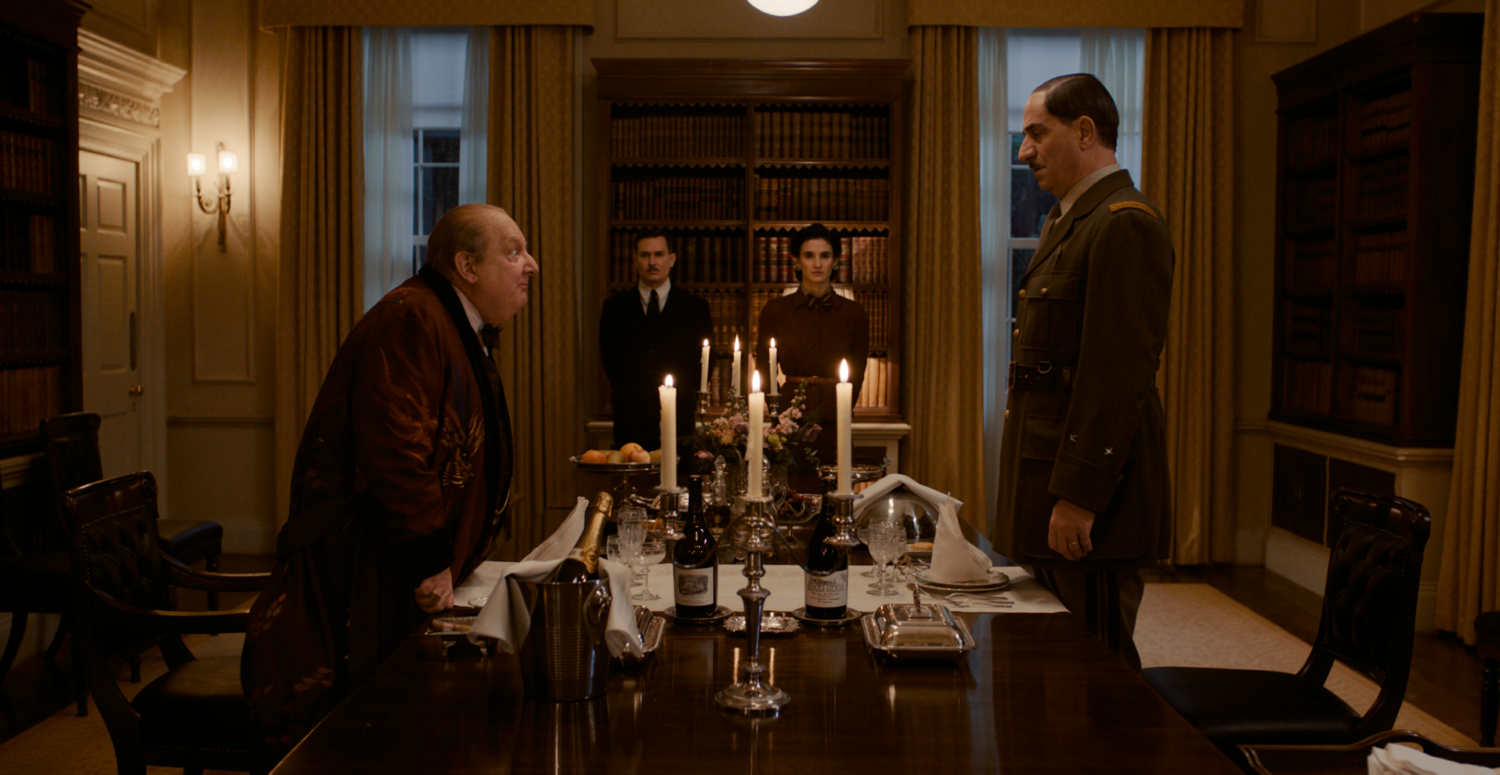
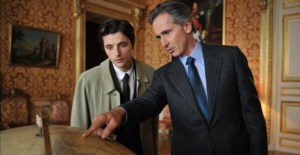
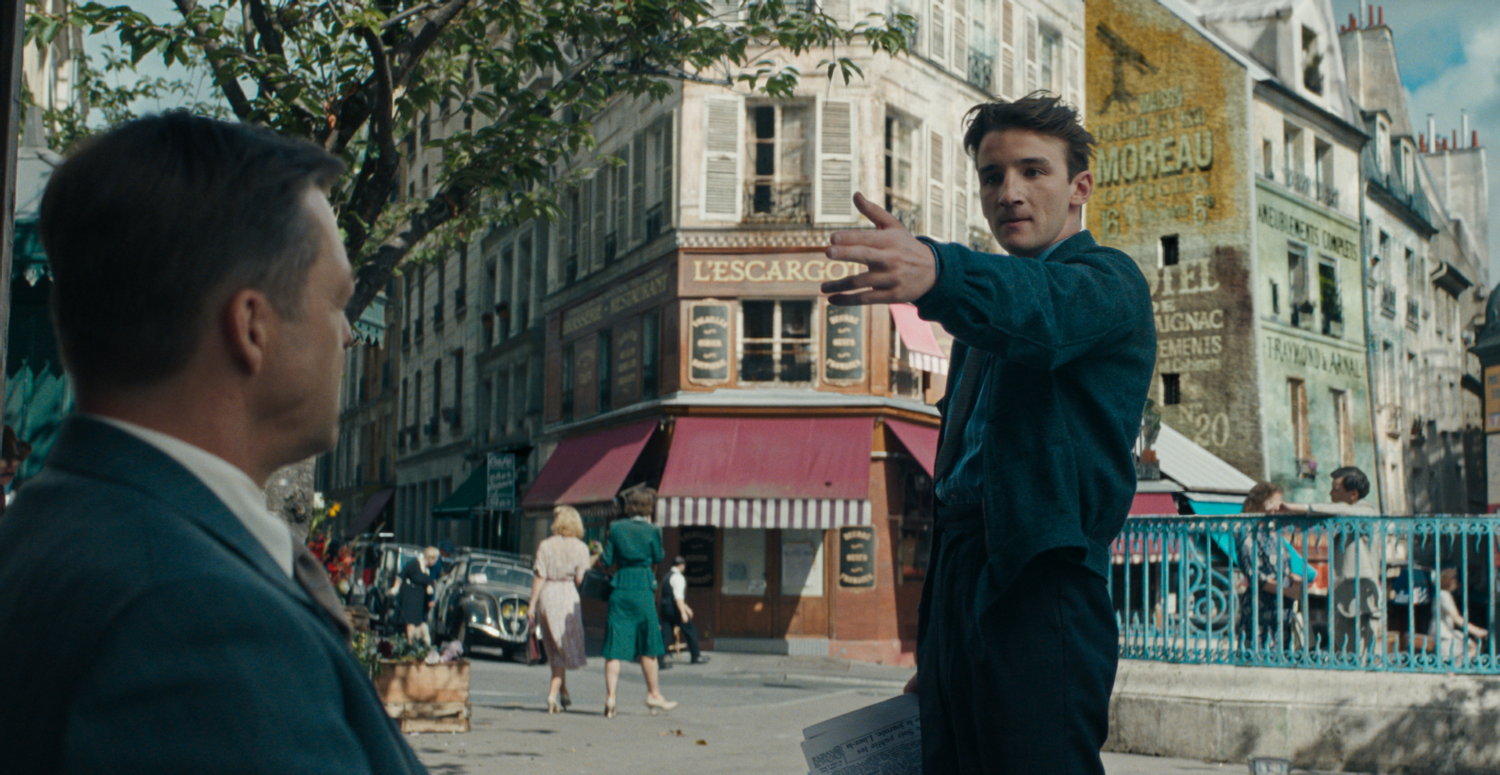
Si l’on considère ce projet comme un double portrait, il est clair que « L’âge de fer » réussit un bien meilleur portrait du Général en restituant autant sa puissance mythologique qu’en désacralisant sa stature dans un récit qui construit l’icône qui n’est pas encore là. A Londres, de Gaulle ne dirige ni territoire, ni armée digne de ce nom. Il n’a aucune véritable légitimité, pourtant il agit comme tel et s’en façonne une de toute pièce face à un Churchill un peu caricatural mais réussi avec Simon Russell Beale. En revanche le portrait de la France Libre s’avère quant à lui beaucoup plus faible autour, d’un côté, de figures secondaires portées par un excellent casting (Benoît Magimel, Matthieu Kassovitz, Niels Schneider) mais reléguées au rang de caméos honorifiques sans véritable développement, et d’un autre côté de personnages illustrant la contestation sur place et les débuts d’une résistance française désorganisée. Non seulement le film joue beaucoup moins sur la fibre comique aux côtés de ces jeunes Parisiens libres – instaurant d’emblée un profond décalage – mais il les cantonne aux scènes emblématiques de prise de conscience, de ralliement, de choix d’action etc, sans les étoffer plus que ça au point de ne pas créer d’attachement ou d’émotion autour du personnage de Fernand sur lequel le film s’ouvre et se conclut pourtant (de manière assez aboutie d’ailleurs) !
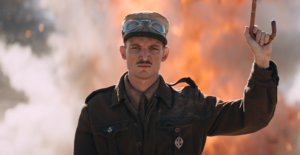
A tout vouloir raconter, l’intrigue se disperse et alourdit donc un récit qui apparaît surchargé lorsque l’on conclut sur la bataille de Bir Hakeim, véritable acte fondateur de la France libre, auprès du Général Koening jusque-là figure plus que secondaire. Alors certes, la séquence d’action est réussie et offre une première mise en scène sur grand écran depuis 84 ans de cette bataille historique française de la seconde guerre mondiale, mais souffrant de problèmes d’échelle elle manque également un morceau de bravoure qui apparaît au bout du compte, et comme le reste de l’ensemble, très emphatique. Malheureusement le film oscille constamment entre le portrait / l’exploration de la naissance d’une chimère devenue réalité à Londres – donc un film de bureaux à l’image des « Heures Sombres » ou de « La Ruse » – et une fresque patriotico-militaro-civile entre l’empire colonial et la résistance métropolitaine – dont le ton ne se prête pas à la critique ou aux détours humoristiques. Reste un film aux intentions pédagogiques plutôt crédibles qui réussit néanmoins à nous adhérer plus ou moins au projet jusqu’au débarquement du second opus dans les prochaines semaines …
Raphaël Sallenave
This is an unusual project in the French film landscape, one that displays a rare level of ambition. This major risk taken by Pathé resembles a type of film that the French have almost never attempted – especially on this scale, with two films in a row and a combined budget of over 70M€. The goal is nothing less than to tell the story of the country in a big-budget spectacle – an epic that plays on the double meaning of its title, depicting a man, a nation, and an idea all at once: to portray the birth of Free France as a grand, popular epic.
After graduating from the École Polytechnique, becoming a diplomat, and then working as a screenwriter for the comic book and film “The French Minister” (directed by Bertrand Tavernier) before stepping behind the camera with the outstanding “The Wolf’s Call”, Antonin Baudry is already setting foot in the world of French-style blockbusters. Yet big-budget productions inevitably entail a commitment to reaching a wide audience. But can the screenwriter – who struck a very delicate balance between comedy and seriousness, between depth and lightheartedness in his portrait of Dominique de Villepin – achieve the same balance with a historical figure like De Gaulle, when it comes to chronicling the pages of our nation’s history? In other words, is it really possible to make a critical hagiography? Especially when one also aims to explore the rapidly spreading idea of a Free France…
Halfway through this double movie, the answer can only be partial, but it seems, at the very least, mixed – if not downright flawed. Overall, the main point of contention remains the less-than-subtly balanced shift between comedy and earnestness, which here relies more on certain characters than on situations – much like a made-up character serving as comic relief, a typical trope in American blockbusters, whose sole purpose is to lighten the mood in every scene he appears in, without any other real narrative purpose. However, given the gravity of the scenes and the scale of the venture, such a character is funny at first but ultimately pointless, creating an inappropriate disconnect in tone.
To be fair, this first half tries throughout to win us over, given how much its opening made things difficult for it with an overload of symbolic shots staged poorly. But the fact remains that it gradually succeeds, thanks in particular to Simon Abkarian’s compelling performance as this isolated, exiled, yet stubborn man in London – sometimes perceived as a visionary, yet one who deeply inspires courage in his compatriots with a magnetic aura that could convince a Pole that he is French (it’s not always entirely clear exactly how he manages to rally people around him, but that, admittedly, is also part of the myth at work here).
If we consider this project as a double portrait, “Tilting Iron” clearly succeeds in painting a far better portrait of the General by both capturing his mythological power and demystifying his stature in a story that shapes the icon that does not yet exist. In London, de Gaulle commands neither territory nor an army worthy of the name. He has no real legitimacy, yet he acts as if he does and forges one from scratch in the face of a Churchill who is somewhat cartoonish but well portrayed by Simon Russell Beale. In contrast, the depiction of the Free French Forces proves much weaker, centered, on the one hand, on supporting characters played by an excellent cast (Benoît Magimel, Matthieu Kassovitz, Niels Schneider) but relegated to the ranks of honorary cameos without any real development, and on the other hand, on characters illustrating the local dissent and the beginnings of a disorganized French resistance. Not only does the film rely much less on comedy when depicting these young, free Parisians – creating a stark contrast from the outset – but it also confines them to emblematic scenes of awakening, rallying, taking action, and so on, without fleshing them out any further, to the point that it fails to create any emotional connection or attachment to the character of Fernand, on whom the film nevertheless opens and closes (quite successfully, in fact)!
In trying to cover everything, the plot becomes scattered and thus weighs down a narrative that feels overloaded by the time it reaches the Battle of Bir Hakeim – the true founding moment of the Free French Forces – centered on General Koening, who until then had been little more than a minor character. Admittedly, the action sequence is well-executed and offers the first big-screen depiction in 84 years of this historic French battle of World War II, but, due to issues with scale, it also lacks a moment of true glory, which ultimately – like the rest of the film – comes across as overly emphatic. Unfortunately, the film constantly oscillates between portraying and exploring the birth of a pipe dream that became reality in London – thus an office-based film along the lines of “Darkest Hour” or “Operation Mincemeat” – and a patriotic, military, and civilian epic set against the backdrop of the colonial empire and the metropolitan resistance – whose tone lends itself neither to criticism nor to humorous side notes. What remains is a film with fairly credible educational intentions that nevertheless manages to keep us more or less engaged with the project until the landing of the second installment in the coming weeks…
Raphaël Sallenave