
Abel
Әбіл
Grand Prix du Jury – (Cinémas d’Asie) Vesoul
2024/2026
FR EN
Saviez-vous que l’ultime république socialiste soviétique à avoir déclaré son indépendance vis-à-vis de l’URSS lors de sa dislocation était le Kazakhstan ? Or, ce pays comme tant d’autres après la fin de l’hégémonie communiste en Europe orientale et en Asie centrale a lui aussi souffert de la transition à marche forcée vers l’économie de marché.
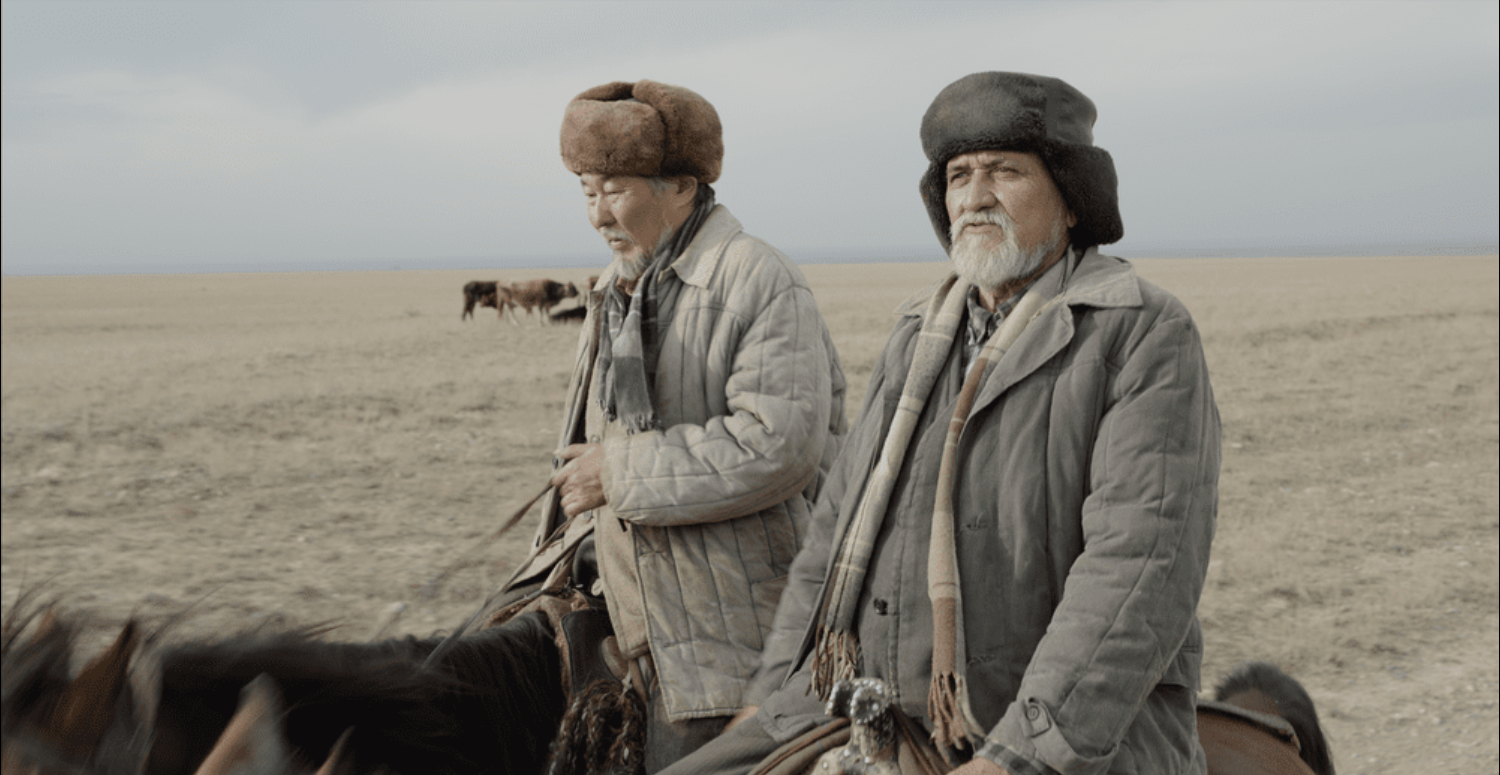
Nous sommes ici en 1993, dans la campagne aride de la région d’Almaty – ancienne Alma-Ata, capitale de l’ex RSS du Kazakhstan. Abel, un éleveur de moutons dans un kolkhoze en plein démantèlement, espère récupérer un peu de son dû après plus de trente ans de dur labeur. Mais la réalité est bien plus complexe…
Composé en très grande partie de longs plans-séquences retranscrivant de complètes scènes de la vie des steppes, « Abel » se veut d’un certain naturalisme, où l’on suit l’existence méconnue de ces paysans isolés, battus par le vent et par la poussière. Le film pourrait ainsi presque faire penser à un intemporel western – d’autant plus que des chevaux y pointent çà et là le bout de leur museau –, mais il se révèle bien plus social qu’aventureux.
La libéralisation et surtout la décollectivisation font en effet des ravages parmi les petites gens de la sphère fraîchement post-soviétique ; et les simples bergers ne sont aucunement épargnés par cette violence économique. Abel, pourtant un honnête homme au crépuscule de sa vie de travailleur, découvre à son insu l’étendue de la corruption, de l’individualisme et de la traîtrise dont font preuve ses collègues et amis d’hier, tandis qu’il perd tout – de son cheptel à ses racines.
À l’instar de cette critique, néanmoins, le film, financé par le gouvernement kazakh et présentant déjà un rythme plutôt inégal, se veut un peu trop didactique : il s’éparpille ainsi parfois trop longuement dans des scènes peut-être trop appuyées, ou dans des dialogues « nostalgiques » ou « historiques » qui relatent entre autres l’Insurrection du Jeltoqsan (en 1986), ce qui alourdit une intrigue globalement lente et (à juste titre) déprimante. Avec une fin tragique, « Abel » retranscrit malgré tout avec authenticité une triste page de l’Histoire centre-asiatique.
Axel Chevalier
Did you know that Kazakhstan was the last Soviet socialist republic to declare its independence from the USSR when it collapsed? Like so many other countries following the end of communist hegemony in Eastern Europe and Central Asia, Kazakhstan also struggled with the forced transition to a market economy.
The year is 1993, and we are in the arid countryside of the Almaty region – formerly Alma-Ata, the capital of the former Kazakh SSR. Abel, a sheepherder on a collective farm in the midst of being dismantled, hopes to recover some of what is rightfully his after more than thirty years of hard work. But the reality is far more complex…
Mostly shot in long continuous takes that capture entire scenes of life on the steppes, “Abel” adopts a certain naturalistic style, following the little-known lives of these isolated farmers, battered by wind and dust. The film could thus almost be mistaken for a timeless Western – especially since horses pop up here and there – but it turns out to be far more social than adventurous.
Liberalization and above all, the dismantling of the collective system, is indeed wreaking havoc among ordinary people in the newly post-Soviet world; and simple shepherds are by no means spared from this economic turmoil. Abel, though an honest man nearing the end of his working life, unwittingly discovers the extent of the corruption, individualism, and betrayal displayed by his former colleagues and friends, while he loses everything – from his livestock to his roots.
Like this review suggests, however, the film – funded by the Kazakh government and already suffering from a somewhat uneven pace – tries to be a bit too didactic: it thus sometimes drags on too long in scenes that may be overly heavy-handed, or in “nostalgic” or “historical” dialogues recounting, among other things, the Jeltoqsan Uprising (in 1986), which weighs down a plot that is generally slow-paced and (rightly so) depressing. Despite its tragic ending, “Abel” nonetheless authentically portrays a sad chapter in Central Asian history.
Axel Chevalier

