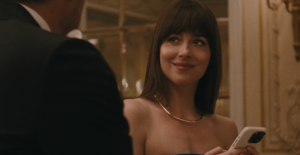
Tout commence dans le plus parfait style d’une comédie romantique où maladresse rime avec coup de foudre pour deux protagonistes formant un couple idéal. Ils ont tout pour eux, ils sont beaux, ont une carrière prometteuse, un bel appartement, tout est mignon et idyllique. Mais à quelques jours d’un mariage qui semble une évidence pour tous, cette mécanique bien huilée va s’enrayer au détour d’une conversation avec leurs témoins. Lorsque chacun révèle ce qu’il pense avoir fait de pire, la trame prend une tournure inattendue pour s’aventurer dans un conte moral et jouissif. Dans la lignée du récent « Materialists », ce nouveau film A24 déconstruit à nouveau la romance en y insufflant une lucidité froide et une réflexion contemporaine, mais va au-delà du cadre du couple et du mariage pour interroger notre perception à l’altérité et à la responsabilité.
Tout part donc d’un postulat de départ simple : un secret peut-il chambouler un couple ? Peut-il renverser les perceptions de nos amis et proches ? Comme dans ses deux précédents films « Sick of Myself » (où une illuminée s’inventait une maladie imaginaire pour attirer l’attention) et « Dream Scenario » (où un monsieur-tout-le-monde se retrouvait brusquement dans les rêves de tout-un-chacun), Kristoffer Borgli explore ici un concept provocateur pour en faire un révélateur (inconfortable) de notre époque. Bien plus sérieuse qu’elle n’y paraît, cette fausse comédie romantique réussit à s’imposer à la fois comme un outil d’exploration morale et comme un divertissement réellement séduisant.
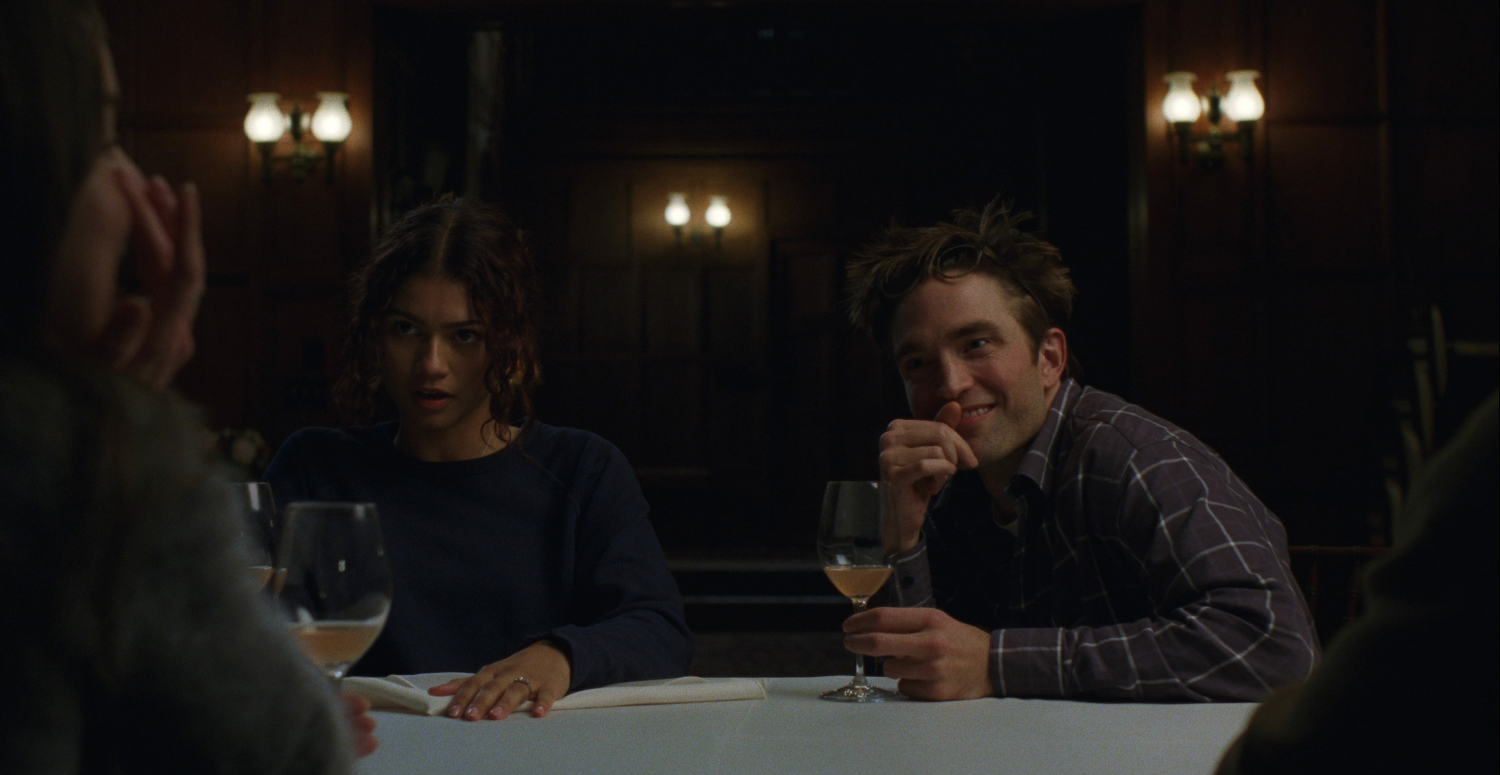
Porté par la superbe alchimie entre les deux stars glamour d’Hollywood du moment (à l’affiche ensemble de pas moins de trois gros projets cette année) avec un Robert Pattinson étranger (dans tous les sens du terme) à la situation qui l’accable et une impressionnante Zendaya dans son rôle le plus riche entre vulnérabilité et opacité, « The Drama » s’impose comme un grand plaisir de salles nous embarquant continuellement de la romance au comique et des surprises au suspense. Dans une atmosphère transmettant le malaise ambiant avec une très bonne composition (pour seulement trois flûtes) de Daniel Pimberton, les spectateurs font le même trajet que les personnages. L’absurde y rencontre le grinçant, l’amour le fardeau, et la magie l’enfer. L’humour y est varié, jouant beaucoup sur la gêne (voir le cringe ou la gênance pour certains) mais aussi sur des doubles sens dans les dialogues et les choix des personnages. C’est parfois gros, parfois subtil, tout en posant de bonnes questions, bref c’est un film très complet qui peut s’adresser à un public très large, d’autant plus qu’il reste très concis (1h45) dans un rythme soutenu mélangeant parfaitement les tons.
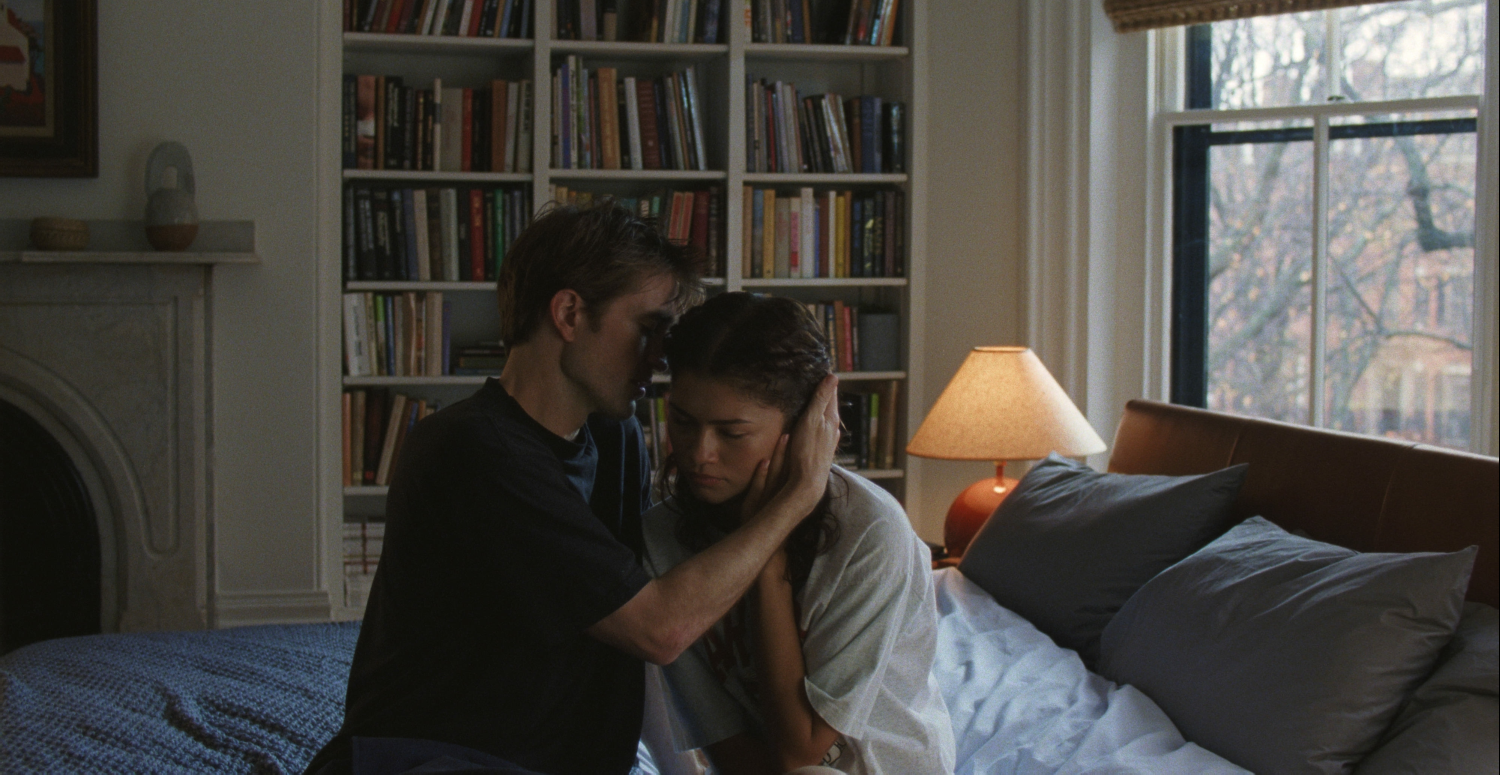
En somme, c’est une sombre comédie finement écrite et réalisée dans ce bel écrin d’un Boston idéalisé et chic, où le montage non-linéaire nous expose synthétiquement et très efficacement le parcours du couple en croisant les regards, avant de rapidement révéler ce fameux secret chamboulant les apparences et la perception initiale, en nous plongeant dans les introspections, imagination et peurs des deux protagonistes. Au fond, c’est moins la nature du secret que le basculement de perception qu’il provoque qui s’impose comme le véritable sujet du film pour inciter une réflexion chez le spectateur. Car limitant les explications autour des motivations du personnage clé, le scénario renvoie le public à sa propre réaction primaire, entre tentative de compréhension de l’autre, rejet immédiat ou dissolution progressive de la perception initiale. Au final, peu importe l’opinion du public sur le sujet de fond ou sur la personne en elle-même, l’important est ici de créer ce questionnement.
Bien sûr, le sujet de fond aurait pu être traité plus en profondeur par ce qu’il y a clairement un riche sujet qui se cache sous l’intrigue, que ce soit sous l’angle des motivations ou du contexte social, mais non seulement les pistes de cet approfondissement sont bien présentes dans l’intrigue, mais ce n’est surtout pas le sujet d’un film dont le rythme et le ton tiennent au dosage entre ses dimensions appréciable, fun, et romantique & interrogatrice, dark, et éthique. Il se concentre plutôt sur le regard des autres, la perception de la douleur plutôt que la douleur elle-même ou ses racines, sur l’écho des mots plutôt que sur leurs cicatrices. Il explore ainsi plus la perception de ce sujet de fond, que le sujet en lui-même, dans la mesure où c’est un sujet perçu différemment en fonction des personnages – et donc des spectateurs –, en fonction des opinions et des expériences de chacun, ainsi que de leur culture, puisqu’il s’agit d’un fait propre à la culture américaine. Or le personnage principal (dont on suit majoritairement le point de vue) vit et travaille depuis des années aux USA mais n’a pas grandi dans cette culture – tout comme le scénariste/réalisateur –, il y est donc plus étranger que d’autres personnages altérant aussi en partie sa réaction.
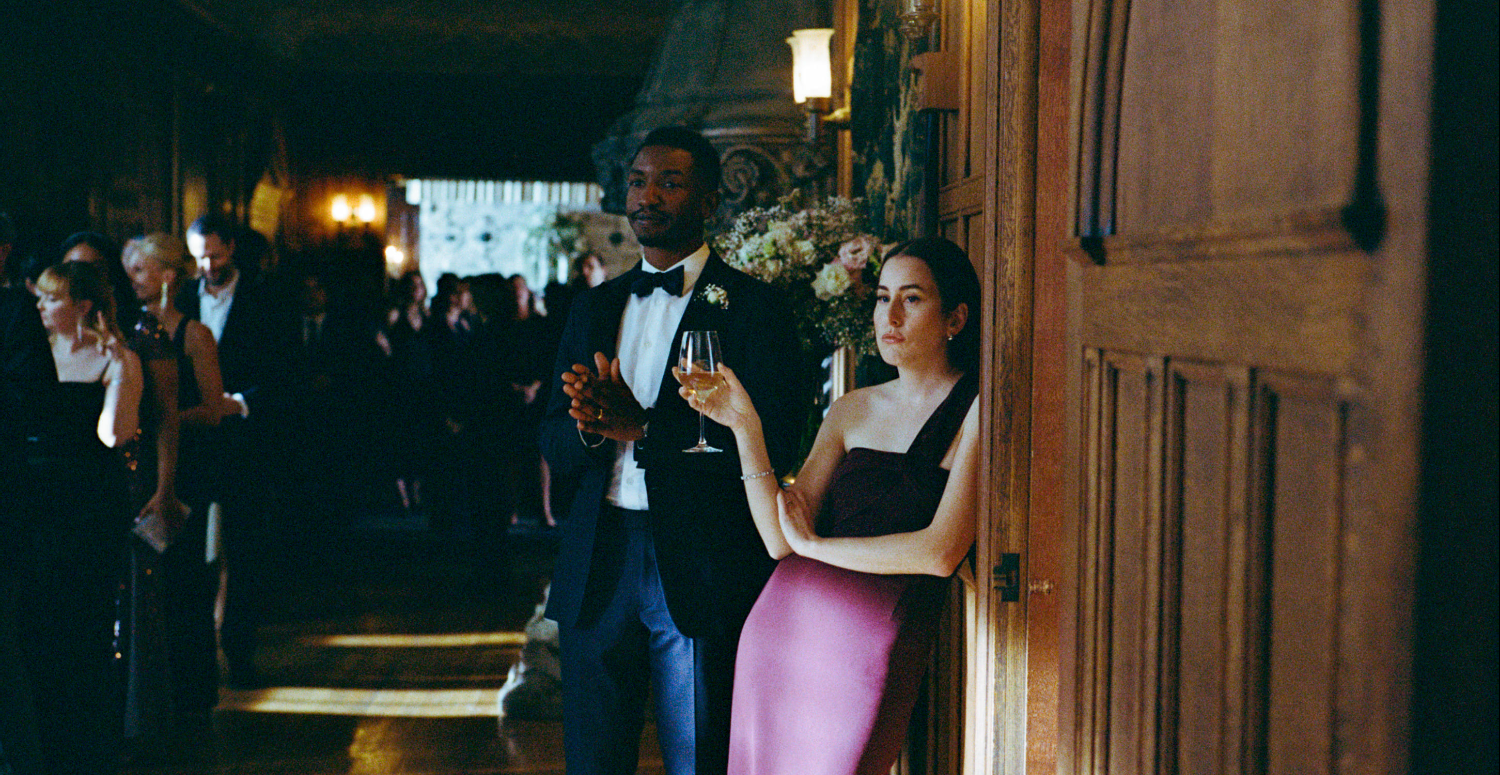
Le cinéaste norvégien interroge en fait le concept même de relation à l’autre avec des personnages qui manquent finalement d’attention envers la personne qui en aurait besoin, au point de la reculpabiliser plutôt que de s’attarder sur les mécanismes d’une invisibilisation sociale et du besoin d’attention. Il y décortique l’hypocrisie d’une génération (voire d’une société) qui d’une part aseptise tout pour ne laisser aucune place à de violents fantasmes immédiatement passés en jugement, et d’autre part se complique la tâche primordiale du pardon quand bien-même la faute est moindre que d’autres. Et il y introduit un intrigant paradoxe en nous identifiant le plus avec le coupable de la pire idée. Contre qui nous positionnons-nous au final ? Celui qui s’expose ou celui qui juge ? Celui qui a commis une faute ou celui qui aurait pu faire pire ? Peut-on d’ailleurs être coupable d’une idée ? Ou même simplement responsable de l’avoir eu ? Et une fois ces questionnements introduits, que penser de la personne à l’heure d’aujourd’hui ? Est-on coupable de notre passé ? Peut-on accepter quelqu’un pour ce qu’il est, et non ce qu’il a pu être ? Dans ce contexte, comment vraiment aimer un autre ?
« The Drama » met le couple à l’épreuve d’un passionnant dilemme moral et controversant entre moralité, culpabilité et jugement d’autrui dans un film riche et complexe, à l’image de sa fin extrêmement réussie où deux interprétations – tout aussi valides l’une que l’autre – coexistent parfaitement pour une conclusion tout aussi satisfaisante.
Raphaël Sallenave
It all begins in the finest romantic comedy tradition, where awkwardness meets love at first sight for two protagonists who seem like the perfect couple. They have it all: they’re attractive, have promising careers, a beautiful apartment – everything is sweet and idyllic. But just days before a wedding that seems like a foregone conclusion to everyone, this well-oiled machine begins to sputter during a conversation with their best man and maid of honor. When each reveals what they believe to be their worst deed, the plot takes an unexpected turn, venturing into a moral and exhilarating tale. Much like the recent “Materialists”, this new A24 film once again deconstructs the romance by infusing it with a cold lucidity and a contemporary insight, but goes beyond the scope of the couple and marriage to question our perception of otherness and responsibility.
It all starts with a simple premise: can a secret turn a couple’s world upside down? Can it overturn the perceptions of our friends and loved ones? As in his two previous films, “Sick of Myself” (where a delusional woman invented an imaginary illness to attract attention) and “Dream Scenario” (where an ordinary man suddenly found himself in everyone’s dreams), Kristoffer Borgli explores a provocative concept here, turning it into an (uncomfortable) reflection of our times. Far more serious than it appears, this pseudo-romantic comedy succeeds in establishing itself both as a tool for moral exploration and as genuinely engaging entertainment.
Driven by the wonderful chemistry between Hollywood’s two most glamorous stars of the moment (starring together in no fewer than three major productions this year) with Robert Pattinson, who is a stranger (in every sense of the word) to the situation that overwhelms him, and an impressive Zendaya in her most nuanced role, balancing vulnerability and mystery, “The Drama” stands out as a major cinematic delight, constantly taking us on a journey from romance to comedy and from surprises to suspense. In an atmosphere that conveys the underlying unease through a superb score (using only three flutes) by Daniel Pimberton, the audience follows the same path as the characters. The absurd meets the gritty, love meets baggage, and magic meets hell. The humor is multifaceted, often playing on awkwardness (and even cringe) but also on double meanings in the characters’ dialogue and choices. It’s sometimes over-the-top, sometimes subtle, all while asking thought-provoking questions; in short, it’s a very well-rounded film that can appeal to a very wide audience, especially since it remains very concise (105 minutes) with a brisk pace that perfectly blends multiple tones.
All in all, this is a dark comedy, cleverly written and directed against the beautiful backdrop of an idealized, fancy Boston, where the non-linear editing succinctly and effectively lays out the couple’s journey through a series of intersecting perspectives, before quickly revealing the secret that shatters appearances and initial perceptions, drawing us into the introspections, imaginations, and fears of the two protagonists. Ultimately, it is less the nature of the secret itself than the shift in perception it triggers that emerges as the film’s true focus, prompting reflection in the viewer. By limiting explanations regarding the key character’s motivations, the screenplay leaves the audience to their own initial reactions—whether attempting to understand the other, immediate rejection, or a gradual dissolution of their initial perception. Ultimately, regardless of the audience’s opinion on the underlying issue or the character themselves, the important thing here is to spark this questioning.
Of course, the underlying theme could have been explored in greater depth, as there is clearly a rich subject matter hidden beneath the plot – whether in terms of motivations or social context – but not only are the seeds of this deeper exploration clearly planted in the plot, but above all, this is not the focus of a film whose pace and tone depend on the balance between its various dimensions: enjoyable, fun, romantic and questioning, dark, and ethical. Instead, it focuses on how others see things, on the perception of pain rather than the pain itself or its roots, on the echo of words rather than the scars they leave. It thus explores the perception of this underlying subject rather than the subject itself, insofar as it is a matter perceived differently depending on the characters – and therefore the viewers – depending on each person’s opinions and experiences, as well as their culture, since it is a phenomenon specific to American culture. However, the main character (whose perspective we follow for the most part) has lived and worked in the U.S. for years but did not grow up in that country – just like the screenwriter/director – so he is more of a stranger to it than the other characters, which also partly shapes his reaction.
The Norwegian filmmaker essentially questions the very concept of human relationships through characters who ultimately fail to pay attention to the person who needs it most, to the point of re-guilting them rather than addressing the root causes of social invisibility and the need for attention. He examines the hypocrisy of a generation (or even a society) that, on the one hand, sanitizes everything to leave no room for violent fantasies that are immediately condemned, and on the other hand, complicates the essential task of forgiveness even when the wrongdoing is minor compared to others. And he introduces an intriguing paradox by making us identify most strongly with the one guilty of the worst idea. Whom do we ultimately side with? The one who exposes themselves or the one who judges? The one who committed a fault or the one who could have done worse? Can one even be guilty of an idea? Or even simply responsible for having had it? And once these questions have been raised, what are we to make of the person today? Are we guilty of our past? Can we accept someone for who they are, and not for who they might have been? In this context, how can we truly love someone else?
“The Drama” therefore puts the couple to the test with a gripping and controversial moral dilemma involving morality, guilt, and other people’s judgment in a rich and complex film, as reflected in its brilliantly executed ending, where two interpretations – each equally valid – coexist seamlessly to create an equally satisfying conclusion.
Raphaël Sallenave