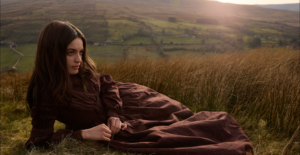
Nouvelle adaptation du roman d’Emily Brontë paru en 1847, ce « “Hurlevent” » arrive précédé d’une promesse ambiguë : moderniser un classique gothique en le rendant plus sexy, plus pop, plus frontal. Après l’excellente surprise que fut que le thriller de vengeance post-MeToo « Promising Young Woman » et l’étude de caractères vénéneuse et amorale « Saltburn », Emerald Fennell adapte ici le roman chéri de son adolescence. Si l’on n’y retrouve pas nécessairement sa patte de scénario qui bifurquent brusquement dans une dynamique d’une toute autre dimension, on y retrouve néanmoins ses personnages moralement troubles aux élans destructeurs dans un univers stylisé. La scénariste et réalisatrice anglaise opte pour des audacieux et assez radicaux choix d’adaptation illustrés par des guillemets encadrant le titre d’une adaptation qui se veut très libre, tout en conservant l’essentiel de la trame du roman d’origine : de l’amour impossible entre Catherine et Heathcliff à l’issue tragique.
Certes le père cruel est toujours là, mais le frère est désormais absent de l’intrigue, tout comme de très nombreux autres personnages faisant disparaître la dimension revanche sociale et fantomatique du roman au profit de l’amour impossible du duo central. La cruauté recule donc devant la romance d’une part, mais la restriction de l’intrigue autour de seulement quelques personnages aboutit aussi à une version plus diabolique de cette femme désargentée, narcissique et instable quand elle civilise un peu plus ce grand sauvage, monstre de désespoir ivre de destruction qu’est le jeune palefrenier adoptif. Les maltraitances et folies des personnages se traduisent ici dans une relation tourmentée où les deux protagonistes se torturent sentimentalement pendant des années. Il n’y a pas de beau personnage dans cette histoire qui transmet cette relation toxique à son spectateur grâce à deux sex-symbols actuels qui créent ce tiraillement entre des personnages profondément antipathiques et leurs figures romantiques tragiques.
Margot Robbie, qu’on ne présente plus, et qui a également produit le film, ne se donne clairement pas la part belle avec ce rôle profondément égoïste et baratineur, quand Jacob Elordi (Euphoria ; Priscilla ; Saltburn) surprend par une évolution physique et vocale marquée. Le casting de qualité – réunissant Hong Chau (Showing Up ; The Whale ; The Menu), Owen Cooper (Adolescence) et une Alison Oliver (Saltburn ; The Order ; Task) qui fait déjà preuve d’une belle palette de jeu – adopte un surjeu volontaire qui colle au traitement très adolescent de cette histoire, des dialogues aux regards pleins de désirs en passant par les nombreuses étreintes cinégéniques et les musiques anachroniques de la pop-star Charli XCX.
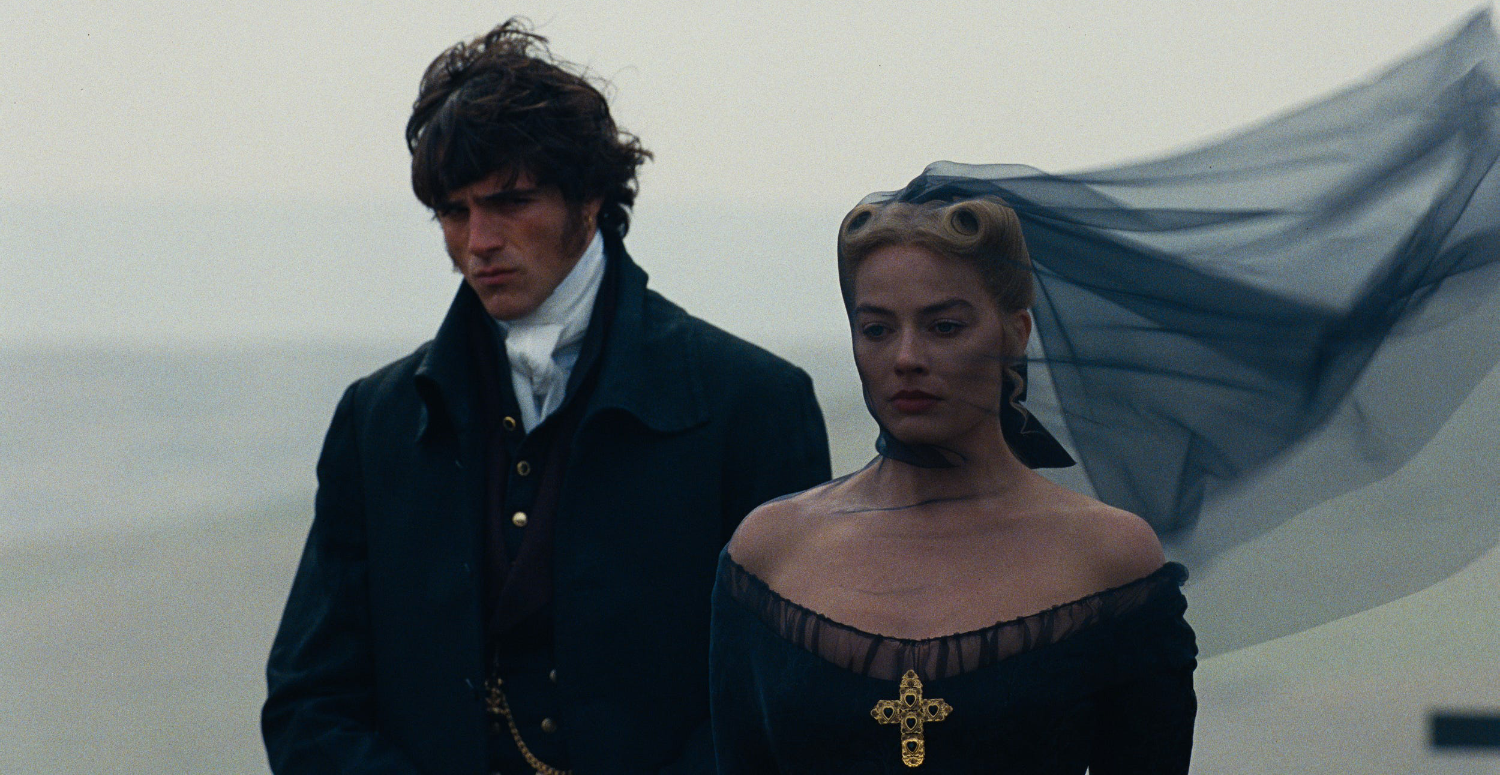
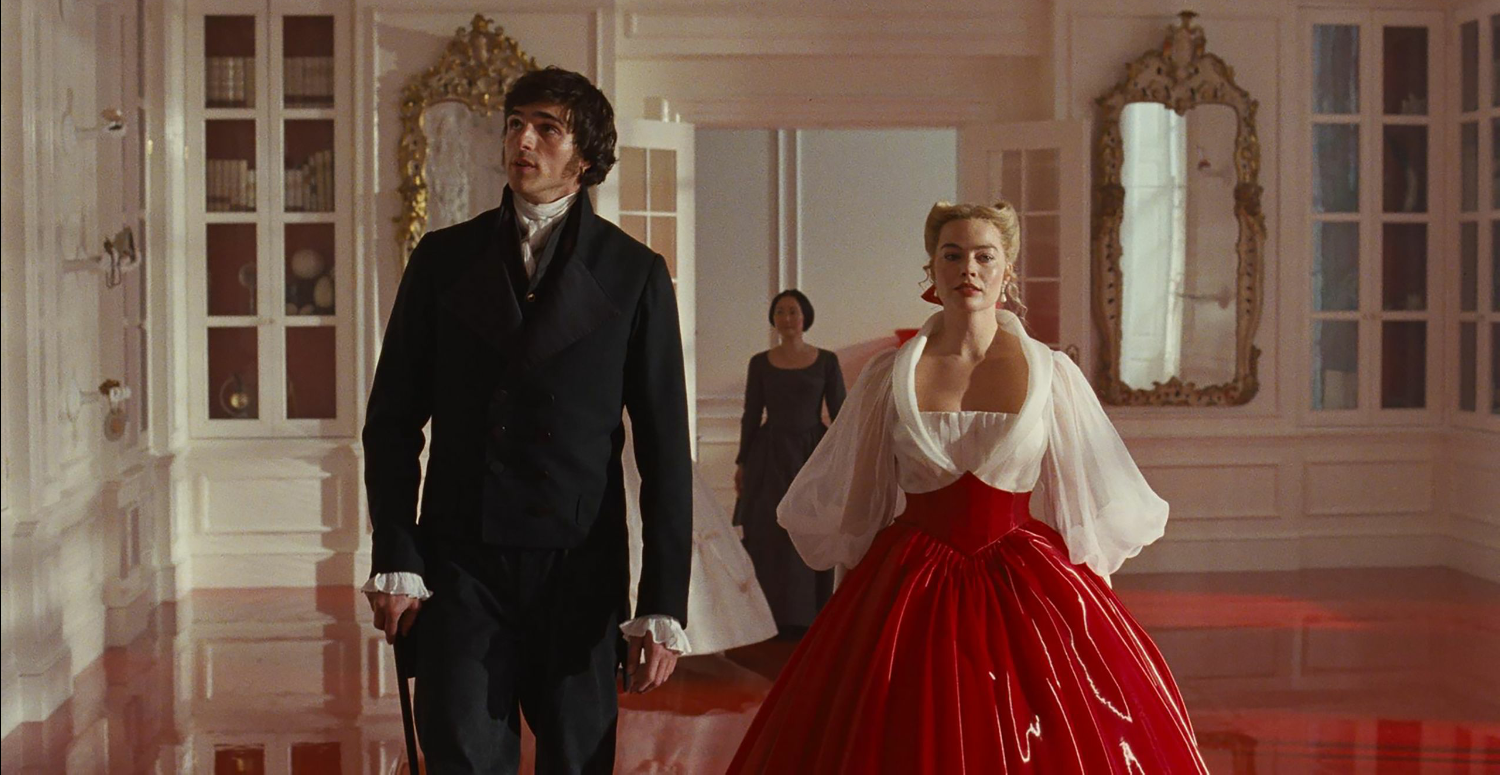
Le film cherche à casser les codes et transformer le romantisme littéraire anglais en un grand spectacle glamour. Cela se traduit par un style extrêmement coloré dans ses costumes variés et ses décors parfois assez factice, ainsi qu’un montage plus rapide que ce que le rythme de ce genre d’intrigues entraîne généralement. Si le film ne prend pas assez son temps sur certains scènes (visuellement et/ou narrativement), il offre aussi une spectaculaire photographie de Linus Sandgren (Babylon ; Saltburn ; La La Land) avec de magnifiques tableaux de paysages rocheux battus par les vents ou de décors très travaillés dans leur géométrie et leurs jeux de couleurs où chaque pièce transmet une atmosphère distincte à l’image de l’opposition entre le domaine familial plongé dans une obscurité oppressante et un brouillard constant, et le domaine voisin aux couleurs vives et variées, deux espaces opposées dans un même spectre de l’irréel, très théâtral.
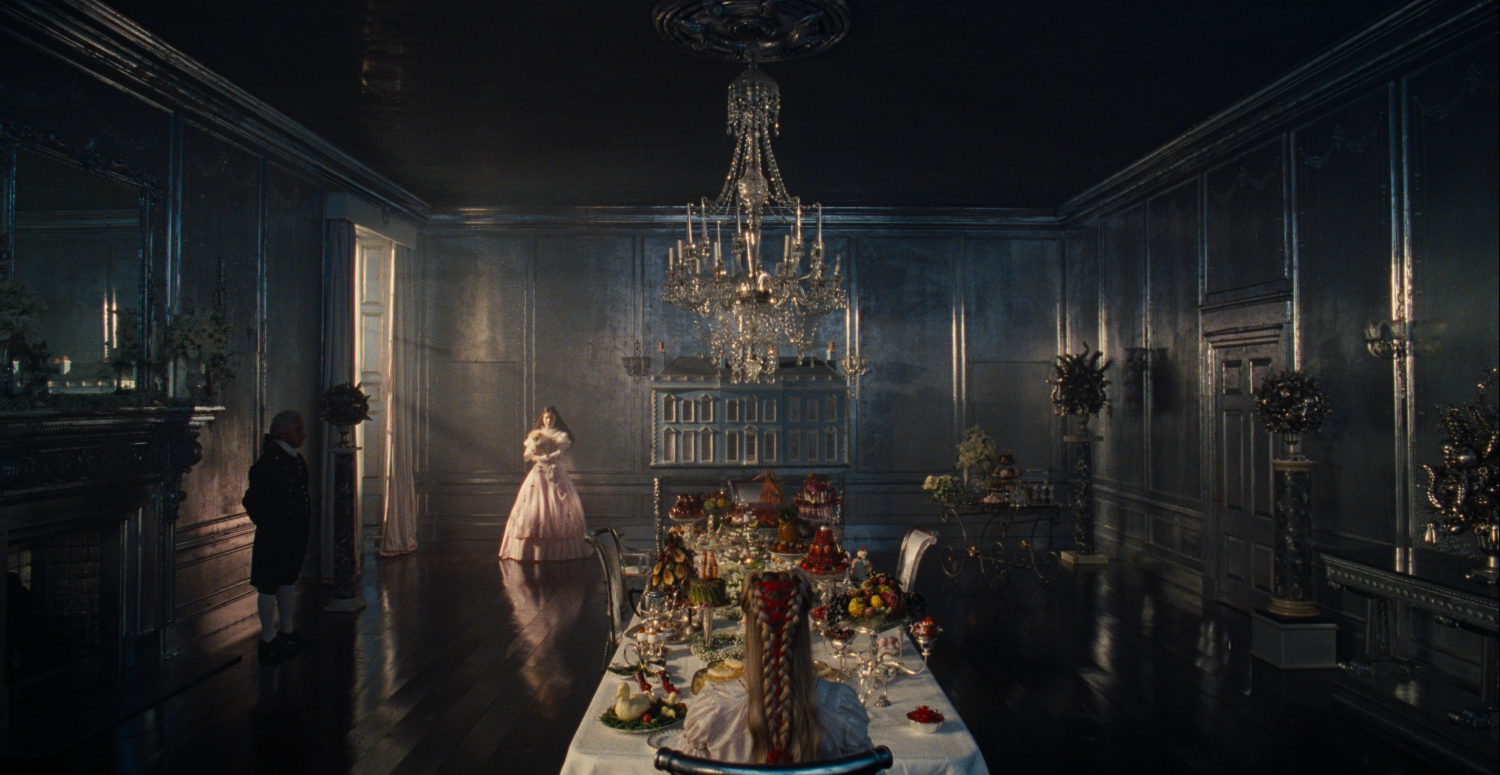
Malgré quelques bonnes idées innovantes comme une étouffante maison de poupées ou une scène d’introduction très suggérée qui annonce directement l’entrelacement et l’inévitabilité de l’amour et de la mort dans cette histoire, cette mise en scène moderne et cette sophistication visuelle masquent finalement une certaine superficialité. Non seulement le roman semble privé de ses ténèbres, mais l’adaptation moderne vendue comme sulfureuse et transgressive reste aussi malheureusement très prude sans emmener l’intrigue dans une direction dramatique vraiment nouvelle. Au final, les personnages tous plus ou moins odieux, se torturent de manière assez puérile sans élever tant que ça les enjeux mis en place dans une introduction assez laborieuse.
Résultat, si le film nous charme visuellement, il peine à pleinement nous emporter pour son récit et ses personnages, un peu à la manière du « Frankenstein » de Guillermo del Toro l’an dernier où costumes, décors et photographie étaient très colorés et stylisés sans que l’émotion ne s’échappe véritablement de la trame. Dans les deux cas, la forme prime clairement sur le fond. Ce qui pose profondément question lorsqu’il s’agit d’une adaptation très différente de l’œuvre originale. Oui elle est audacieuse, assumée et aboutie jusqu’à une fin assez réussie, mais reste alors la question de l’utilité d’une telle adaptation. Pourquoi garder le titre pour faire quelque chose de différent ? Ou du moins, pourquoi s’attacher autant à la trame globale quand on en change autant les ressorts et aboutissants ? Le risque est alors de déplaire autant aux amateurs littéraires de l’œuvre gothique qu’à ceux d’une pure romance pop. Peut-être davantage destiné à un public féminin, ce « “Hurlevent” » risque donc de trop restreindre son public-cible, surtout en étant vendu comme un produit de Saint-Valentin …
Raphaël Sallenave
This new adaptation of Emily Brontë’s 1847 novel “Wuthering Heights” comes out with an ambiguous promise: to modernize a Gothic classic by making it sexier, poppier, more confrontational. After the excellent surprise that was the post-MeToo revenge thriller “Promising Young Woman” and the venomous, amoral character study “Saltburn”, Emerald Fennell adapts the novel she cherished in her adolescence. While we may not necessarily find the same sharp narrative pivots that suddenly shifted her previous scripts into another dimension, we do find her taste for morally troubled, self-destructive characters evolving within a highly stylized universe. The British writer-director opts for bold, fairly radical adaptation choices – signaled by the quotation marks framing a version that presents itself as deliberately ‘free’ – while still preserving the core arc of the original novel, from the impossible love between Catherine and Heathcliff to its tragic outcome.
The cruel father remains, but the brother has disappeared from the story, along with many other characters, erasing much of the novel’s social revenge and ghostly dimension in favor of the central romance. Cruelty gives way to love, yet narrowing the plot around only a handful of figures also results in a more villainous portrayal of this impoverished, narcissistic, unstable woman, even as it slightly domesticates the wild, despair-ridden monster that is the adopted stable boy. The characters’ abuse and madness translate into a tormented relationship in which the two protagonists emotionally torture each other for years. There is no likable figure in this story, and that toxicity is transmitted to the audience through two current sex symbols who create a constant tension between deeply unappealing personalities and their tragic romantic aura.
Margot Robbie – who needs no introduction and also serves as producer – clearly does not give herself the flattering role, embracing a selfish, manipulative character, while Jacob Elordi (Euphoria; Priscilla; Saltburn) is surprising with a significant physical and vocal transformation. The strong supporting cast – Hong Chau (Showing Up; The Whale; The Menu), Owen Cooper (Adolescence), and Alison Oliver (Saltburn; The Order; Task), who already displayed an impressive range – leans into a deliberate exaggeration that matches the film’s distinctly teenage treatment, from desire-laden glances and dialogues to grand, cinematic embraces, all underscored by anachronistic tracks from pop star Charli XCX.
The film seeks to break convention and subvert English literary romanticism into a glamorous spectacle. This translates into highly colorful costumes and occasionally artificial-looking sets, as well as faster editing than the genre typically allows. While the film sometimes fails to linger on certain scenes – visually and/or narratively – it also offers a striking cinematography by Linus Sandgren (Babylon; Saltburn; La La Land), with splendid tableaux of wind-swept rocky landscapes and meticulously composed interiors structured around geometry and bold color contrasts. Each space conveys a distinct atmosphere, from the oppressive darkness and constant fog of the family estate to the brighter, more vibrant neighboring manor—two opposing realms within the same theatrical spectrum of unreality.
Despite a few genuinely inventive ideas – a suffocating dollhouse motif, or an opening scene that subtly announces the inevitable intertwining of love and death – this modern take and visual sophistication ultimately mask a certain superficiality. The novel seems stripped of its deepest shadows, and the supposedly sultry, transgressive adaptation remains surprisingly chaste, without steering the drama in a truly new direction. In the end, these largely obnoxious characters torment one another in a rather childlike manner, without significantly elevating the stakes introduced in a somewhat lackluster opening.
The result is a film that visually enchants but struggles to fully carry us through its story and characters, much like Guillermo del Toro’s “Frankenstein” last year, where costumes, sets, and cinematography were vivid and stylized with no emotion truly escaping the narrative core. In both cases, style clearly prevails over substance. That imbalance raises deeper questions when it comes to such a markedly different adaptation of a classic novel. Yes, it is bold, and formally accomplished – culminating in a fairly successful ending – but the question remains: Why keep the title to create something so different? Or, at the very least, why cling to the overall plot while reshaping so many of its mechanisms and implications? The risk is alienating both literary purists and those seeking a straightforward pop romance. Perhaps aimed more directly at a female audience, this “ “Wuthering Heights” ” may ultimately narrow its target audience too much – especially when marketed as a Valentine’s Day product.
Raphaël Sallenave