Le Studio Photo de Nankin
南京照相馆 – Nánjīng zhàoxiàng guǎn
(Dead to Rights)
2025/2026
FR EN
Malheureusement assez méconnu de nos jours en Occident, le massacre de Nankin, commis éhontément en décembre 1937 et janvier 1938, demeure pourtant d’une grande actualité en Extrême-Orient. Preuve en est avec le succès de cette super-production chinoise sortie l’été dernier dans l’Empire du Milieu qui en crispe plus d’un au Pays du Soleil Levant. Inspiré d’une terrible histoire vraie et de la terriblement vraie Histoire, « Le Studio Photo de Nankin » relate à travers le regard de ses personnages toutes les atrocités qui se sont succédé dans cette capitale assiégée lors de la seconde guerre sino-japonaise. Sans trop rentrer dans les détails, le massacre comptabiliserait environ 200 000 victimes (plus de 300 000 selon Pékin), des dizaines de milliers de viols et d’innombrables mutilations en tous genres.
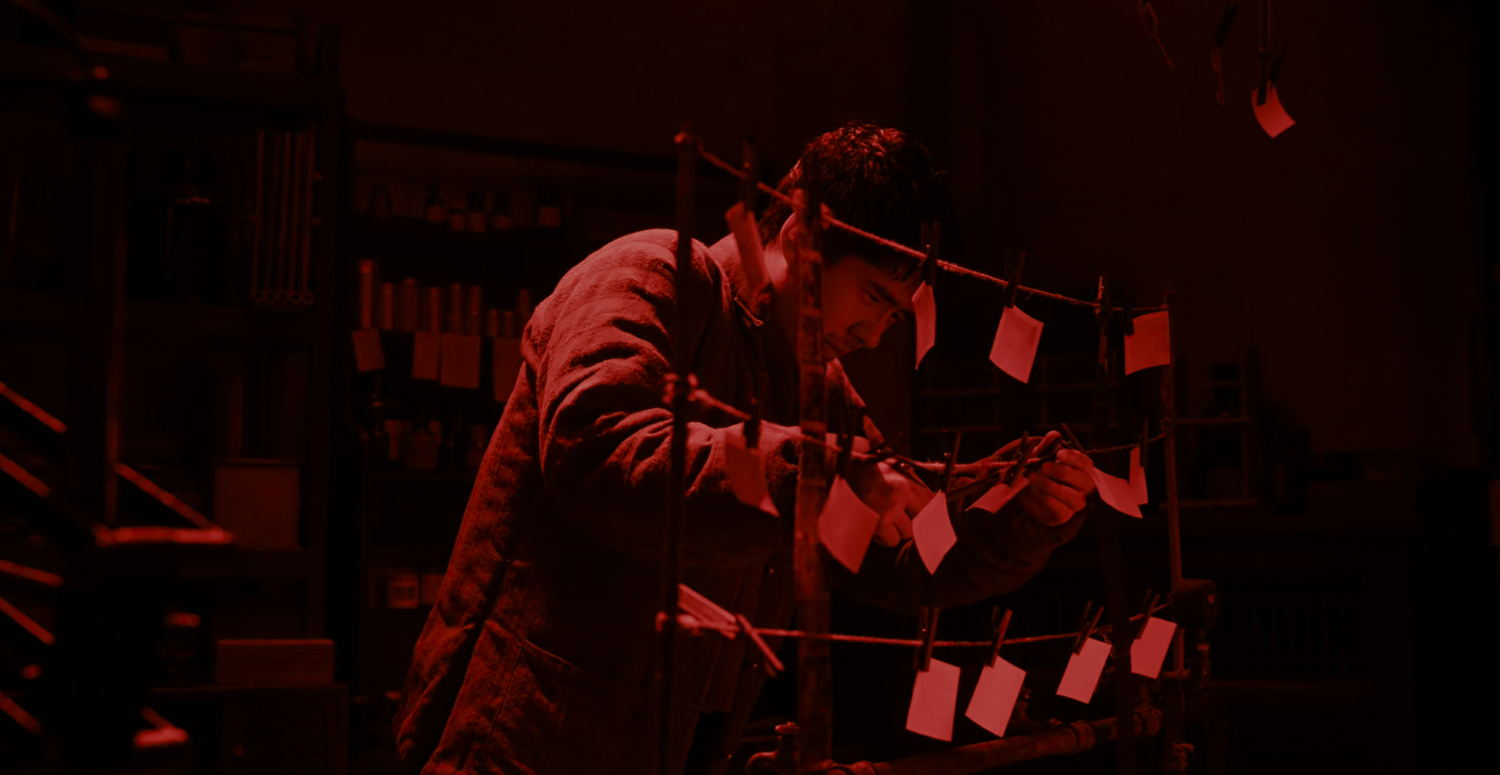
Et le tout a été bien documenté. D’où un récit qui se concentre sur une famille composite et de circonstance de civils chinois cachés dans un studio photo dont le patron improvisé est contraint de développer des clichés de l’armée japonaise sous l’occupation. Le film, clairement à charge et comprenant un soupçon parfois très insistant de nationalisme, ne lésine néanmoins pas sur une sur-exposition de scènes extrêmement choquantes et sanglantes, historiquement fondées – les chasses à l’homme, les incendies volontaires (de bâtiments comme d’êtres humains), les exécutions massives, les assassinats d’enfants et de nouveaux-nés, les viols à répétition et même un concours de décapitations.
Véritable blockbuster chinois, le long-métrage présente nombre d’effets spéciaux et d’excellentes reconstitutions d’une Nankin en ruines et exsangue. Et comme tout blockbuster qui se doit, le film manque quelque peu de subtilité, surtout au vu de son orientation [géo]politique. En revanche, les personnages et leurs choix sont très bien amenés, ni noirs ni blancs, à l’instar de cet homme jouant le rôle d’interprète pour l’armée nippone – le film étant par ailleurs bilingue. Le tout heurte et suscite la controverse, mais cela a le mérite de commémorer l’une des pires hécatombes asiatiques du XXe siècle.
Axel Chevalier
Unfortunately relatively unknown in the West today, the Nanking Massacre, committed shamelessly in December 1937 and January 1938, remains highly topical in the Far East. Proof of this is the success of this Chinese blockbuster released last summer in the Middle Kingdom, which has caused quite a stir in the Land of the Rising Sun. Inspired by a terrible true story and the terribly true history, “Dead to Rights” depicts, through the eyes of its characters, all the atrocities that took place in this besieged capital during the Second Sino-Japanese War. Without going into too much detail, the massacre is estimated to have claimed around 200,000 victims (more than 300,000 according to Beijing), with tens of thousands of rapes and countless mutilations of all kinds.
And it’s all been well documented. Hence a story that focuses on a makeshift family of Chinese civilians hiding in a photo studio whose improvised boss is forced to develop photographs of the Japanese army during the occupation. The film, clearly biased and with a sometimes very insistent hint of nationalism, nevertheless does not skimp on overexposure of extremely shocking and bloody scenes, historically accurate – manhunts, arson (of buildings and human beings), mass executions, the murder of children and newborns, repeated rapes, and even a decapitation contest.
This Chinese blockbuster features lots of special effects and excellent reconstructions of a ruined and bloodied Nanking. And like any blockbuster worth the label, the film lacks a certain subtlety, especially given its [geo]political stance. That said, the characters and their choices are very well developed, never black and white, like the man who acts as an interpreter for the Japanese army – the film being bilingual, by the way. The whole thing is shocking and controversial, but it does have the merit of commemorating one of the worst massacres in 20th-century Asian history.
Axel Chevalier