Le Temps des Moissons
生息之地 – Shengxi zhidì
(Living the Land)
Ours d’Argent (Réalisation) – Berlin
2025

FR EN
République Populaire de Chine, 1991. Dans une campagne bien isolée des dynamiques de modernisation que connaît l’Empire du Milieu depuis les années 1970, le jeune Chuang constate avec acuité les profonds changements et décalages que connaît son village. Ours d’Argent de la Meilleure Réalisation à Berlin en 2025, « Le Temps des Moissons » dépeint une Chine ô combien éloignée du modèle promu par Pékin, de sorte que le film, pourtant initialement autorisé par le gouvernement à concourir en festivals internationaux, n’a toujours pas de date de sortie dans son pays de production. Et ce n’est pas surprenant.
Tourné sur une année entière et décrivant littéralement un « lieu de vie » (titre original en mandarin) au milieu de ce qui semble être partout et nulle part, « Le Temps des Moissons » est un long-métrage âpre et terriblement déprimant. Car, à travers les yeux de Chuang mais pas uniquement, c’est toute une triste histoire et un profond sentiment de misère à l’état pur qui sont mis à l’écran. À commencer par l’existence même de Chuang, troisième rejeton de ses parents néo-citadins contraints de le cacher à la campagne et ne pas l’avoir déclaré à l’état civil afin de ne pas payer une seconde amende pour non-respect de la politique de l’enfant unique. Mais si seulement il n’y avait que ça…
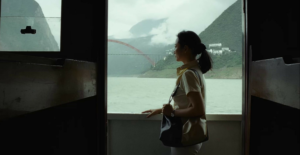
Composé en chroniques désolantes de la vie pastorale, le film narre et développe une panoplie de personnages et de sous-intrigues où l’extrême pauvreté est reine. De l’absence notoire de technologies modernes (à l’exception d’un seul téléviseur, d’un seul tracteur, d’un seul camion) au poids écrasant des traditions presque désuètes qui oblitèrent le malheur des villageois (les enterrements, les mariages, le Nouvel An) en passant par des trajectoires personnelles marquées par des contraintes insurmontables (les maigres récoltes, le manque d’argent, les arrangements négociés, le vieillissement, le handicap), tout parle de misère. Et ce avec une photographie picturale et un montage arythmique qui renforcent ce sentiment éprouvant d’une lente et épuisante transition vers un avenir pas si radieux. C’en est bellement anémiant.
Axel Chevalier
In 1991, in a rural area of the People’s Republic of China that had been largely isolated from the modernization that had swept through the Middle Kingdom since the 1970s, young Chuang keenly notices the profound changes and shifts taking place in his village. Winner of the Silver Bear for Best Direction at Berlin in 2025, “Living the Land” depicts a China that is so far removed from the model promoted by Beijing that the film, although initially approved by the government to compete in international festivals, still has no release date in its home country. And that’s not exactly a surprise.
Filmed over an entire year and literally describing a “place of life” (original title in Mandarin) in the middle of what seems to be everywhere and nowhere, “Living the Land” is a harsh and terribly depressing film. Through Chuang’s eyes, but not only through his, a sad story and a profound sense of pure misery are brought to the screen. Starting with Chuang’s very existence, the third child of his neo-urban parents, who were forced to hide him in the countryside and not register him with the civil authorities in order to avoid paying a second fine for non-compliance with the one-child policy. But if only that were all…
Made up of dismal chronicles of pastoral life, the film narrates and explores a range of characters and subplots where extreme poverty reigns supreme. From the glaring absence of modern technology (with the exception of a single television, a single tractor, and a single truck) to the crushing weight of almost obsolete traditions that obscure the villagers’ misfortune (funerals, weddings, New Year’s Day) to personal trajectories marked by overwhelming constraints (meager harvests, lack of money, negotiated arrangements, aging, disability), everything speaks of misery. And this is achieved with pictorial cinematography and arrhythmic editing that heighten the harrowing feeling of a slow and exhausting transition toward a not-so-bright future. It is beautifully exhausting.
Axel Chevalier