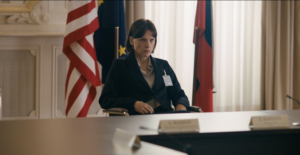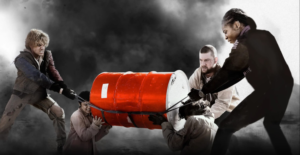
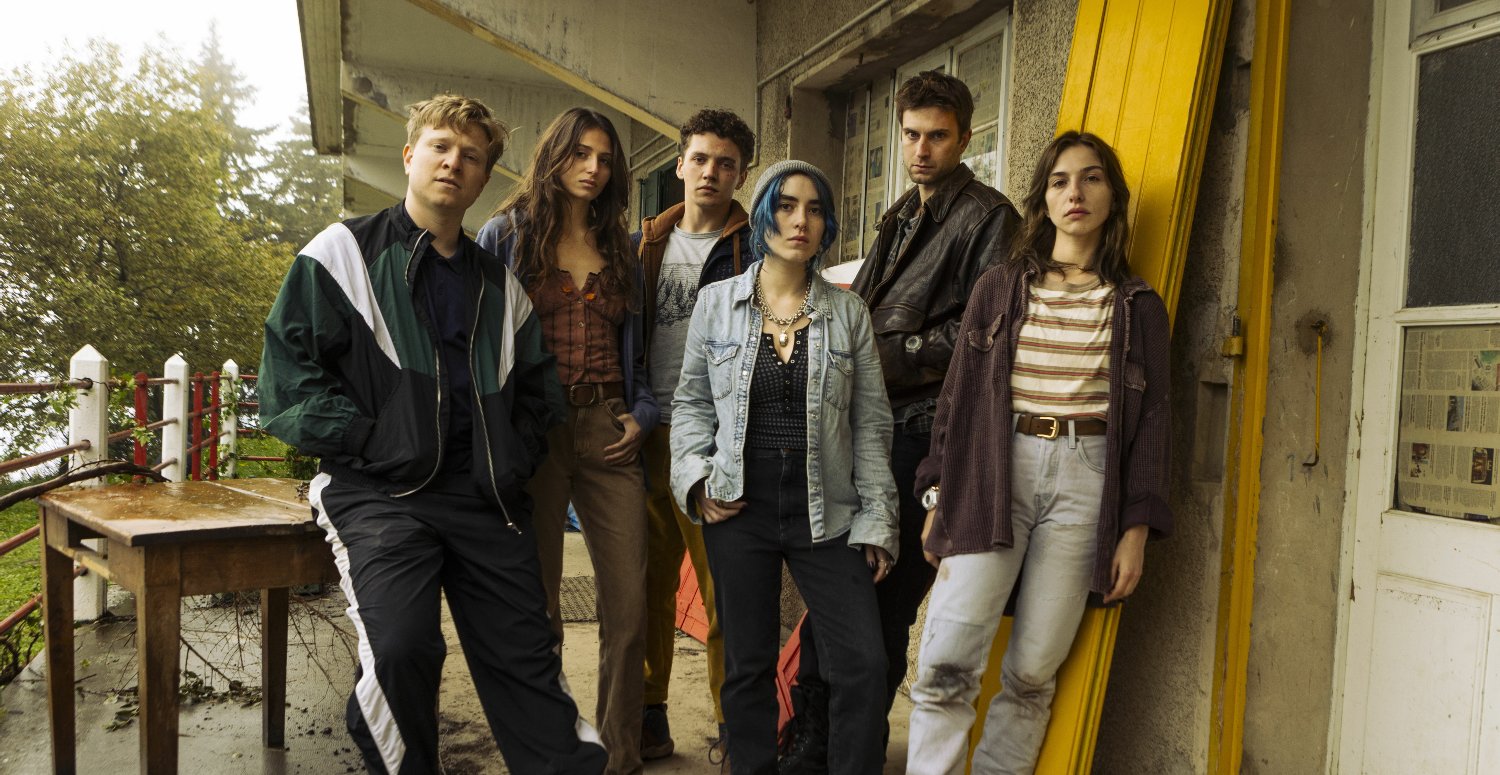
L’oiseau légendaire du titre de cette mini-série française symbolise un cycle de mort et de résurrection, c’est un vivant qui renaît de ses cendres qui fait ici référence à nulle autre que notre planète Terre dont les enjeux climatiques sont empêtrés dans une crise politique de conscience et de système. Diffusée sur France TV, cette série pluriculturelle et plurilingue (français, anglais, espagnol, allemand) européenne veut provoquer une prise de conscience en questionnant l’usage de la violence et les impasses de l’engagement face à l’urgence environnementale. Son récit s’articule ainsi sur un groupe de six jeunes militants écologistes qui pour des raisons différentes ne supportent plus d’être complice d’un capitalisme prêt à imploser et décident de ‘prendre les armes’ pour forcer la main des grands pollueurs. Ici en s’en prenant aux enfants de PDG de grands groupes industriels en pleine conférence à Annecy pour dénoncer le greenwashing et réclamer une rançon environnementale.
Ayant pour objectif d’interpeller la jeune génération, en leur proposant une nouvelle voie, « Phoenix » questionne ainsi la notion controversée d’écoterrorisme avec empathie et sans complaisance, sous la forme d’un thriller en pleine prise d’otage alpine (non, pas celle de Luca de Meo à Enstone). L’humanité va-t-elle enfin sortir du déni climatique ? Le recours à la violence peut-il ou doit-il devenir un moyen légitime ? Et de quelle violence parle-t-on ? En cherchant à équilibrer discours volontariste et facilité d’accès, la mini-série n’offre pas de réponses simples à ces questions complexes mais les explore aussi de manière très frontale et assez incomplète.
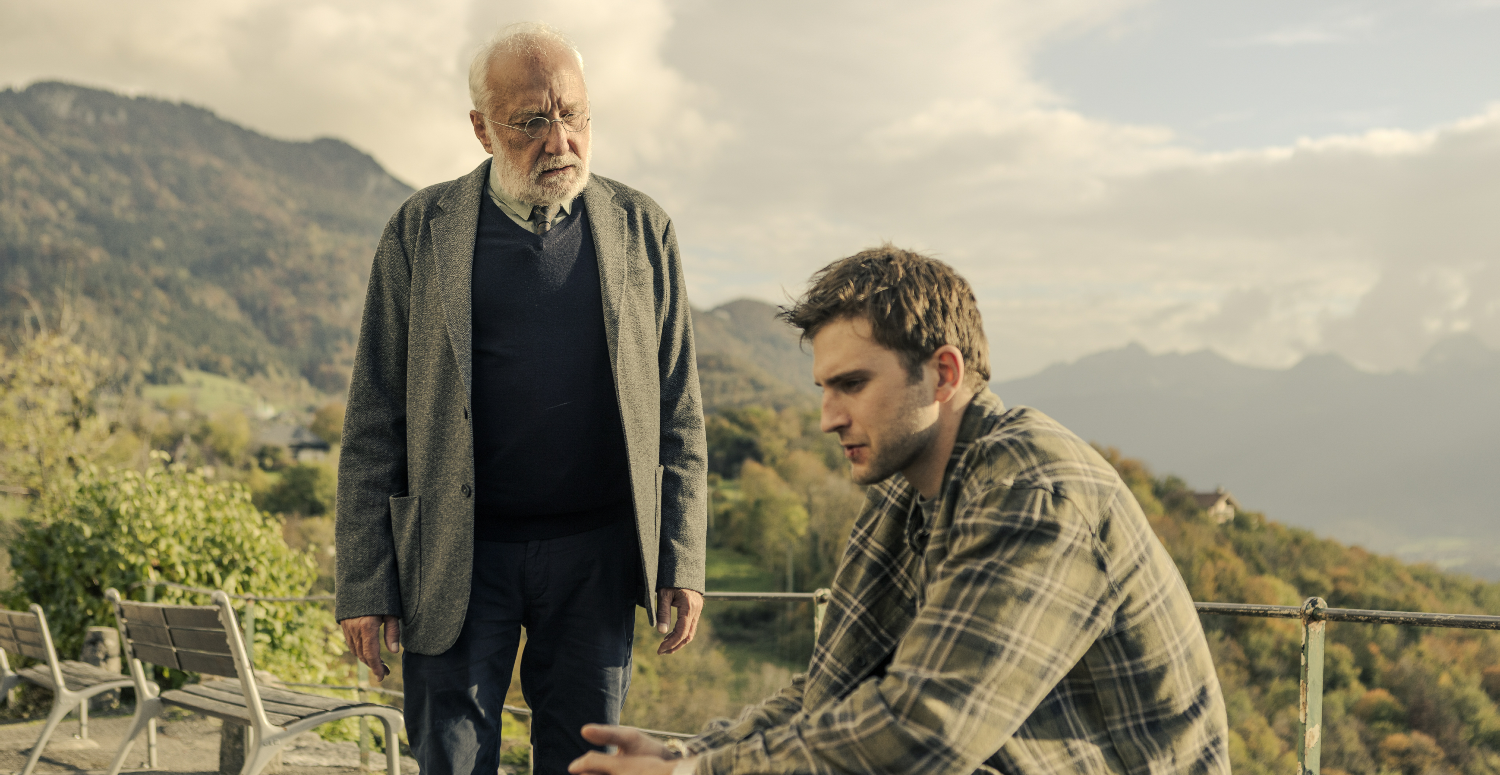
En visant un public adolescent avec un groupe de jeunes protagonistes, la série a peur de dérailler de son aiguillage grand public et délaisse souvent la construction de sa trame ou de ses scènes pour faire passer un message malheureusement assez simplifié, parfois schématique – ce qui est bien dommage vu la rareté des éco-fictions, contrairement à l’excellent film « Sabotage » sur une autre dimension de ces mêmes enjeux. Elle fait ainsi l’amalgame entre violence physique et matérielle, et surtout personnifie un problème beaucoup plus large et systémique. D’autant qu’elle met en scène des militants dits ‘radicalisés’ que l’intrigue ne pousse jamais vraiment dans leur retranchement pour questionner un peu leur moralité ou la bascule / l’ampleur de leur radicalité. Non, au fond aucun n’est réellement radicalisé, ce qui fait que la série ne peut au final pas vraiment poser les questions que son histoire effleure.
Le résultat global est donc très inégal, autant dans l’action et la mise en scène parfois caricaturales, que dans la direction d’acteurs un peu forcée. Tout n’y est pas parfaitement crédible, certains dialogues sont un peu clichés, la trame n’est pas structurée au mieux pour avoir un réel impact avec des révélations et des rebondissements parfois mal orchestrés, et les bribes d’un idéal révolutionnaire qui peut s’enliser dans l’emprise ou l’aveuglement ne font qu’apparaître occasionnellement telles une lointaine liberté guidant le peuple. Néanmoins, entre ses thématiques intéressantes, sa trame intrigante et ses interactions de personnages de qualité, notamment d’un point de vue linguistique avec de belles performances des jeunes acteurs Will Attenborough, Catalina del Rosario, Alva Schäfer et Pauline Pollmann, « Phoenix » réussit à nous captiver mais aura probablement du mal à nous marquer …