
Magellan
Magalhães
2025
FR EN
Fernand de Magellan (en portugais, Fernão de Magalhães ; en castillan, Fernando de Magallanes). Un nom qui inspire au rêve, au voyage, à l’exploration du monde, par-delà les mers et les océans. Magellan, c’est tout un mythe à l’héritage incontestable, tant dans les toponymes que dans l’Histoire – de la navigation comme des Grandes Découvertes. Et pourtant, la réalité a été tout autre, et ce film réalisé par le Philippin Lav Diaz l’illustre parfaitement.
Parce que derrière l’imaginaire collectif européen incarné et généré par cet homme de sang (mais pas toujours d’allégeance) portugais(e) se cachent de bien plus sombres récits. Le XVIe siècle a été certes celui d’un enrichissement matériel et (peut-être) culturel des déjà puissantes monarchies européennes, mais ce au détriment de dizaines de peuples et civilisations aux quatre coins du globe. Les rencontres entre explorateurs et indigènes ont rarement été pacifiques ; elles ont même souvent été ponctuées de bains de sang commis au nom d’une Couronne, d’un Dieu ou d’une Humanité très malléables – et les longs voyages de Magellan n’ont pas été des exceptions.
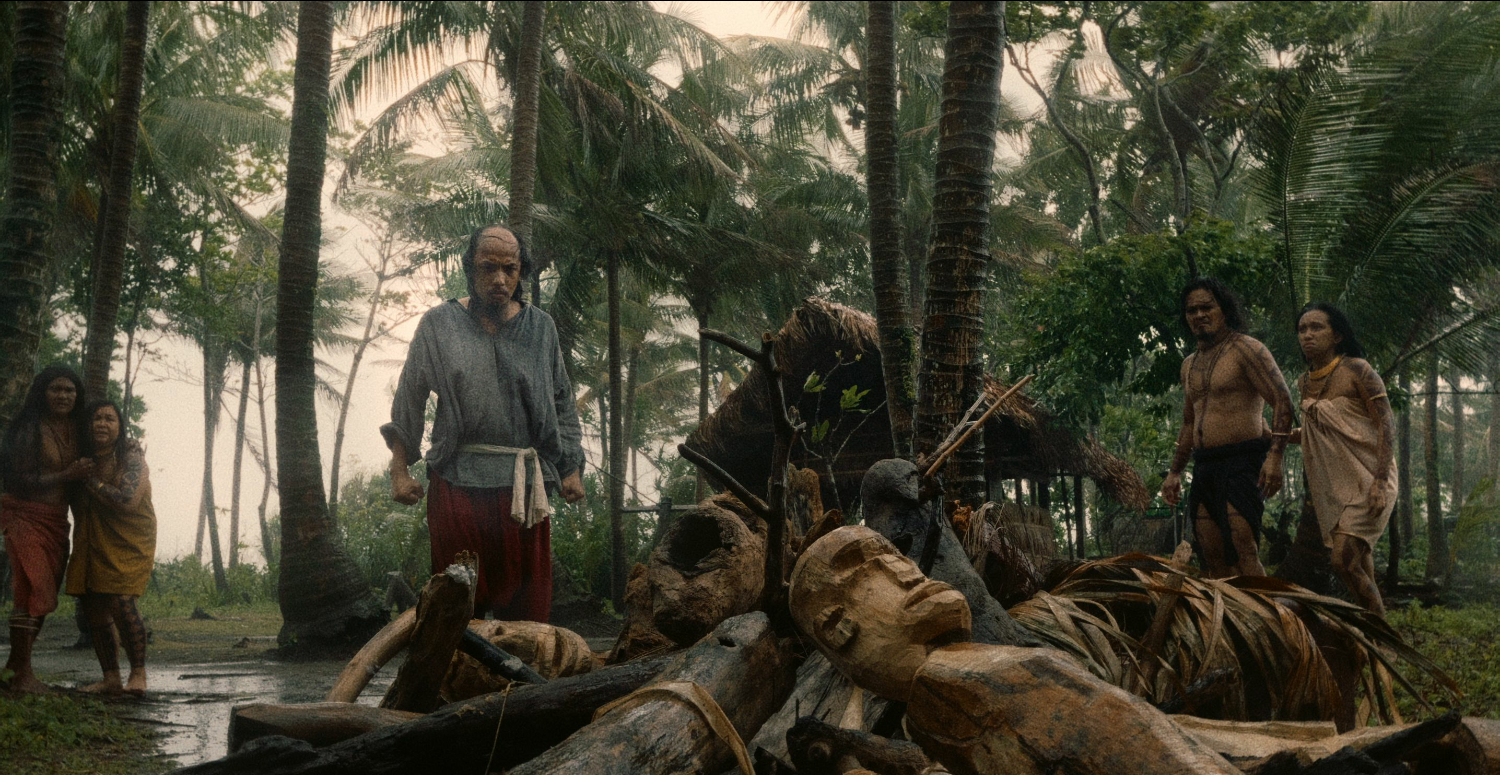
Le long-métrage – qui dure deux heures et trente-six minutes – est ainsi particulièrement éprouvant. Premièrement parce que les scènes exposées sont très loin d’être enchanteresses, entre situations cocasses, discours effrayants, dialogues existentiels, conjurations politiques et massacres abjects. Deuxièmement parce que le film est d’une longueur aberrante : les séquences (autant d’errance désespérée sur les flots que d’incompréhension inter-culturelle sur les terres) sont étirées inlassablement en plus d’être majoritairement taciturnes, de sorte que nous sommes emportés dans la neurasthénie par un constant et monotone fond sonore (forêt tropicale, pluie, vagues, vent, grincement des bateaux). Troisièmement parce que l’image en 4/3 est picturale : le travail sur les plans, les cadres et les couleurs crée de véritables tableaux aussi beaux que glaçants.
Le film, empreint d’un cynisme impudent (parfois presque comique), change de fait considérablement notre regard sur la circumnavigation inachevée de Magellan, dont la flotte qui a tant subi la violence du temps l’a ardemment répercutée sur des populations qui n’avaient (et n’ont toujours) rien demandé.
Axel Chevalier
Fernand Magellan (in Portuguese, Fernão de Magalhães; in Castilian, Fernando de Magallanes). This is a name that inspires dreams, travel, and exploration of the world, across seas and oceans. Magellan is a myth with an undeniable legacy, both in names and in history – from navigation to the Age of Discovery. However, the reality was quite different, as this film by Filipino director Lav Diaz perfectly illustrates.
Because behind the shared European imagination embodied and generated by this man of Portuguese blood (but not always allegiance) lie much darker stories. The 16th century was certainly one of material and (perhaps) cultural enrichment for the already powerful European monarchies, but this came at the expense of dozens of peoples and civilizations around the globe. Encounters between explorers and indigenous peoples were rarely peaceful; they were often fraught with bloodshed committed in the name of a highly changeable Crown, God, or Humanity – and Magellan’s long journeys were no exception.
The movie – which lasts two hours and thirty-six minutes – is particularly trying. Firstly, because the scenes depicted are far from enchanting, ranging from comical situations to frightening speeches, existential dialogues, political conspiracies, and abject massacres. Secondly, because the film is absurdly long: the sequences (as much about desperate wandering on the seas as about intercultural misunderstanding on land) are stretched out tirelessly and are mostly taciturn, so that they draw us into neurasthenia with a constant and monotonous background sound (rainforest, rain, waves, wind, the creaking of boats). Thirdly, because the 1:33 aspect ratio is very pictorial: the work on the shots, frames, and colors creates real paintings that are as beautiful as they are chilling.
The film, imbued with shameless cynicism (sometimes almost humorous) significantly changes our perspective on Magellan’s unfinished circumnavigation, whose fleet, having suffered so much from the violence of the weather, eagerly took it out on populations who had (and still have) done nothing to deserve it.
Axel Chevalier