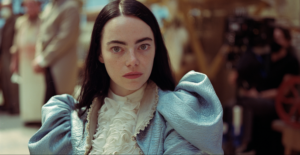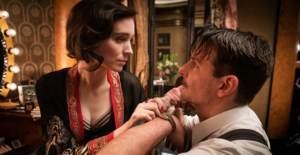

Œuvre originelle de l’autrice britannique Mary Shelley publiée il y a maintenant plus de deux cents ans, « Frankenstein ou le Prométhée moderne » est devenue non seulement un classique fondamental de la littérature, mais aussi du cinématographe dès les débuts de ce dernier. C’est donc le réalisateur Guillermo del Toro qui s’attaque cette fois-ci au roman, avec un long-métrage dans la veine de son univers fantastique et étrangement allègre.
Nous (re)voilà ainsi avec le Dr. Viktor Frankenstein qui, par le fruit d’un travail acharné (et bien sûr éthiquement discutable) donne vie à une Créature faite de lambeaux et de morceaux de cadavres récupérés çà et là. Mais la naissance de cette Créature et la réaction de Frankenstein face à sa réussite effrayent, émeuvent et surtout questionnent notre humanité.
Fidèle à l’atmosphère de ses précédents films, Guillermo del Toro nous emporte à nouveau dans des décors rétro-futuristes tout en couleurs qui paraissent à la fois kitsch et enchanteurs, aussi parce que le continuel mouvement de la caméra nous accompagne dans cette curiosité ornementale et paysagère – quoique peut-être au détriment des détails et de la complexité de certains lieux (en particulier l’imposante tour-laboratoire).
De cette chaleur (malgré le froid hivernal voire arctique de plusieurs scènes) découle évidemment une intrigue relativement joyeuse, teintée néanmoins de quelques passages malencontreux, à l’image des contes pour enfants. Frankenstein comme la Créature éprouvent ainsi des moments de vie, des péripéties et des sentiments auxquels l’on peut s’identifier, et le long-métrage conclut par des morales que l’on peut aisément déceler.
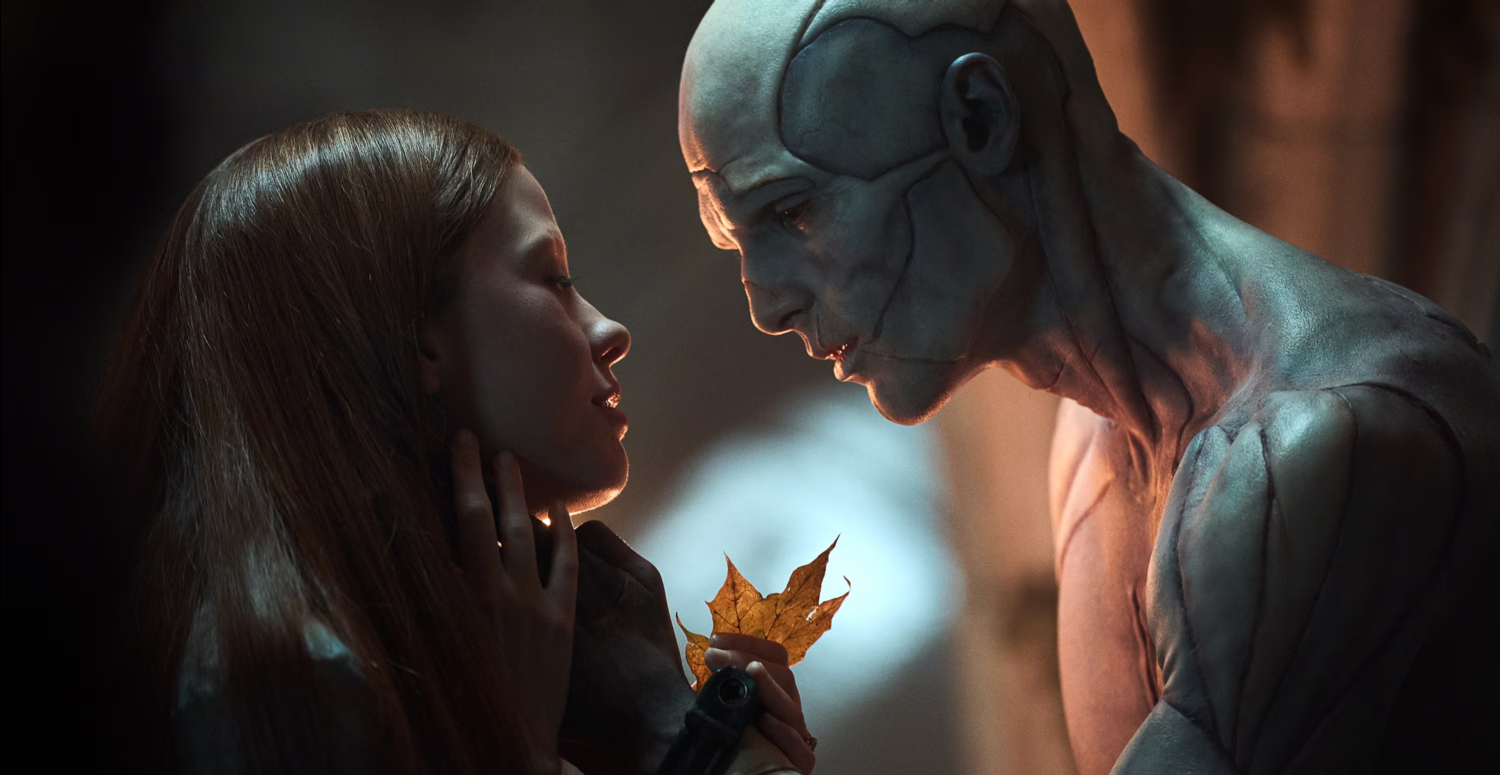
Toutefois, il s’agit d’une adaptation une nouvelle fois très libre du livre de Mary Shelley. Non pas que les choix de réalisation et de réécriture d’une intrigue au départ particulièrement tragique soient déplacés (ils demeurent assez cohérents et respectent même la structure originelle du roman), mais ils engendrent des écarts de narration quelquefois bancals et réduits à peau de chagrin. Le personnage très remodelé d’Elizabeth se cantonne par exemple presque à un cliché de l’Amour véritable et inatteignable, tandis que l’expressif et mortel Frankenstein s’efface au profit de la taciturne et increvable Créature, ce qui est une simplification regrettable d’une histoire qui est pourtant bien plus cruelle et bien plus profonde que ce que le long-métrage en remâche insipidement.
« Frankenstein » se rapproche par conséquent un peu trop de « La Forme de l’Eau », alors même que ce sont des récits diamétralement opposés ; c’est dommage. En somme, cette énième adaptation (égayante, et c’est pas si bête, encore une fois) présente des faiblesses scénaristiques, mais elle demeure belle visuellement – voire, si l’on fait abstraction du registre originel du roman, belle philosophiquement.
Axel Chevalier
Originally written by British author Mary Shelley and published over two hundred years ago, “Frankenstein: or, The Modern Prometheus” has become not only a timeless literary classic, but also a staple of early cinema. This time, director Guillermo del Toro takes on the novel with a film in line with his fantastical and strangely cheerful universe.
Here we are again with Dr. Viktor Frankenstein who, through hard work (and, of course, ethically questionable practices), brings to life a creature made from scraps and pieces of corpses collected here and there. But the birth of this creature and Frankenstein’s reaction to his success frighten, move, and above all, challenge our humanity.
Consistent with the atmosphere of his previous films, Guillermo del Toro once again takes us into colorful retro-futuristic sets that seem both kitsch and enchanting, partly because the camera’s constant movement draws us into this ornamental and landscaped curiosity – although perhaps at the expense of the details and complexity of certain locations (particularly the imposing tower-laboratory).
This warmth (despite the wintery, even arctic cold of several scenes) naturally gives rise to a relatively joyful plot, tinged nonetheless with a few ill-fated passages, much like children’s stories. Frankenstein and the Creature thus experience moments of life, adventures, and feelings with which we can relate, and the movie concludes with morals that are easy to grasp.
However, this is yet another very loose adaptation of Mary Shelley’s book. Not that the choices made in directing and rewriting what was originally a particularly tragic plot are inappropriate (they remain fairly consistent and even respect the original structure of the novel), but they do lead to some uneven and truncated narrative discrepancies. The heavily reworked character of Elizabeth, for example, is reduced to little more than a cliché of true and unattainable love, while the expressive and mortal Frankenstein fades into the background in favor of the taciturn and undying Creature, which is an unfortunate simplification of a story that is much crueler and deeper than what the movie blandly rehashes.
“Frankenstein” therefore comes a little too close to “The Shape of Water,” even though they are diametrically opposed stories, which is a shame. All in all, this umpteenth adaptation (which is uplifting, and not so bad, once again) has weaknesses in its screenplay, but it remains visually beautiful – and even, if we disregard the original tone of the novel, philosophically beautiful.
Axel Chevalier