
Rsg Production

Les Braises

 
(Ablaze)

2025

FR                   EN


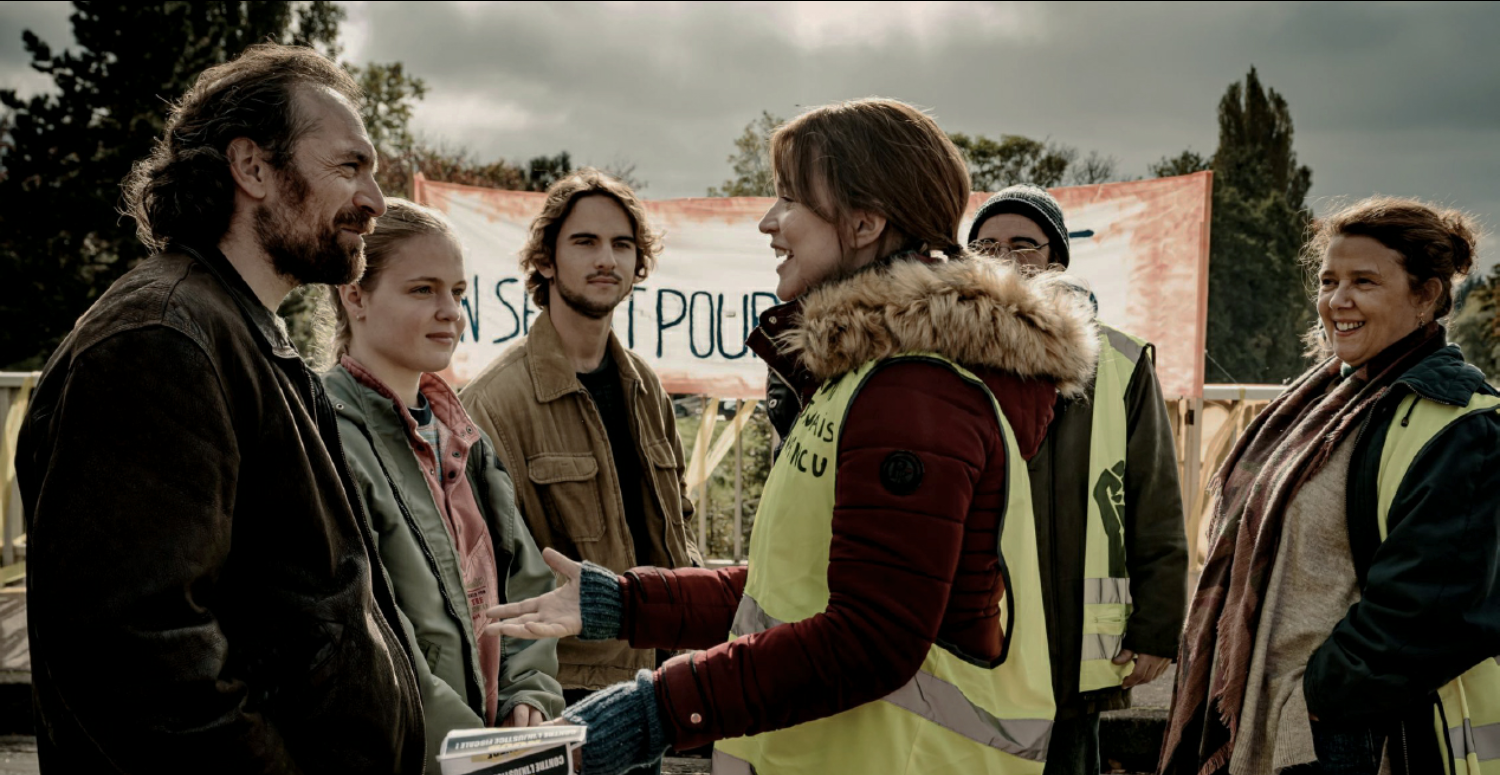
Sept ans après son apparition, le plus grand mouvement de contestation sociale de notre histoire récente fait son entrée dans la fiction cinématographique avec « Dossier 137 » sur les violences policières et « Les Braises » sur la nécessité de collectif dans l’engagement. Après s’être intéressé aux rouages et pièges de la politique locale dans « Les Promesses » où Isabelle Huppert et Reda Kateb incarnaient des politiciens du 93 en proie aux ressorts intimes de leur engagement respectif, Thomas Kruithof continue d’explorer les ressorts intimes de l’engagement en nous plongeant cette fois dans la France des ronds-points, mettant en lumière une France peu présente au cinéma, pas toujours en accord sur tout mais qui au fond se bat pour un avenir digne de ce nom.

Le film retranscrit bien sûr la naissance de ce mouvement en montrant comment les petits mépris accumulés alimentent une colère sociale avant que l’engagement qui en découle ne porte l’espoir d’un avenir meilleur et réinvente ainsi le mouvement collectif pour se faire entendre. Mais le film ne tente pas vraiment de réponse et ne plonge pas entièrement dans les enjeux politiques et sociaux du phénomène. Le cœur du sujet n’est tout simplement pas là. Ce n’est pas un film coup de poing sur le mouvement politique, c’est une histoire d’amour secouée par des luttes sociales. C’est au final, plus une étude du couple qu’un film sur les Gilets Jaunes. La force du collectif, la soif de justice et les divisions sont ainsi vues à travers le prisme de ce couple admirablement interprété par Virginie Efira (Revoir Paris ; L’Amour et les Forêts) et Arieh Worthalter (Le Procès Goldman ; Serre Moi Fort).
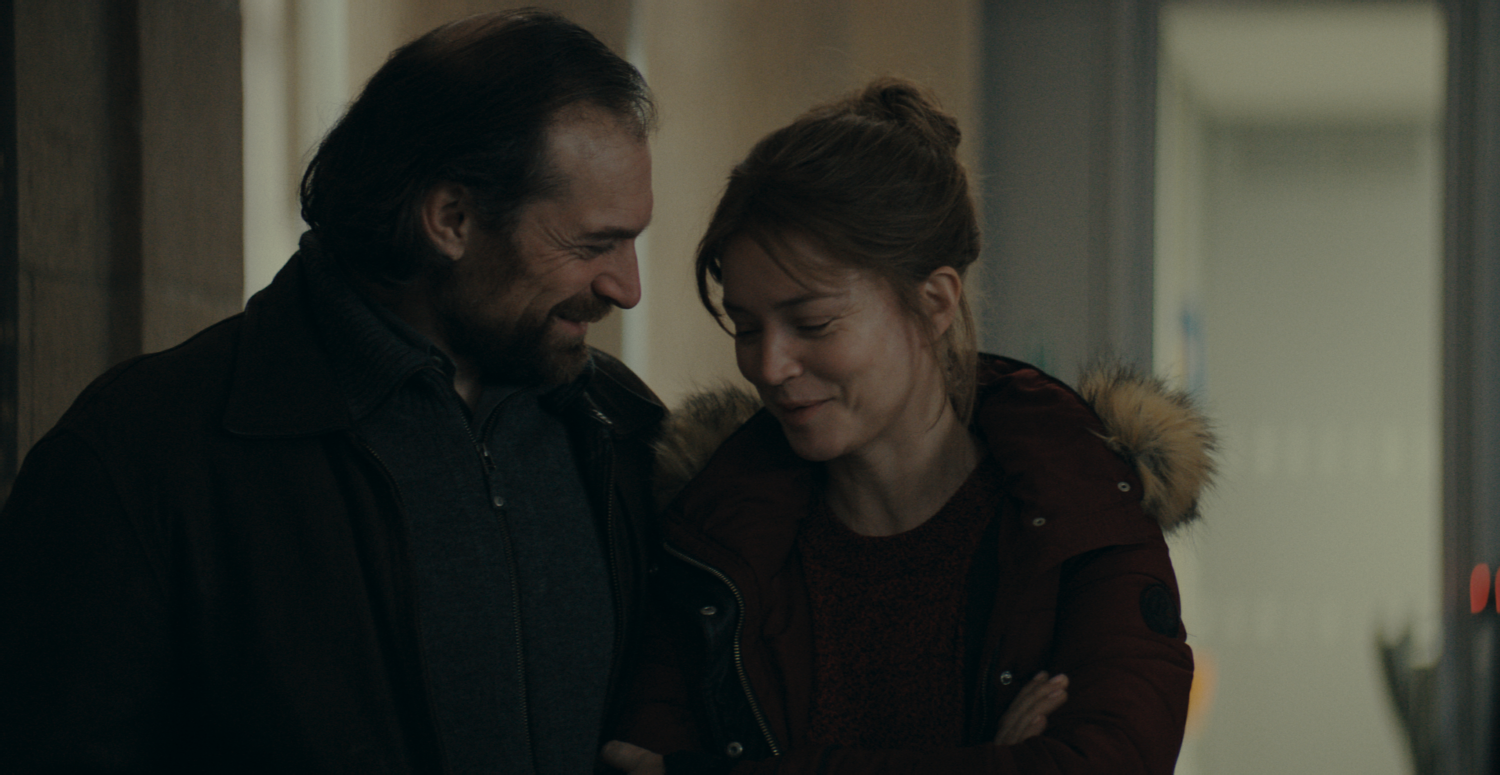
Le cadre d’une vie dure mais acceptée où l’amour est le ciment qui fait tenir l’ensemble, est posé dès le départ, d’abord dans l’espace intime avant d’entrer dans le milieu professionnel. Vingt ans de vie commune, deux gamins, une maison en construction, elle à l’usine avec ses horaires compliqués, lui au volant de son semi-remorque avec ses horaires décalés. Il est plutôt du genre laborieux-taiseux, quand elle, pas fainéante non plus, a plus de mal à se taire.

Quand surgit le mouvement des Gilets Jaunes, l’équilibre du couple vacille à mesure que la force du collectif et l’espoir d’un changement attirent inexorablement l’un des deux en périphérie de leur relation. Le scénario confronte ainsi à travers ce couple deux formes de survie, la robustesse intranquille de l’un face à la détermination pugnace de l’autre. Mais la famille peut-elle résister à un engagement corps et âme envers ces deux orbites ? Car c’est bien cette érosion du quotidien que décortique ce film à travers l’évolution de ses dynamiques de couple. Son titre polysémique renvoie alors à la fois aux combats à l’extérieur (en manifs) et à l’intérieur (les liens amoureux) du cocon familial. « Les Braises » parle de ce qui couve, ce qui hésite à flamber ou à s’éteindre, cet entre-deux constant entre tension sociale et fragilité intime.

C’est en cela un très bon film de couple qui conclut sur une belle fin appropriée et célèbre autant l’attachement que la solidarité dans un film qui peut surprendre pour sa douceur vis-à-vis d’un sujet exposant la dureté du monde.

Raphaël Sallenave

 

Seven years after it first surfaced, the largest social protest movement in our recent history is making its debut in cinema with “Case 137” on police violence and “Ablaze” on the need for collective action. After exploring the traps and cogs of local politics in “Promises”, in which Isabelle Huppert and Reda Kateb played politicians grappling with the personal motivations behind their respective commitments, Thomas Kruithof continues to explore the personal dynamics of commitment, this time taking us to the France of the roundabouts, bringing into the light a France that is rarely seen in cinema, not always in agreement on everything, but which is ultimately fighting for a future worth the name.

The film, of course, chronicles the birth of this movement by showing how small acts of contempt accumulate and fuel social anger before the ensuing commitment brings hope for a better future and thereby reinvents the collective movement to make itself heard. But the film does not really attempt to provide answers and does not delve fully into the political and social issues surrounding the social protest movement. The heart of the matter is simply not there. This is not a hard-hitting film about the political movement, but a love story thrown into turmoil by social struggles. Ultimately, it is more a study of the couple than a film about the Yellow Vests. The strength of the collective, the hunger for justice, and the divisions are thus seen through the lens of this couple, beautifully portrayed by Virginie Efira (Paris Memories; Just the Two of Us) and Arieh Worthalter (The Goldman Case; Hold Me Tight).

The setting for a tough but accepted life, where love is the glue that holds everything together, is established from the outset, first in their private life and then in their professional lives. Twenty years of living together, two kids, a house being built, her at the factory with her hectic schedule, him behind the wheel of his semi-truck with his irregular schedule. He is more of the hard-working, quiet type, while she, though not lazy either, finds it harder to keep her mouth shut.

When the Yellow Vests movement erupts, the couple’s balance falters as the strength of the collective and the hope for change inexorably draw one of them to the edges of their relationship. Through this couple, the script therefore pits two forms of survival against each other: the restless resilience of one against the fierce determination of the other. But can the family withstand a wholehearted commitment to these two orbits? For it is precisely this erosion of everyday life that the film dissects through the evolution of its couple dynamics. Its polysemic title refers both to the struggles outside (in demonstrations) and inside (romantic relationships) the family sphere. “Ablaze” speaks of what smolders, what is wavering between bursting into flames or dying out, that constant limbo between social tension and intimate fragility.

In this respect, it is a very good film about a couple, which concludes with a beautiful and appropriate ending, celebrating both attachment and solidarity in a film that may surprise viewers with its gentleness towards a subject that exposes the harshness of the world.

Raphaël Sallenave

Rien à Perdre
Les Promesses