

Qui a gagné le concours de la Défense ? Johan …. Otto von … Spre..ckelsen. Qui ? Johan Otto von Spreckelsen, un inconnu …
Nous sommes en 1983, lors du premier mandat de François Mitterrand qui lança ses grands travaux de la Pyramide de Pei au Louvre au Centre international de la Communication dans le quartier de la Défense dans la perspective des Champs-Elysées et de l’Arc de Triomphe. A la surprise générale, c’est donc un architecte danois méconnu qui remporte le concours et va rapidement devoir organiser la maîtrise d’œuvre autour de lui dans un constant bras de fer avec les pouvoirs politiques et financiers du pays.
Après « Borgo », Stéphane Demoustier revient donc au style de ses premiers films architecturaux en s’attaquant à la reconstitution de ce gigantesque chantier. Il réussit à faire éprouver sa vaste échelle dans quelques plans larges, peu nombreux mais très utiles et très bien réalisés sans un usage excessif d’effets spéciaux grâce aux nombreuses photos prises in situ à l’époque qui non seulement confèrent aux décors une grande véracité mais permettent aussi de limiter un budget raisonnable à hauteur de 6,5M€. Très documenté et riche de petits détails, bien que romancé, « L’inconnu de la Grande Arche » porte ainsi sur le dialogue souvent conflictuel entre un artiste et les pouvoirs publics, sur ces négociations autour des idées, des plans et des maquettes à valider dans les temps, et sur des exigences artistiques soumises aux aléas de la politique. Entre portrait solitaire et obsessionnel et satire institutionnelle, le film est d’abord empreint d’une certaine légèreté, d’une dose de dérision et de touches d’humour régulières avant de subtilement se faire de plus en plus inquiet et mélancolique à mesure que l’architecte ne se bat plus pour son design, mais pour des compromis écrasés sous une tonne d’un impératif béton de ‘rigueur’. Concis, clair et bien construit, « L’inconnu de la Grande Arche » s’ouvre et se ferme sur des tons opposés dans un traitement anti-spectaculaire qui filme plus l’érosion d’un homme que l’érection d’un monument
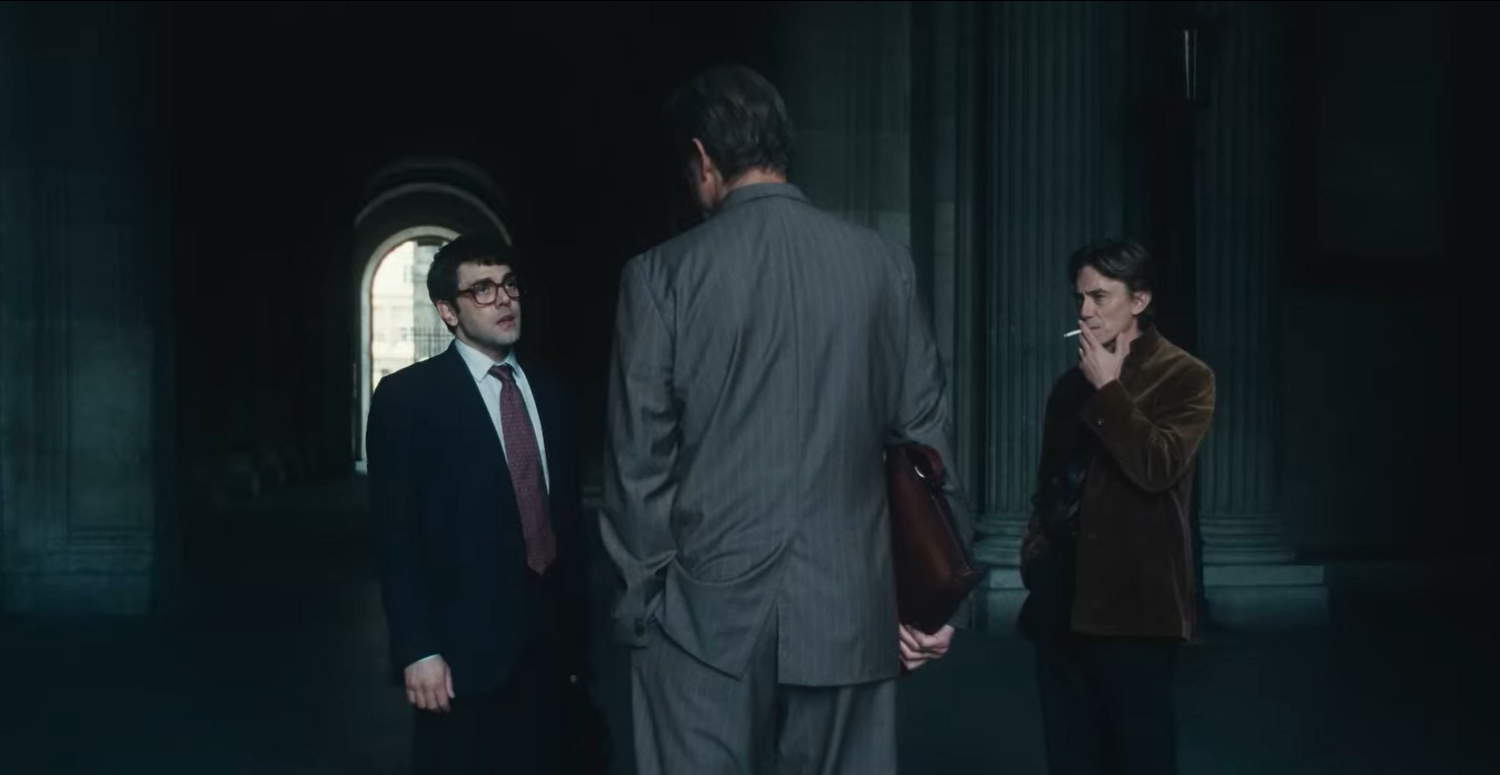
Là où il y a quelques mois « The Brutalist » cherchait à subjuguer par le monumental, le film de Demoustier ne cherche pas l’admiration et se concentre sur un angle plus humain : l’énigme Spreckelsen. Il ne filme pas la Grande Arche comme un sujet historique, mais comme l’objet d’un drame psychologique, le théâtre d’une bataille personnelle autour d’une ambition inassouvie. Le récit adapté du roman de Laurence Cossé ne se structure ainsi pas autour des étapes de construction du chantier, mais bien autour des batailles perdues d’une vision artistique confrontée à la réalité des faits (ce qui peut bien évidemment faire écho au travail du réalisateur dans le cinéma). C’est un processus d’effacement et dépossession que raconte cette histoire. Celle d’un homme fondamentalement incompris ou malentendu – qui continua à toujours nommer son œuvre le cube quand tout le monde autour de lui l’appelle l’arche – de sa première scène en harmonie avec une nature paisible dans son Danemark natal à sa dernière scène sur du béton de la mauvaise couleur dans un pays qui ne l’a pas adopté.
Porté par un excellent casting au sommet duquel Claes Bang (The Square) compose un héros consommé par l’œuvre de sa vie aux côtés de Swann Arlaud et Xavier Dolan en principaux collaborateur sans oublier la danoise Sidse Babette Knudsen et Michel Fau en président énigmatique, « L’inconnu de la Grande Arche » se distingue par son illustration de l’obsession artistique qu’il dépeint chez l’architecte en jouant constamment sur la forme carré du ‘cube’ de son format d’image en 4/3 à ses génériques. Ce choix donne à la mise en scène de Demoustier un style élégant et cohérent, bien qu’il aurait pu plus jouer des cadres architecturaux sur certains plans. Mais narrativement construit de manière plus simple que ses deux précédents longs-métrages, c’est une œuvre aboutie et soignée … peut-être même son meilleur !
Raphaël Sallenave
Who won the Defense district contest? Johan… Otto von… Spre…ckelsen. Who? Johan Otto von Spreckelsen, a complete unknown…
It was 1983, during François Mitterrand’s first term in office, when he kicked off his big building projects, from the Pei Pyramid at the Louvre to the International Communication Center in the La Défense district facing the Champs-Elysées and the Arc de Triomphe. To everyone’s surprise, it was a largely unknown Danish architect who won the competition and quickly had to organize the project management around him in a constant tug-of-war with the country’s political and financial powers.
After “Borgo”, Stéphane Demoustier returns to his early architectural films by recreating this gigantic building site. He successfully conveys its vast scale in a few wide shots, very effective and well executed without excessive use of special effects, thanks to the many photos taken on site at the time, which not only lend the sets a great deal of authenticity but also keep the budget down to a reasonable €6.5 million. Well-researched and full of small details, although fictionalized, “The Great Arch” focuses on the often-conflictual dialogue between an artist and the public authorities, on the negotiations around ideas, plans, and models to be approved on time, and on artistic demands subject to the vagaries of politics. Part solitary and obsessive portrait, part institutional satire, the film is initially imbued with a certain levity, a dose of derision, and regular touches of humor, before subtly becoming increasingly anxious and melancholic as the architect fights no longer for his design, but for compromises crushed under a ton of concrete imperatives of ‘rigor’. Concise, clear, and well-executed, “The Great Arch” opens and closes on contrasting notes in an anti-spectacular treatment that captures the erosion of a man rather than the erection of a monument (which its international title does not convey).
Where a few months ago “The Brutalist” sought to enthrall with its monumental scale, Demoustier’s film does not seek admiration and focuses on a more human angle: the enigma of Spreckelsen. He does not frame the Great Arch as a historical subject, but as the object of a psychological drama, the theater of a personal battle over unfulfilled ambition. The story, adapted from Laurence Cossé’s novel, is thus structured not around the stages of construction, but around the lost battles of an artistic vision confronted with the realities of the situation (which obviously echoes the director’s work in film). This story is about a process of erasure and dispossession. It is the story of a fundamentally misunderstood man – who continued to call his work ‘the cube’ when everyone around him called it “the arch” – from his first scene in harmony with the peaceful nature of his native Denmark to his last scene on concrete of the wrong color in a country that did not embrace him.
Driven by an excellent cast, at the top of which Claes Bang (The Square) plays a hero consumed by his life’s work alongside Swann Arlaud and Xavier Dolan as his main collaborators, as well as Danish actress Sidse Babette Knudsen and Michel Fau as the enigmatic president, “The Great Arch” stands out for its depiction of the architect’s artistic obsession, constantly playing on the square shape of the ‘cube’ from its 1:33 aspect ratio to its credits. This choice gives Demoustier’s direction an elegant and coherent style, although he could have exploited the architectural frames a little more in some shots. But, more simply structured narratively than his two previous feature films, it is a carefully crafted and accomplished work… perhaps even his best!
Raphaël Sallenave