Clair-Obscur
Passing
Best Supporting Actress – Spirit
Best Cinematography – Spirit
2021

FR EN
Un beau film d’auteur disponible sur Netflix !
A New York dans les années 1920, une femme noire voit sa vie bouleversée lorsqu’elle retrouve une ancienne amie d’enfance qui se fait désormais passer pour blanche. Leur nouvelle fréquentation menace alors leurs deux réalités soigneusement bâties …
L’actrice britannique Rebecca Hall (Vicky Cristina Barcelona ; The Town) passe derrière la caméra et nous propose un superbe premier film aux résonnances très intimes en adaptant le roman « Passing » de Nella Larsen publié en 1929. Le “passing”, c’est ce phénomène qui vit un certain nombre de Noirs américains se faire passer pour des Blancs afin d’échapper à la ségrégation. « Clair-Obscur » intègre donc tout d’abord une dimension didactique en abordant ce phénomène peu traité mais également des thématiques profondes : de la question raciale – bien évidemment – aux classes sociales en passant subtilement par la sexualité tout en jouant constamment sur les apparences.
Rebecca Hall nous offre un film personnel avec à la fois une histoire qui lui tient à cœur au vu de son histoire familiale mais aussi un film purement d’actrice qui tient beaucoup au jeu de ses deux rôles principaux et de la direction de son actrice-réalisatrice. Les deux amies sont interprétées par les excellentes Tessa Thompson (Creed ; Thor Ragnarok) et Ruth Negga (Loving ; Preacher) dans un style un peu surjoué très théâtral s’accordant au rythme lent de l’intrigue.
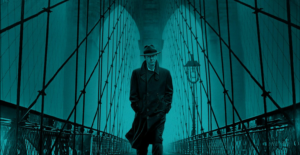
Mais « Clair-Obscur » se distingue avant tout par sa forme avec le choix d’un subtil noir et blanc particulièrement approprié à l’histoire et de nombreux jeux sur ces contrastes dans les transitions, les costumes ou les décors avec la neige par exemple ; ainsi qu’avec le choix du format 4/3 nous ramenant dans l’ambiance d’un film d’époque.
« Clair-Obscur » est donc un premier film d’une grande finesse au style épuré.
Raphaël Sallenave
A beautiful auteur film available on Netflix!
In New York City in the 1920s, a black woman’s life is upended when she reunites with an old childhood friend who is now posing as white. Their new acquaintance threatens both of their carefully constructed realities…
British actress Rebecca Hall (Vicky Cristina Barcelona; The Town) steps behind the camera and offers us a wonderful first film with very intimate echoes by adapting Nella Larsen’s 1929 novel “Passing”. The « passing » is this phenomenon which saw a certain number of American blacks passing themselves off as white in order to break away from segregation. “Passing” therefore features first of all a didactic dimension by tackling this little-treated reality, but also deep themes: from the racial issue – of course – to the social classes, while subtly touching on sexuality by constantly playing with appearances.
Rebecca Hall offers us a personal film with both a story that is close to her heart in view of her family history but also a pure film of an actress which relies a lot on the acting of the two leading roles and the direction of her actress-director. The two friends are played by the excellent Tessa Thompson (Creed; Thor Ragnarok) and Ruth Negga (Loving; Preacher) in a slightly overplayed, very dramatic style that matches the slow pace of the plot.
But “Passing” stands out primarily for its style with the choice of a subtle black and white particularly appropriate to the story and many uses of these contrasts in the transitions, costumes or scenery with the snow for example, but also with the choice of 1:33 aspect ratio bringing us back into the atmosphere of a vintage film.
“Passing” is therefore a first film of great finesse with a refined style.
Raphaël Sallenave