La Voisine Idéale
The Perfect Neighbor
[Documentaire]
Directing Award (Documentary) – Sundance
Special Mention (FACT) – Copenhagen
Best Documentary Feature – Spirit
2025
FR EN
Ce documentaire innovant sur la forme nous plonge dans une histoire pourtant assez banale à première vue, au gré d’une affaire de voisinage qui empire jusqu’au fait divers. C’est l’histoire d’une femme vivant seule dans un quartier de famille nombreuses d’Ocala, une suburb plutôt mixte et pauvre, dérangée par tous les bruyants enfants de ses voisins. Cette ‘voisine idéale’ est ce que les Américains appellent en argot une ‘Karen’, autrement dit une femme de classe moyenne qui s’empresse de se plaindre, râler, critiquer, exiger, surveiller, bref une femme qui s’insurge de tout. C’est surtout, ici, une femme vulnérable, qui a déjà connu la violence, la voit désormais partout, et appelle la police tous les quatre matins pour ses conflits de voisinage.
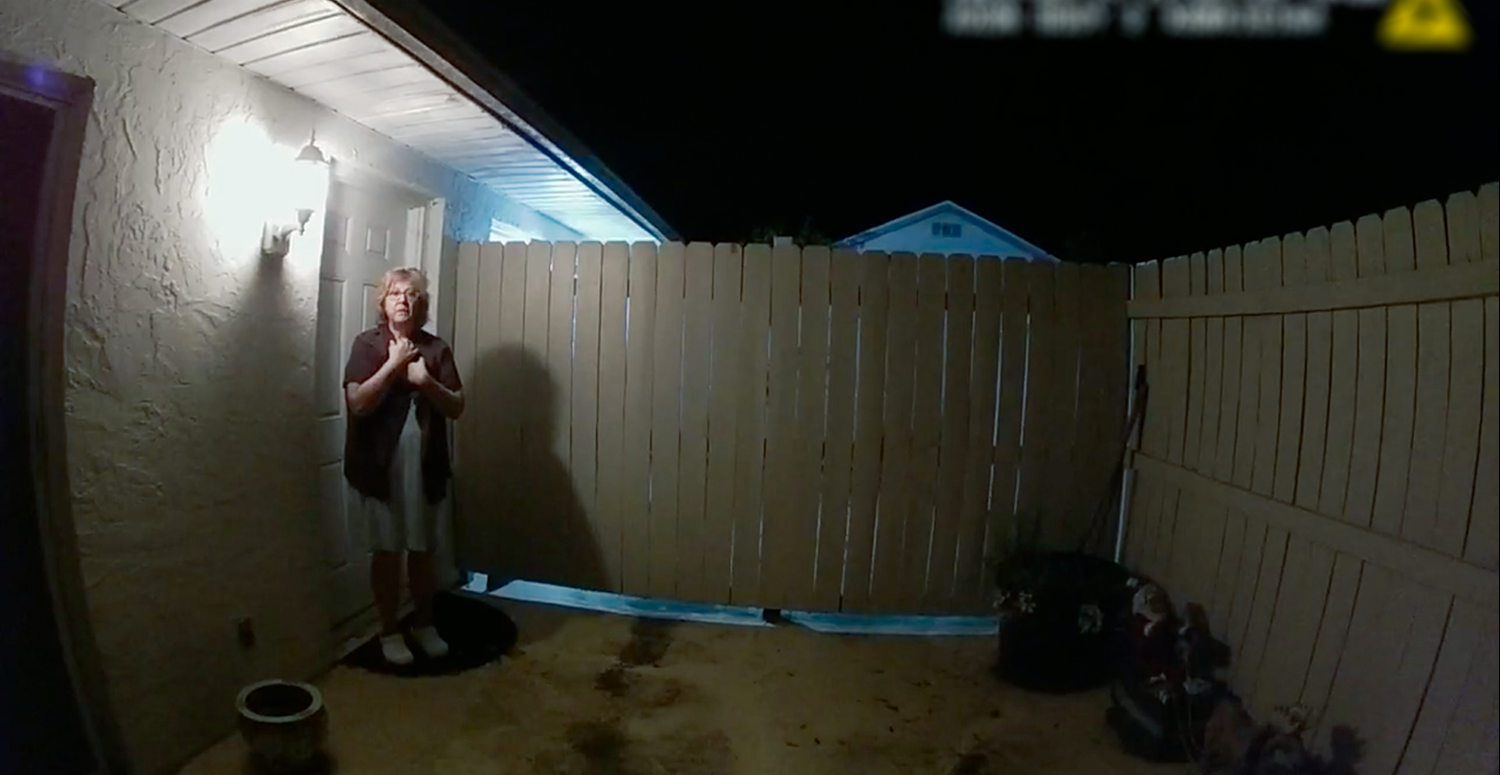
Mais si ce documentaire est réellement impressionnant c’est pour sa narration qui n’utilise aucune voix-off et se limite exclusivement aux bodycams – ces caméras corporelles obligatoires chez les policiers aux États-Unis – et caméras de vidéosurveillance de la police mettant ainsi le spectateur en condition en temps réel pour un degré supplémentaire d’authenticité qui le rend d’autant plus intrigant. La réalisatrice Geeta Gandbhir laisse ainsi totalement parler les images en remontant le fil de l’escalade sur plus de deux ans avec ces policiers qui ne cessent d’être appelés sur les lieux. C’est un concept simple et radicalement efficace qui fut primé à Sundance pour ses choix de ‘mise en scène’ dans la sélection et le montage des différents points de vue de policiers nous donnant un aperçu global sans jamais créer la moindre longueur. C’est en cela, aussi un thriller tendu et poignant.
Mais en exploitant cette surabondance d’images – caméras de police & de surveillance ou photos et vidéos prises directement sur place – « La Voisine Idéale » s’inscrit dans une dynamique de neutralité, jusqu’à ce que cette dernière s’efface sur la fin pour poser question. Car le film raconte un espace américain invivable, une Amérique gangrénée par la paranoïa, le racisme, et l’incapacité à partager l’espace. Il questionne non seulement la loi floridienne stand-your-ground-law, et montre une culture des quartiers résidentiels où cohabitent sans loyer commun les notions de propriété privée et de vivre ensemble : un véritable quartier des libertés à l’américaine, somme toute.
Raphaël Sallenave
This original documentary takes us into a story that may seem pretty ordinary at first, about a neighborhood dispute that gets worse and worse until it turns into a news story. It’s about a woman who lives alone in a neighborhood with lots of families in Ocala, a pretty mixed and poor suburb, and is bothered by her neighbors’ noisy kids. This ‘perfect neighbor’ is what Americans slangily refer to as a ‘Karen’, in other words, a middle-class woman who is quick to complain, grumble, criticize, demand, and watch over others – in short, a woman who takes offense at everything. But above all, here, this is a vulnerable woman who has already experienced violence, now sees it everywhere, and calls the police every other day about her neighborhood quarrels.
But what makes this documentary truly impressive is its narration, which uses absolutely no voice-over and relies exclusively on bodycams and police surveillance cameras, putting viewers in real-time situations for an extra degree of authenticity that makes it all the more fascinating. Director Geeta Gandbhir therefore lets the footage speak for itself, piecing together the escalation over more than two years with these police officers who are constantly being called to the scene. It’s a simple and radically effective concept that won an award at Sundance for its ‘directorial’ choices in selecting and editing the different points of view of the police officers, giving us an overall picture without ever creating any drag. In this respect, it is also a tense and harrowing thriller.
But by drawing on this overabundance of images – from police and surveillance cameras or photos and videos taken directly on the spot – “The Perfect Neighbor” initially adopts a neutral stance, until this approach gradually fades away towards the end, raising questions. This is because the film depicts an unbearable American environment, an America plagued by paranoia, racism, and an inability to share space. It not only calls into question Florida’s stand-your-ground law, but also shows a culture of residential neighborhoods where the notions of private property and community living coexist without common ground: in a nutshell, a true neighborhood of American-style freedoms.
Raphaël Sallenave