Flee
[Documentaire]
Best World Documentary – Sundance
Grand Prix & Meilleure Musique – Annecy
Best Independent Animated Film – Annie
Best International Independent Film – BIFA
Best Documentary & Best Editing – Denmark
Best Sound & Best Score – Denmark
2021/2022
FR EN
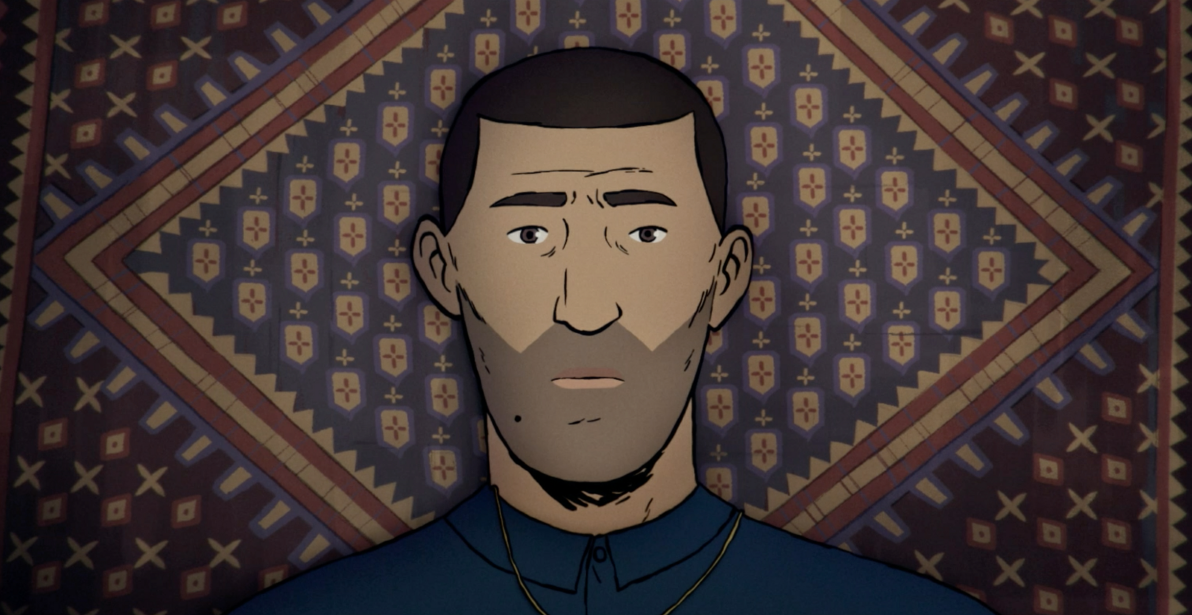
Rares sont les documentaires d’animation – on pense notamment à « Persepolis » de Marjane Satrapi ou « Valse avec Bashir » d’Ari Folman –, mais encore plus rares sont les films aussi forts, aussi terrifiants et à la fois aussi durs et magnifiques que « Flee » ! Ce très bel objet hybride et multilingue réalisé par le Danois Jonas Poher Rasmussen mêle une narration en animation à quelques images d’archives venant préciser le contexte du long périple entre Kaboul et l’Europe d’un jeune Afghan fuyant les Taliban. C’est un portrait-hommage délicat et humain qui donne la parole à un migrant et fait écho à tous les exodes d’hier et d’aujourd’hui …
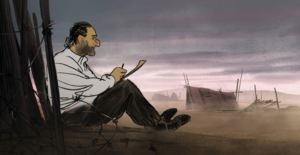
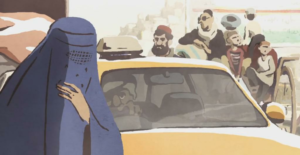
Sur de belles musiques du groupe Low Roar, le film joue avec différentes formes d’animation (supervisées par Kenneth Ladekjaer et Jess Nicholls), de la plus chatoyante à la plus inquiétante, pour reconstituer le passé et illustrer ce long périple différemment entre ce qui est du ressort de la mémoire, de l’imagination et du traumatisme. Certaines séquences semblent ainsi tout droit sorties d’un cauchemar quand d’autres apparaissent rotoscopées à partir de scènes filmées, notamment lors des entretiens dont les enregistrements vocaux constituent le cœur de la narration. L’animation est ainsi non seulement justifiée pour retranscrire ce témoignage, mais aussi pour retranscrire la façon dont le narrateur le raconte.
Car « Flee » nous raconte non seulement une histoire humaine mais fait aussi office de séances de psychanalyse pour son narrateur qui se confie pour la première fois. Le titre fait en effet référence à la fois à la fuite d’un pays en guerre, mais aussi à l’abandon d’une identité qu’il s’est forcé de taire. Le film croise ainsi plusieurs sujets, de l’immigration – bien sûr – à l’homosexualité, en passant par les guerres, la corruption et la clandestinité. C’est une histoire de traumatisme et de résilience qui appuie sur le côté psychologique de cette exhumation du passé et son influence sur la relation avec les autres. Il y a un véritable désespoir qui irradie cette œuvre très puissante qui touche en plein cœur.
Raphaël Sallenave
Animated documentaries are rare – Marjane Satrapi’s “Persepolis” and Ari Folman’s “Waltz with Bashir” certainly spring to mind – but films as powerful, terrifying, and at the same time as harsh and beautiful as “Flee” are even rarer! This beautiful hybrid, multilingual film by Danish director Jonas Poher Rasmussen combines an animated narrative with archive footage that provides context for the long journey from Kabul to Europe undertaken by a young Afghan on the run from the Taliban. It is a delicate and humane portrait and tribute that gives a voice to a migrant and resonates with all the exoduses of yesterday and today…
Featuring beautiful music by the band Low Roar, the film plays with different forms of animation (under Kenneth Ladekjaer and Jess Nicholls’ supervision), from the most dazzling to the most disturbing, to recreate the past and illustrate this long journey in different ways, drawing on memory, imagination, and trauma. Some sequences therefore seem straight out of a nightmare, while others appear to be rotoscoped from filmed scenes, particularly during the interviews, whose voice recordings provide the core of the narrative. The animation is thereby warranted not only to convey this story, but also to convey the way in which the narrator tells it.
Because “Flee” not only tells a human story, but also acts as a form of psychological therapy for its narrator, who is opening up for the very first time. The title then refers both to fleeing a country at war and to abandoning an identity that he has forced himself to conceal. The film thus covers several topics, from immigration – of course – to homosexuality, as well as war, corruption, and clandestinity. It is a story of trauma and resilience that emphasizes the psychological aspect of this unearthing of the past and its impact on relationships with others. There is a real sense of despair that radiates from this powerful picture, which cuts deep to the heart.
Raphaël Sallenave