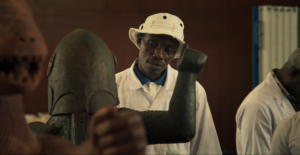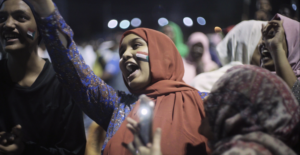
Voilà un documentaire pas comme les autres qui mêle histoire politique et musicale aussi bien dans le fond que dans la forme en abordant à la fois l’indépendance du Congo, le rôle trouble de l’ONU et le poids du jazz dans cette géopolitique des grandes puissances. Si les atrocités commises par la Belgique durant la colonisation sont désormais largement reconnues, la période entourant l’indépendance (30 juin 1960) du Congo reste encore souvent abordée à demi-mots. « Soundtrack to a Coup d’État » nous replonge ainsi en pleine guerre froide dans ce pays en proie à la guerre civile et aux sous-sols riches en ressources naturelles attisant les ingérences occidentales. Le Congo fut en effet le premier fournisseur de minerais pour tous les grands conflits du XXe siècle ainsi que pour les technologies modernes. Mais cet héritage colonial est ici mis en parallèle des mouvements pour les droits civiques aux USA où le jazz est vu à la fois comme un outil de lutte politique et comme un instrument de propagande démocratique avec de nombreux artistes utilisés comme ‘ambassadeurs du jazz’, autrement dit, comme ‘cheval de Troie’ pour la CIA …
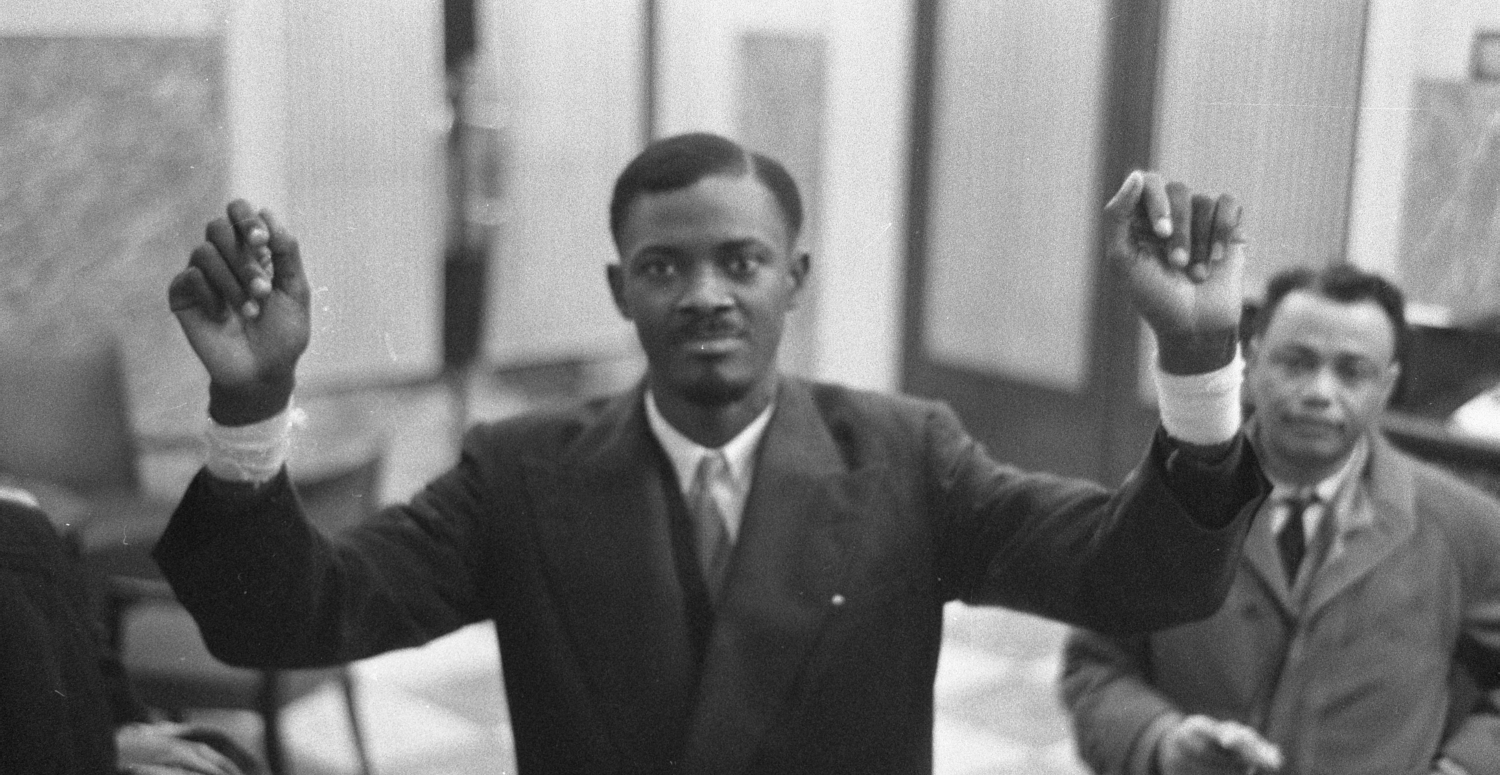
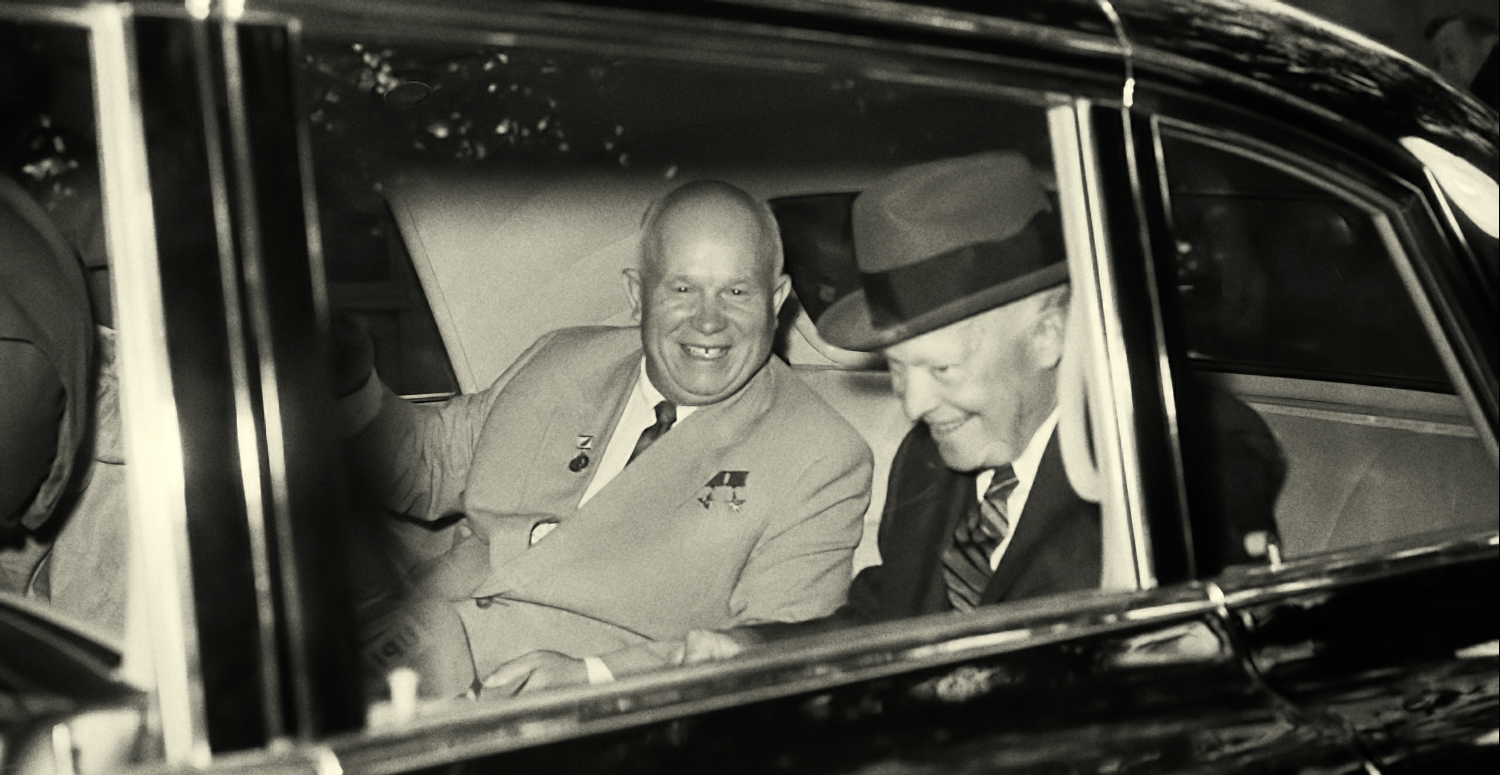
Présenté à Sundance début 2024 et nommé aux Oscars, ce documentaire s’impose donc comme une œuvre pluridisciplinaire mettant en perspective de manière inédite une page cruciale de l’histoire de la décolonisation dans un enchevêtrement d’intérêts illustrant les liens étroits entre l’économie minière du Katanga, et les négociations onusiennes face à l’avènement d’un mouvement panafricain naissant et l’élargissement du mouvement des non-alignés après l’entrée de seize nouveaux membres aux Nations Unies faisant (dangereusement) pencher l’organisation vers le Sud global. L’étourdissant travail de recherches et de documentation de Johan Grimonprez entrelace ainsi une multitude d’images d’archives pour plonger dans cette matière historique au gré de témoignages de figures marquantes et oubliées, de tous les grands jazzmen de l’époque aux politiques impliqués comme Patrice Lumumba, Kwame Nkrumah, ou la moins connue mais non moins centrale Andrée Blouin, ainsi qu’Eisenhower et Khrouchtchev se livrant un redoutable bras de fer géopolitique (parfois très théâtral), sans oublier Malcolm X et sa conférence de Bandung à Harlem.
Ces multiples sujets sont ainsi abordés à travers une multitude de sources où beaucoup d’éléments se mélangent, des innombrables images d’archives, bien évidemment, aux différents styles de jazz évoqués rythmant le documentaire d’une musique quasi non-stop, auxquels il faut ajouter les voix-off des personnages historiques ainsi que de nombreuses citations de leurs témoignages qui sont retranscrites à l’écran. D’autant que si le documentaire suit principalement un chapitrage sur l’année 1960 au cœur du récit, la narration fait des allers-retours chronologiques sur plus d’une décennie tout en insérant de brefs éléments contemporains à l’image de certaines pubs de géants de la Tech illustrant les conséquences encore visibles des minerais du conflit congolais. Cet impressionnant travail de montage – autant visuel que sonore – embrasse donc, et de manière assez appropriée, une forme free jazz, libre de toute linéarité, de didactisme, et de cadre thématique rendant l’expérience assez exigeante.
Mené tambour battant sur une cinquantaine de standards de jazz, « Soundtrack to a Coup d’État » est un documentaire très construit qui développe un cadre narratif bien spécifique en bouclant par exemple la boucle sur le duo Abbey Lincoln & Max Roach, ou en jouant sur la pipe qui n’en est pas une (de Magritte) pour signifier qu’un discours en cache un autre. Le lien entre Congo et jazz se crée aussi au montage en illustrant par exemple les voyages d’Andrée Blouin des images et des musiques de Nina Simone et en portant la voix de ses témoignages par une chanteuse également belgo-congolaise. C’est ainsi un film rigoureux et instructif sur le fond qui s’avère donc aussi très original et audacieux sur la forme en entremêlant musique & politique et art & histoire.
Raphaël Sallenave
Here is a documentary unlike any other, combining political and musical history in both substance and style, addressing Congo’s independence, the murky role of the UN, and the influence of jazz in the geopolitics of the great powers. While the atrocities committed by Belgium during colonization are now widely recognized, the period up to Congo’s independence (June 30, 1960) is still often glossed over. “Soundtrack to a Coup d’État” takes us back to the height of the Cold War in a country ravaged by civil war and rich in natural resources, fueling Western interference. The Congo was indeed the leading supplier of minerals for all the major conflicts of the 20th century, as well as for modern technologies. But this colonial legacy is here juxtaposed with the civil rights movements in the US, where jazz was seen both as a tool for political struggle and as a vehicle for democratic propaganda, with many artists being used as ‘jazz ambassadors’, or, in other words, as ‘Trojan horses’ for the CIA…
Presented at Sundance in early 2024 and nominated for an Oscar, this documentary stands out as a multidisciplinary work that offers a unique perspective on a crucial chapter in the history of decolonization, weaving together a web of interests that illustrates the close links between Katanga’s mining economy and UN negotiations in the face of the emergence of a nascent pan-African movement and the expansion of the non-aligned movement after the entry of sixteen new members into the United Nations, which (dangerously) tilted the organization toward the Global South. Johan Grimonprez’s stunning research and documentation work intertwines a multitude of archival images to delve into this historical material through the testimonies of prominent and forgotten figures, from all the great jazz musicians of the time to the politicians involved, such as Patrice Lumumba, Kwame Nkrumah, or the lesser-known but no less central Andrée Blouin, as well as Eisenhower and Khrushchev engaged in a dreadful geopolitical power struggle (sometimes very theatrical), not to mention Malcolm X and his Bandung conference in Harlem.
These multiple topics are thus addressed through a multitude of sources where many elements are mixed together, from countless archive images, of course, to the different styles of jazz mentioned, giving the documentary an almost non-stop musical beat, to which must be added the voice-overs of historical figures and numerous quotes from their testimonies, which are transcribed on screen. Although the documentary mainly follows a chapter structure based on the year 1960 at the heart of the narrative, the narration jumps back and forth chronologically over more than a decade, while also inserting brief contemporary elements such as ads from tech giants illustrating the still visible consequences of the ores from the Congolese conflict. This impressive editing work – both visual and audio – appropriately embraces a free jazz form, free of any linearity, didacticism, or thematic boundaries, making for a rather challenging experience.
Set to a lively soundtrack of around fifty jazz standards, “Soundtrack to a Coup d’État” is a carefully crafted documentary that develops a very specific narrative framework, for example by bringing the story full circle with the duo Abbey Lincoln & Max Roach, or by playing on the pipe that is not a pipe (by Magritte) to suggest that one speech conceals something else. The connection between jazz and the Congo is also brought to life in the editing, for example by illustrating Andrée Blouin’s travels with images and music by Nina Simone and by having her testimonies voiced by a singer who is also Belgian-Congolese. The result is a film that is both meticulous and enlightening in substance, while also proving highly original and daring in style, interweaving music and politics & art and history.
Raphaël Sallenave