
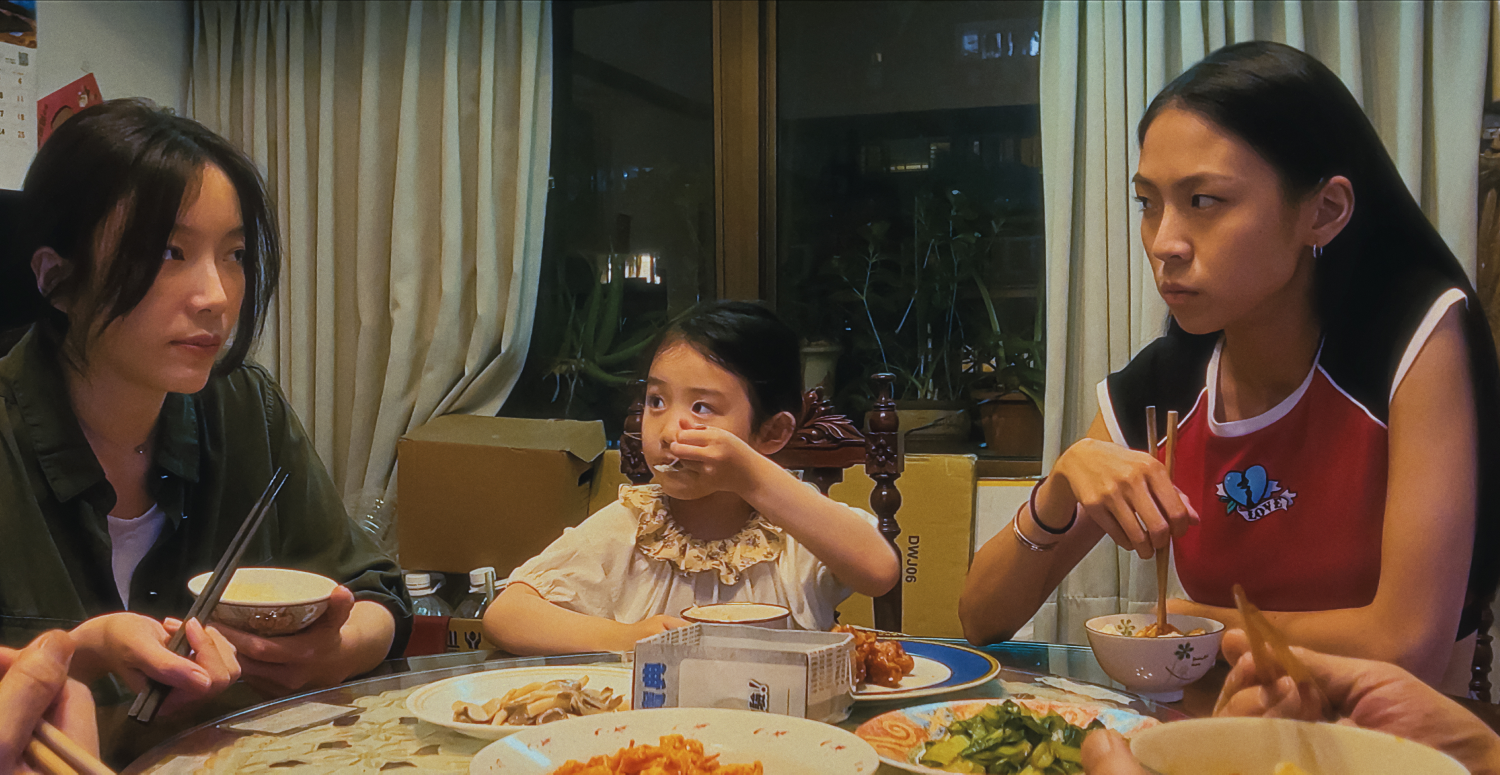
Collaboratrice de longue date de Sean Baker, avec lequel elle réalise le documentaire « Take Out » en 2004 – sur le quotidien harassant d’un livreur sans papiers chinois à NYC – avant de co-écrire et produire ses films, Shih-Ching Tsou réalise cette fois son premier film en solo avec cette immersion féminine en plein Taipei. Après sa Palme d’Or l’an dernier, le cinéaste américain a à son tour co-écrit le scénario, produit et monté « Left-Handed Girl ». On retrouve d’ailleurs quelques éléments de son style, que ce soit visuellement dans le côté pop, vibrant, coloré et notamment filmé à l’iPhone (Tangerine), ou narrativement avec une histoire solidement ancrée dans le réel sur la précarité et l’exploitation des femmes depuis le point de vue des enfants (The Florida Project) mais débordant d’invention et d’humour où les galères d’argent ravivent les fractures générationnelles et familiales.
La réalisatrice met ainsi en scène l’arrivée à Taipei d’une mère célibataire accompagnée de ses deux filles avec pour projet d’ouvrir un stand restaurant au cœur du foisonnant marché nocturne de la capitale taïwanaise. C’est un triple portrait – principalement raconté sous le double point de vue des sœurs, l’une qui travaille en bonne volonté d’indépendance de fille aînée comme ‘betel nut beauty’, quand sa cadette à la bouille craquante vadrouille selon ses envies et questionne sa propre déviance en utilisant sa main gauche (d’où le titre) – au gré des tourments familiaux et des pressions financières pour conserver sa place dans un marché si prisé.
C’est ainsi le récit intime d’une famille totalement féminine (au point que le frère soit absent) qui peint un portrait de femmes à la fois social et sensible où chacune doit composer à son niveau avec les non-dits, préjugés et injonctions au sein d’une famille qui repose bien sur elles, mais privilégie toujours les hommes. « Left-Handed Girl » aborde donc la place de la femme et le poids des traditions patriarcales à Taïwan, mais s’impose aussi comme un film sur la culture du secret, notamment chez les femmes où la maternité y est vécue comme un lien compliqué. Quelle que soit la génération, chaque personnage principal cache ainsi quelque chose mettant en lumière la peur du jugement ou du rejet social qui rend primordial de sauver la face, en particulier dans la culture chinoise. Cette oppression sociale et héritée de génération en génération atteint alors son apogée dans une magnifique conclusion particulièrement forte.
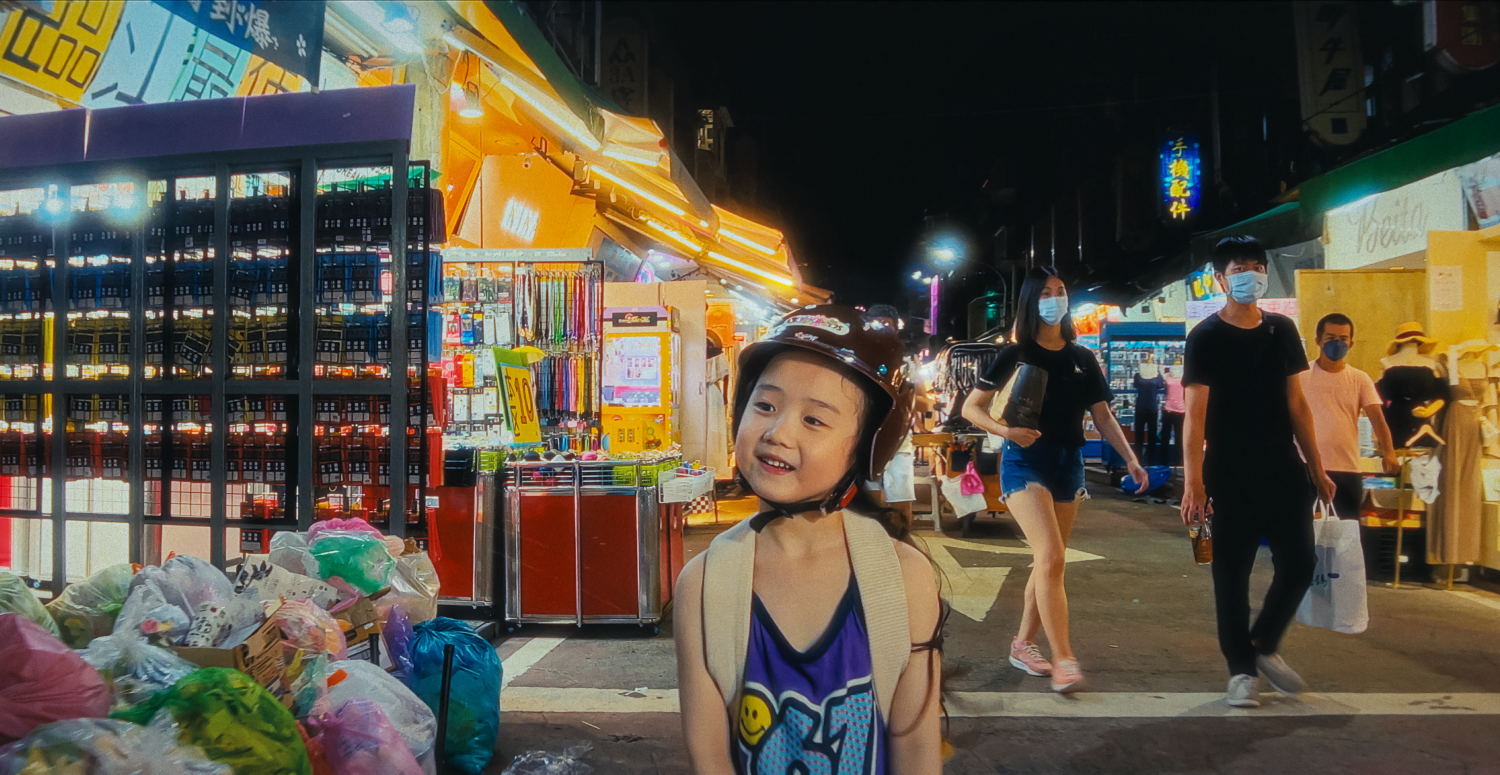
Mais plus qu’une immersion familiale, « Left-Handed Girl » c’est avant tout une formidable immersion citadine au cœur de Taipei, qui ne joue certes pas tant que ça sur les cadres, mais plutôt sur la frénésie et le fourmillement notamment de sa vie nocturne. L’image est ainsi saturée de lumières, de couleurs vives et de néons au gré d’un rythme dynamique que ce soit lorsque la cadette (filmée à hauteur d’enfant) déambule dans le marché ou lorsqu’on embarque sur le scooter de l’aînée. Souvent tourné en grand angle pour capturer un maximum d’informations dans l’image, le film s’attarde aussi sur des petites choses du quotidien qui font la particularité de l’île et l’ancrent ainsi dans ce cinéma de la réalité. Réalisé avec un mini-budget et une équipe très minimaliste, « Left-Handed Girl » nous marque ainsi par l’authenticité du décor et l’immersion sensorielle qu’il procure au sein de la métropole, sans oublier une remarquable justesse d’interprétation !
Raphaël Sallenave
A long-time collaborator of Sean Baker, with whom she made the documentary “Take Out” in 2004 – about the grueling daily life of an undocumented Chinese delivery driver in NYC – before co-writing and producing his films, Shih-Ching Tsou now directs her first film on her own with this female dive in the heart of Taipei. After winning the Palme d’Or last year, the American filmmaker in turn co-wrote the screenplay, produced, and edited “Left-Handed Girl”. Some elements of his style can in fact be found here, whether visually in the pop, vibrant, colorful aspect, especially shot on iPhone (Tangerine), or narratively, with a story firmly rooted in reality about the precariousness and oppression of women from the perspective of children (The Florida Project), but overflowing with creativity and humor, where financial struggles reignite generational and family rifts.
This is the story of a single mom who moves to Taipei with her two daughters and plans to open a food stall in the bustling night market of the Taiwanese capital. This is in fact a triple portrait – told mainly from the dual perspective of the sisters: the elder sister, who works hard to gain independence as a “betel nut beauty,” while her younger sister, with her cute face, wanders around as she pleases and questions her own left-handedness (hence the title) – amid family turmoil and financial pressures to maintain her place in such a sought-after market.
It is thus the intimate story of an all-female family (to the point that the brother is not even there) that paints a portrait of women that is both social and sensitive, where each one must deal in her own way with the unspoken, prejudices, and dictates within a family that relies heavily on them but still puts men first. “Left-Handed Girl” therefore addresses the place of women and the weight of patriarchal traditions in Taiwan, but also stands out as a film about the culture of secrecy, particularly among women, where motherhood is experienced as a complicated bond. Regardless of their generation, each main character hides something, highlighting the fear of judgment or social rejection that makes saving face essential, particularly in Chinese culture. This social oppression, passed down from generation to generation, then reaches its climax in a stunning and particularly powerful finale.
But more than just a family experience, “Left-Handed Girl” is above all a wonderful city experience in the heart of Taipei, which doesn’t focus so much on the frames but rather on the frenzy and bustle of its nightlife in particular. The picture is therefore saturated with lights, bright colors, and neon signs, following a dynamic pace, whether it’s when the youngest daughter (filmed at child height) wanders through the market or when we hop on the older daughter’s scooter. Often shot with a wide angle to capture as much detail as possible in the frame, the film also lingers on the little everyday things that make this island unique, anchoring it in the cinema of reality. Made on a shoestring budget with a very minimalist crew, “Left-Handed Girl” stands out for the authenticity of its environment and the sensory experience it provides within the big city, not to mention the remarkable talent of its cast!
Raphaël Sallenave