La Femme qui en savait trop
Shahed (The Witness)
Prix du Public – (Orizzonti) Venise
2025

FR EN
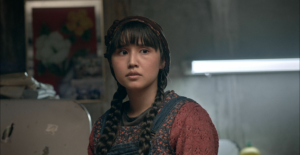
Distribué quelques semaines avant la sortie en France de la Palme d’Or 2025 de Jafar Panahi, « La Femme qui en savait trop » est justement monté et co-écrit par le réalisateur de « Taxi Téhéran » & « Un Simple Accident » avec Nader Saeivar (Trois Visages) qui réalise ici son troisième long-métrage, tourné sans autorisation en Iran avant de quitter le pays à son tour. Ce film engagé fait à nouveau écho au mouvement Femme, Vie, Liberté et au courage des femmes iraniennes luttant pour leurs droits, en mettant en scène une professeure à la retraite toujours prête à aider ses collègues et sa famille, qui va décider de témoigner contre un homme sans autre preuve que sa propre parole. Cette femme en quête de justice va alors subir des pressions venues de toute part, y compris de sa propre famille …
C’est une œuvre forte mêlant l’intime et le politique tout en intégrant la fiction à la réalité dans une intrigue particulièrement bien ficelée et rythmée dans une fine narration – à l’exception d’un très léger didactisme lors d’une séquence – développant sobrement mais subtilement ses personnages dressant un poignant portrait du courage féminin tout en questionnant la notion de maternité : la protagoniste étant à la fois la mère biologique d’un fils, la mère adoptive d’une fille, et la mère contractuelle d’un mari ! Le film montre ainsi non seulement les mécanismes d’oppression, notamment à travers la pression psychologique jouant sur l’affection des proches, mais dépeint aussi une société gangrénée par une corruption patriarcale qui fait payer un lourd tribut pour tout engagement politique. Il brosse enfin le portrait d’une société qui veut s’ouvrir et d’une jeune génération qui souffle un vent de changement symbolisé par la danse comme forme d’art d’émancipation à l’image de l’excellente et métaphorique scène de fin.
Porté par la remarquable présence de Maryam Boubani – aux côtés de Nader Naderpour, Hana Kamkar et de la jeune Ghazal Shojaei (Happiness) – qui a soutenu le mouvement social en retirant son hijab, « La Femme qui en savait trop » construit un très beau suspense dans une mise en scène élégante avec de magnifiques plans d’extérieurs et des cadres travaillés en intérieurs. C’est un film riche et intelligent dont le titre original (signifiant ‘Témoin’) décrit bien sûr la position délicate dans laquelle se retrouve la protagoniste, mais rappelle aussi le poids de la surveillance nationale et de la peur généralisée que les autorités iraniennes répandent sur leur société, en reprenant le nom du drone le plus utilisé au monde à l’heure actuelle à travers son utilisation massive en Ukraine par l’armée russe.
Raphaël Sallenave
Released just a few weeks before the release of Jafar Panahi’s 2025 Palme d’Or winner, “The Witness” is actually edited and co-written by the director of “Taxi” and “It was Just a Simple Accident” with Nader Saeivar (3 Faces), who directs his third feature film here, shot in Iran without authorization before leaving the country as well. This politically committed film once again echoes the Woman, Life, Freedom movement and the courage of Iranian women fighting for their rights, depicting a retired teacher who is always ready to help her colleagues and family, and who decides to testify against a man with no evidence other than her own word. This woman in search of justice then comes under pressure from all sides, including her own family…
This is a powerful work that blends the personal and the political, integrating fiction and reality in a particularly well-crafted and well-paced plot with subtle narration – with the exception of a very slight didacticism in one sequence – tersely but skillfully developing its characters and depicting a poignant story of female courage while questioning the notion of motherhood: the protagonist being at once the biological mother of a son, the adoptive mother of a daughter, and the contractual mother of a husband! The film thus not only shows the mechanisms of oppression, particularly through psychological pressure exerted over the affection of loved ones, but also unveils a society plagued by patriarchal corruption that exacts a heavy toll on any political activism. Finally, it portrays a society that wants to open up and a young generation that is blowing a wind of change, symbolized by dance as an art form of emancipation, as seen in the brilliant and poetic final scene.
Led by the remarkable presence of Maryam Boubani – alongside Nader Naderpour, Hana Kamkar, and the young Ghazal Shojaei (Happiness) – who supported the social movement by removing her hijab, The Woman Who Knew Too Much builds a beautiful suspense in an elegant staging with beautiful exterior shots and carefully crafted interior frames. This is a rich and intelligent film whose original title (meaning “Witness”) not only describes the delicate position in which the protagonist finds herself, but also brings to mind the weight of national surveillance and the widespread fear that the Iranian authorities spread throughout their society, echoing the name of the most widely used drone in the world today due to its massive use in Ukraine by the Russian army.
Raphaël Sallenave