
L’Exorciste du Vatican
The Pope’s Exorcist
(L’esorcista del Papa)
2023
FR EN
Cinquante ans après la sortie du célébrissime film de William Friedkin, si le thème de l’exorcisme a beau être devenu un poncif rabâché et souvent ennuyeux, « L’Exorciste du Vatican » semble apporter une certaine fraîcheur en déplaçant légèrement le regard sur ce rituel qui fascine malgré tout. Nous voilà donc en Castille, dans une abbaye délabrée où une famille meurtrie est victime de la possession démoniaque de l’un de ses membres. Directement envoyé par le Vatican, le père Gabriele Amorth a alors pour mission de libérer le jeune Henry de Satan.
Oui, le long-métrage de Julius Avery reprend le classique schéma des films d’horreur à soubassement religieux, avec un scénario vu et revu : un environnement morbide, une famille traumatisée, un prêtre local impuissant, une violence physique et blasphématoire, et une confrontation finale entre le Bien et le Mal.
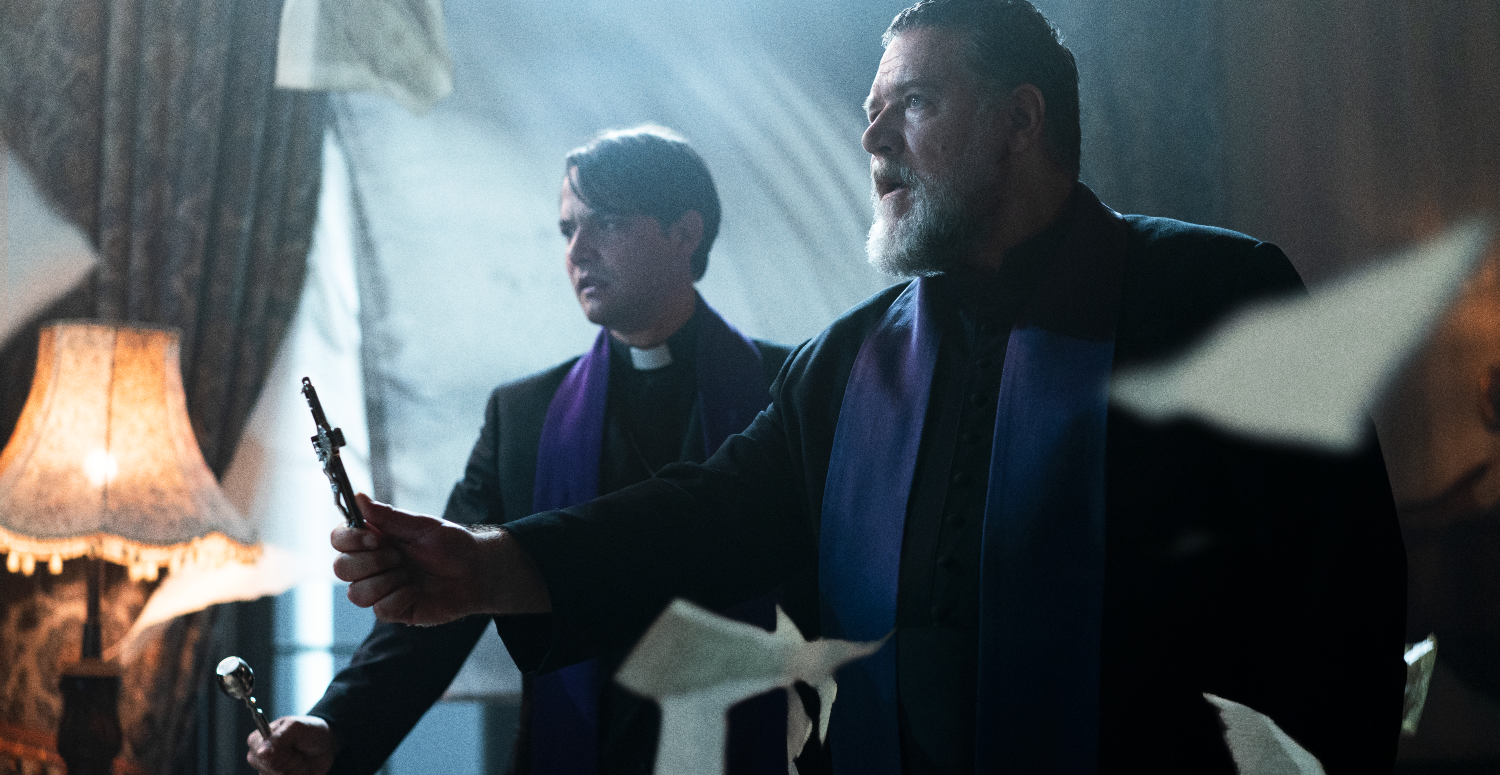
Mais, l’intrigue a la particularité de se centrer sur son personnage-titre : Gabriele Amorth, véritable exorciste en chef du diocèse de Rome entre 1986 et 2016. Un homme qui, dans la vraie vie comme dans le film, est controversé. Librement – et excellemment – interprété par Russell Crowe, le père Amorth forme ainsi un protagoniste charismatique, à la fois bienveillant, sage et drôle, qui porte presque toute l’histoire et lui donne un fond bien plus divertissant que l’exorcisme qu’il doit pratiquer.
Par le prisme d’Amorth, le film prend alors une autre saveur à mesure qu’il confond christianisme, obscurantisme, voire ésotérisme (et même, de façon intéressante, maladie mentale), en particulier lors du climax – qui donne une justification plus que douteuse (voire subrepticement réactionnaire) aux horreurs de l’Inquisition mais pourrait lancer une jolie franchise autour du prêtre (une suite a été annoncée en avril dernier). Gabriele Amorth qui a d’ailleurs inspiré un documentaire de notre cher William Friedkin en 2017. Enfin, on appréciera le multilinguisme (relatif et parfois bancal, certes) du long-métrage, notamment lors des scènes au Saint-Siège où Amorth tient définitivement une place à part.
{English below & Italiano alla fine}
Fifty years after the release of William Friedkin’s acclaimed movie, the theme of exorcism may well have become a hackneyed and often boring cliché, but “The Pope’s Exorcist” seems to bring a certain refreshing twist by slightly shifting the focus on this ritual that fascinates in spite of everything. Here we are in Castile, in a dilapidated abbey where a grieving family has fallen victim to the demonic possession of one of its members. Sent directly by the Vatican, Father Gabriele Amorth’s mission is to free young Henry from Satan.
Yes, Julius Avery’s feature film follows the classic pattern of religiously-based horror films, with a familiar storyline: a morbid environment, a traumatized family, a powerless local priest, physical and blasphemous violence, and an ultimate showdown between Good and Evil.
However, the plot is unique in that it focuses on its title character: Gabriele Amorth, the actual chief exorcist of the Roman diocese from 1986 to 2016. A man who, in real life as in the film, is highly controversial. Freely – and brilliantly – portrayed by Russell Crowe, Father Amorth makes a charismatic protagonist, at once benevolent, wise and funny, who carries most of the story and gives it a background far more entertaining than the exorcism he has to perform.
Through Amorth’s prism, the film then takes on a different flavor as it blurs Christianity, obscurantism, even esotericism (and even, interestingly, mental illness), particularly during the climax – which gives a more than dubious (if not surreptitiously reactionary) justification to the horrors of the Inquisition but could launch a nice franchise around the priest (a sequel was announced last April). Gabriele Amorth, who inspired a documentary by the great William Friedkin in 2017. Last but not least, the film’s multilingualism (relative and sometimes shaky, admittedly) should be highlighted, especially during the scenes in the Holy See, where Amorth definitely holds a place of his own.
Axel Chevalier
ITALIANO
Cinquanta anni dopo l’uscita del celeberrimo film di William Friedkin, se il tema dell’esorcismo è diventato una banalità ripetitiva e spesso noiosa, “L’Esorcista del Papa” sembra portare una certa freschezza con lo spostamento lieve dello sguardo su questo rito che affascina sempre. Eccoci quindi in Castilla, in un’abbazia fatiscente dove una famiglia in lutto è vittima dalla possessione demoniaca di uno dei propri membri. Direttamente mandato dal Vaticano, il padre Gabriele Amorth ha allora per missione di liberare il giovane Henry da Satana.
Sì, il lungometraggio di Julius Avery riprende il classico schema dei film d’orrore con connotazioni religiose, usando una sceneggiatura troppo familiare: un’ambiente morbosa, una famiglia traumatizzata, un impotente prete locale, una violenza fisica e blasfematoria, ed una finale confrontazione fra il Bene ed il Male.
Ma, la trama ha la particolarità di focalizzarsi sul suo principale protagonista: Gabriele Amorth, ufficiale esorcista della diocesi di Roma dal 1986 al 2016. Un uomo che, tanto nella vita reale quanto nel film, rimane controverso. Liberamente – ed eccelsamente – interpretato da Russell Crowe, il padre Amorth incarna così un personaggio carismatico, benevolente, saggio e buffo, che porta quasi tutto l’intreccio e gli dà uno sfondo molto più dilettevole dell’esorcismo che esso deve praticare.
Attraverso il prisma di Amorth, il film assume poi un sapore diverso man mano che confonde cristianesimo, oscurantismo, perfino esoterismo (ed anzi, in un modo interessante, malattia mentale), specie durante il climax – che dà una giustificazione davvero dubbiosa (persino furtivamente reazionaria) alle orrori dell’Inquisizione ma potrebbe creare una nuova franchise sul prete (è stato annunciato un sequel lo scorso aprile). Gabriele Amorth che ha d’altronde ispirato un documentario del caro William Friedkin nel 2017. Infine, ci piacerà il multilinguismo (relativo e a volte zoppicante, certo) del lungometraggio, soprattutto durante le scene nella Santa Sede, dove Amorth tiene definitivamente un posto a parte.

