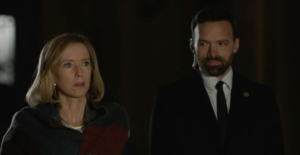
Alors qu’il se rend en visite d’État, le Président français fraîchement élu se voit immédiatement confronté au risque d’escalade nucléaire. Lorsqu’une crise éclate à la suite d’un attentat visant son homologue russe, un ultimatum du Kremlin pousse le chef de l’État et son cabinet restreint à débattre d’une décision vertigineuse dans le PC Jupiter sous l’Élysée.
Le réalisateur-scénariste Alexandre Smia inscrit son premier film derrière la caméra dans la lignée du genre atomique de « Point Limite » (Sidney Lumet, 1964) à « House of Dynamite » (Kathryn Bigelow, 2025) – en passant récemment chez nous par « Le Chant du Loup » (Antonin Baudry, 2019) –, en adaptant ces enjeux à la réalité géopolitique actuelle dans un contexte plausible (mais fictif) d’une Ukraine acculée et de dirigeants occidentaux divisés face à une OTAN délaissée par les USA et une Russie plus encline à menacer les alliés européens. Quasiment uniquement tourné en huis-clos dans ce lieu secret de décisions aux lourdes conséquences, son film est construit en cinq actes et selon une (quasi) unité de temps et de lieu rappelant la forme classique de la tragédie. Mais si le drame se profile dès l’introduction, c’est bien la tension qui s’installe avant tout et progresse tout du long dans un rythme soutenu où s’enchaînent les situations dans une efficacité haletante.
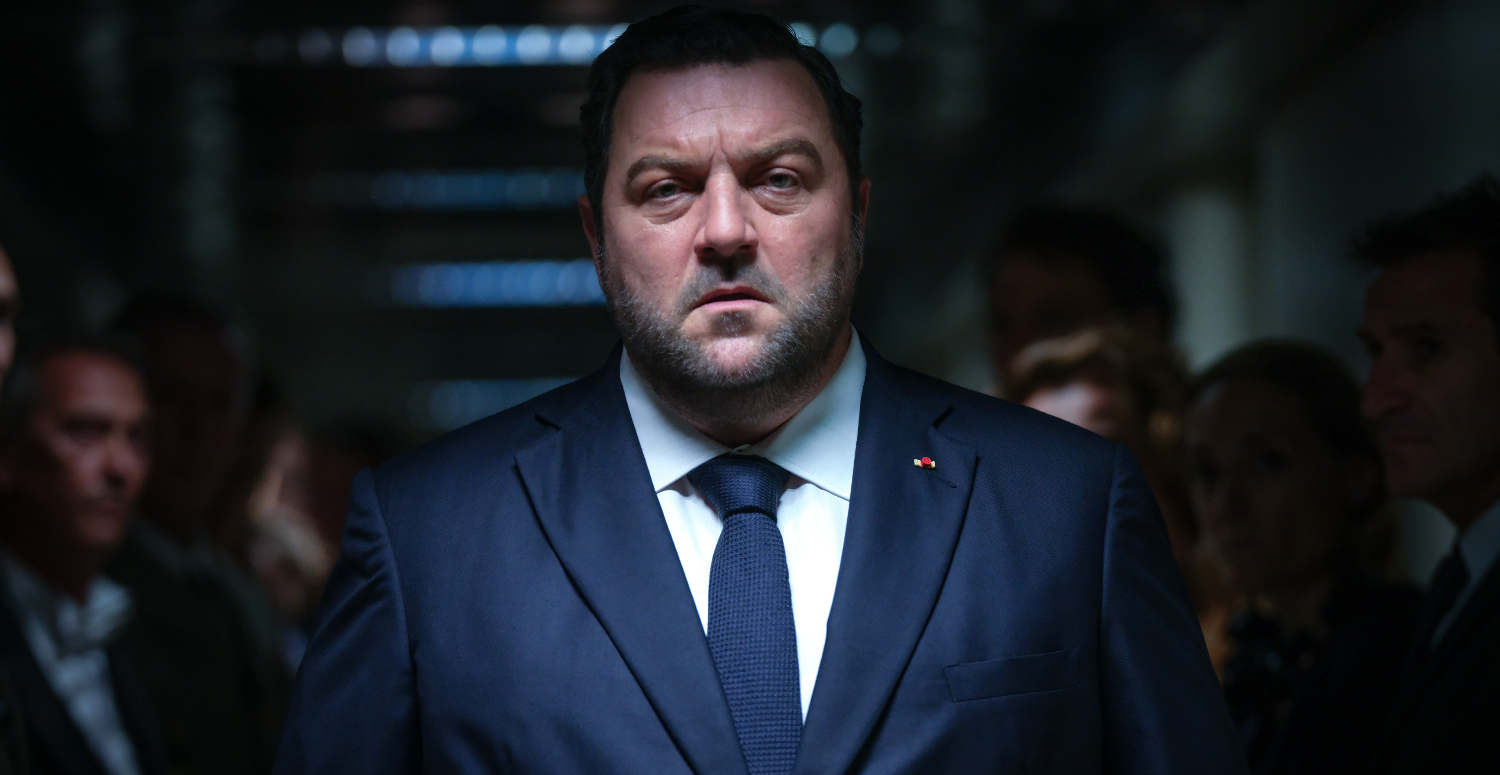
Denis Ménochet y livre une prestation remarquable d’intensité aux côtés notamment d’André Dussollier en Chef-d’État Major, Dominique Blanc en Ministre des Affaires étrangères et Reda Kateb en Ministre des armées. En jouant de très gros plans sur les visages et d’un cadre resserré par l’étroitesse des lieux, le film insiste sur l’enfermement du protagoniste, de son isolement familial à la solitude de la figure présidentielle, en allant jusqu’à jouer avec les spectres de la mort lorsque les possibilités de frappes sont évoquées, car in fine si la puissance destructrice d’une arme nucléaire est bel et bien incommensurable, la décision de sa frappe ne revient qu’à un seul homme (ou femme …).
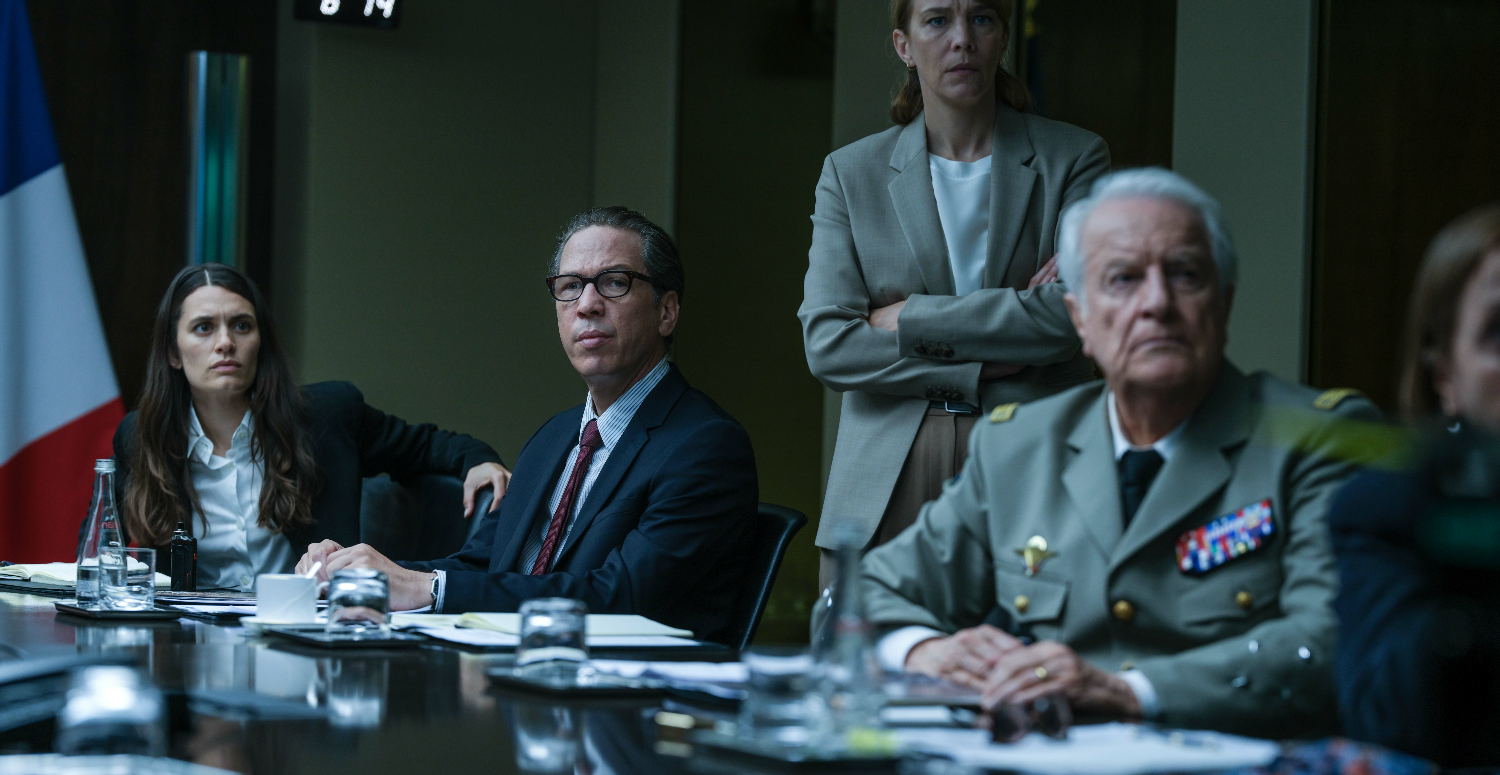
Dans une atmosphère crépusculaire et claustrophobique jouant sur les ombres et les lumières comme prémonitoire d’un monde funèbre, « Jupiter » explore le poids de la fonction présidentielle sous la Ve République, et la fragilité d’un humain face à son pouvoir de foudre. Le scénario questionne ainsi les notions de dignité & d’intégrité et les délimitations de nos intérêts vitaux dans une série de dialogues tendus autour de l’abstraction d’une telle menace. Car toute l’action du film est contenue dans ces rafales de répliques qui fusent telle une fusillade de controverse où ‘tout peut être envisageable’ pour éviter l’annihilation. Si quelques dialogues peuvent paraître un peu explicatifs (parfois totalement crédibles, parfois moins), le scénario recèle deux superbes inflexions – l’une éthique, l’autre tactique – qui jouent justement dans cette supposée fragilité face au poids de la menace nucléaire. Car c’est avant tout un film très documenté sur son sujet : celui de la dissuasion nucléaire, et plus précisément la dissuasion nucléaire française et la doctrine qui l’accompagne – ce qui apparaît d’autant plus important pour le réalisateur (comme il nous le confirmait) en cette période d’instabilité internationale et à la veille des élections où les Français s’apprêtent à confier les clés de cette puissance de feu.
En somme un bon film de politique-fiction, et surtout un thriller très captivant !
Raphaël Sallenave
While on a state visit, the newly elected French president is immediately confronted with the risk of a nuclear escalation. When a crisis erupts following an attack on his Russian counterpart, an ultimatum from the Kremlin forces the president and his inner circle to debate a staggering decision in the Jupiter Command Center beneath the Élysée Palace.
Director-screenwriter Alexandre Smia brings his directorial debut into the tradition of the nuclear genre, ranging from “Fail-Safe” (Sidney Lumet, 1964) to “House of Dynamite” (Kathryn Bigelow, 2025) – including most recently, here in France, “The Wolf’s Call” (Antonin Baudry, 2019) –, by adapting these themes to today’s geopolitical reality within a plausible (yet fictional) context of a cornered Ukraine and divided Western leaders facing a NATO deserted by the U.S. and a Russia more inclined to threaten the European allies. Shot almost entirely behind closed doors in this secret venue where decisions with far-reaching consequences are made, his film is structured in five acts and follows a (near) unity of time and place reminiscent of the classical form of tragedy. But while the drama looms from the very beginning, it is the tension that takes hold first and foremost, building steadily throughout at a brisk pace as one situation follows another with breathless effect.
Denis Ménochet delivers a remarkably intense performance alongside, notably, André Dussollier as the Chief of Defence Staff, Dominique Blanc as the Minister of Foreign Affairs, and Reda Kateb as the Minister of the Armed Forces. By using extreme close-ups of the characters’ faces and a frame narrowed by the confines of the setting, the film emphasizes the protagonist’s confinement – from his isolation from his family to the loneliness of the presidential figure – going so far as to play with the specter of death when the prospect of strikes is raised, because ultimately, while the destructive power of a nuclear weapon is indeed immeasurable, the decision to launch a strike rests with a single man (or woman…).
Set in a twilight, claustrophobic atmosphere that plays on light and shadow as a foreshadowing of a grim world, “Jupiter” explores the weight of the presidential office under the Fifth Republic and the fragility of a human being in the face of its thunderous power. The screenplay thus examines the notions of dignity and integrity, as well as the boundaries of our vital interests, through a series of tense dialogues centered on the abstract nature of such a threat. For the film’s entire action is contained within these rapid-fire exchanges, which erupt like a shootout of controversy where “anything is possible” to prevent annihilation. While some of the dialogue may seem a bit explanatory (sometimes entirely credible, sometimes less so), the screenplay features two brilliant insights – one ethical, the other tactical – that play precisely on this alleged fragility in the face of the overwhelming threat of nuclear war. For above all, this is a film thoroughly researched on its subject: nuclear deterrence, and more specifically French nuclear deterrence and the doctrine that comes with it – which seems all the more important to the director (as he confirmed to us) in this period of international instability and on the brink of elections where the French are preparing to entrust the keys to this firepower.
All in all, a good political fiction drama, and above all, a highly captivating thriller!
Raphaël Sallenave