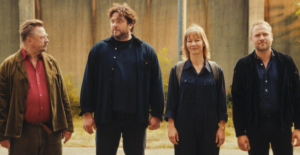
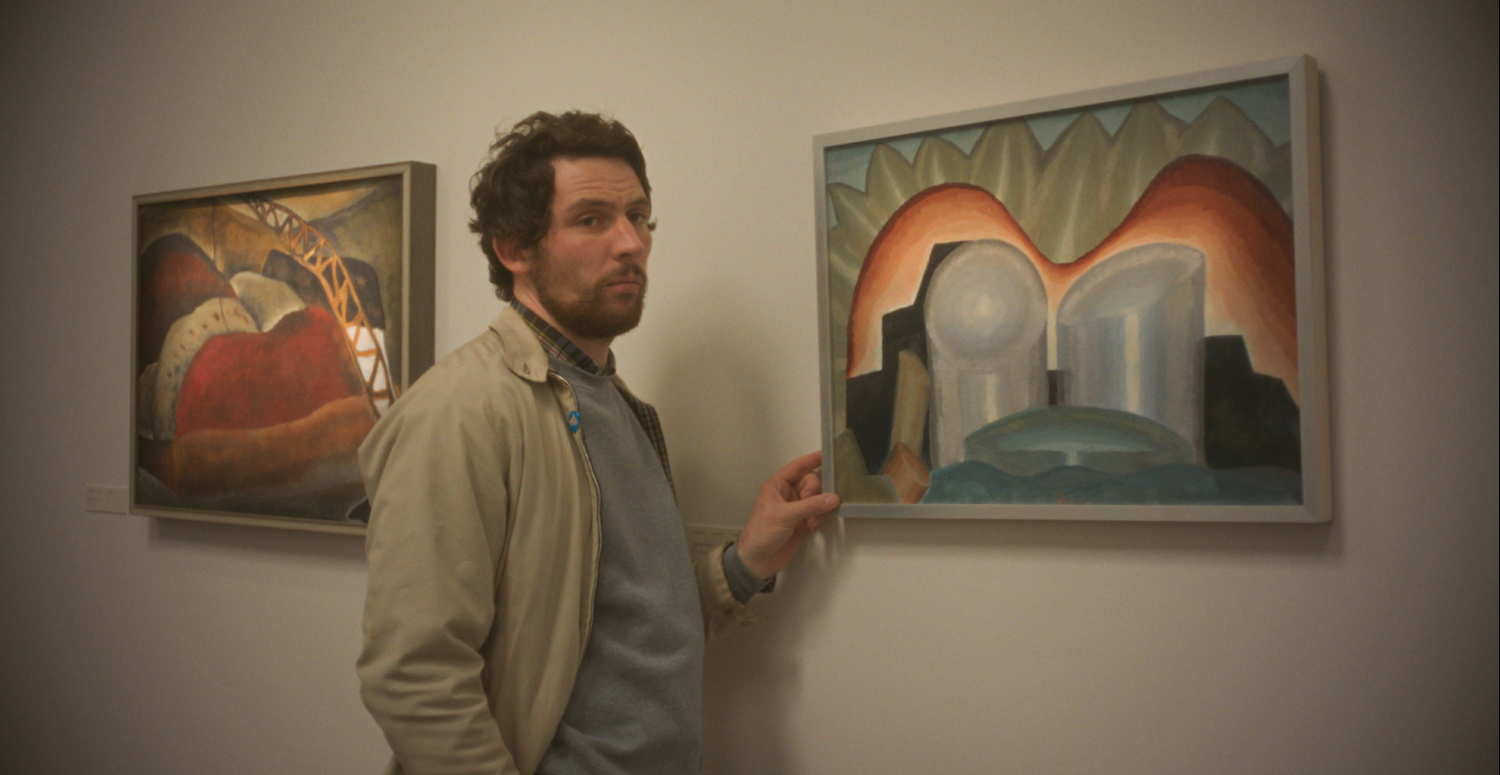
Kelly Reichardt signe ici un faux film de casse qui n’en a ni l’efficacité ni l’urgence, et qui s’en détourne très vite pour mieux scruter ce qui l’intéresse réellement : les choix d’un homme et leurs conséquences. Le braquage – le vol de quatre tableaux abstraits d’Arthur Dove dans un musée de la banlieue du Massachusetts – n’est pas très bien exécuté, on ne sait jamais vraiment pourquoi ces œuvres-là ont été choisies, ni ce que compte en faire le protagoniste. Le vol devient presque, in fine, secondaire dans une trame qui se concentre ensuite sur une cavale aussi anti-spectaculaire que le casse en lui-même. Ce qui intéresse la réalisatrice américaine n’est clairement pas l’acte, mais plutôt les choix qui s’offrent aux personnages. Elle regarde l’après et scrute le basculement.
Nous sommes en 1970, une année charnière filmée avec un soin extrême du détail – décors, voitures, couleurs en demi-teinte, tons marron et verts, grain de la pellicule – dans la reconstitution d’époque. J.B. Mooney est un architecte raté devenu menuisier, père de famille issu d’un milieu bourgeois accompli avec un père juge et une mère amatrice d’art. C’est un personnage distant, même avec ses proches, qui n’est pas foncièrement ambitieux, ne convoitant pas de voler des tableaux très prisés, mais plutôt ceux qu’il connaît et qui lui parlent. Au chômage depuis quelques temps, sans avoir l’air véritablement pressé de trouver un emploi, c’est un personnage qui semble vivre en périphérie de son époque, jusqu’à ce qu’il doive faire face aux conséquences de ses actes et que son époque ne le rattrape. La guerre du Vietnam affleure ainsi en arrière-plan – journaux télévisés, affiches, manifestations – sans jamais devenir un moteur narratif direct, bien que son ampleur ne finisse par envahir celui qui refusait de la regarder. Car pour un personnage ainsi déconnecté de la réalité, l’enjeu n’est donc pas une aventure flamboyante poursuivie par la police, mais plutôt un suspense personnel poursuivi par la réalité.
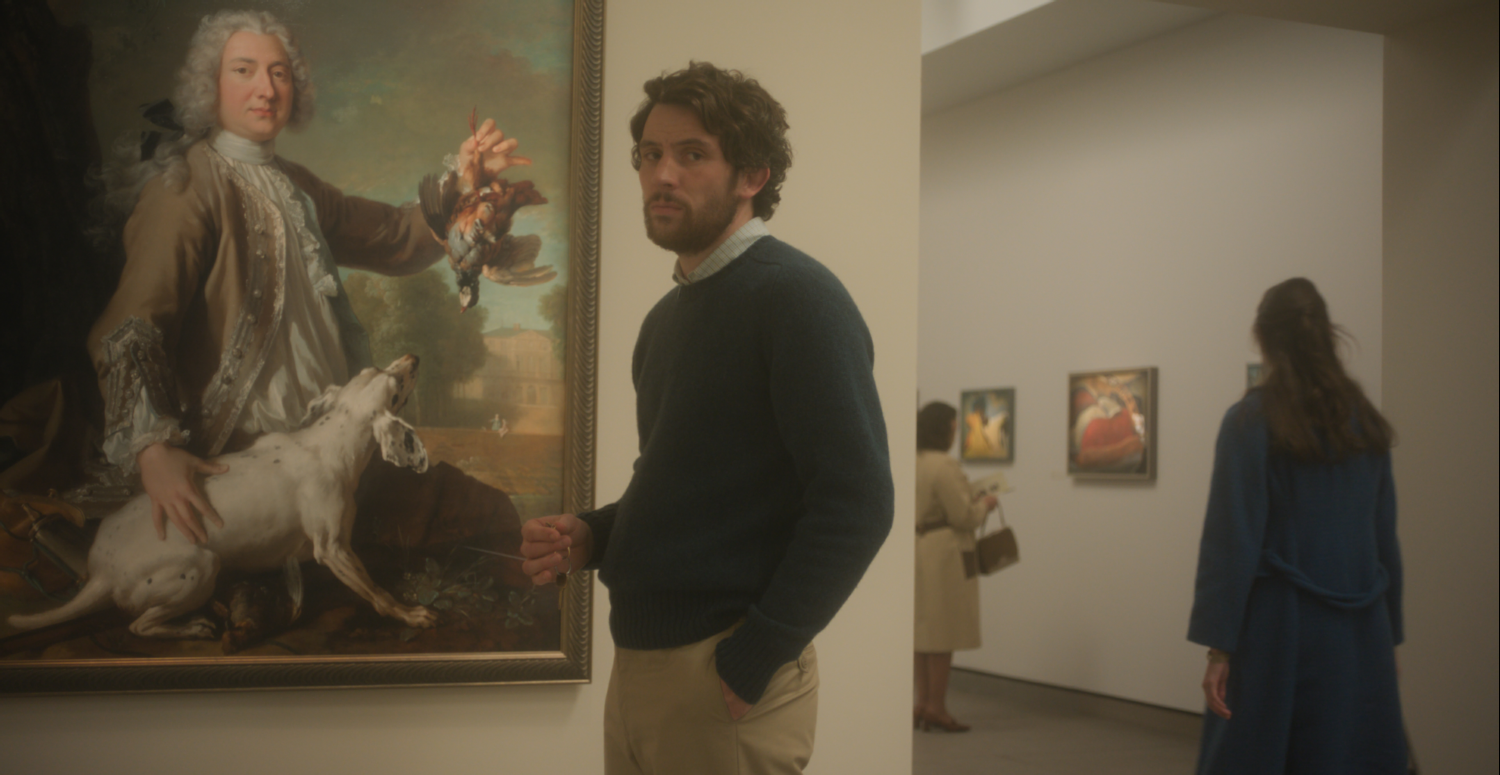
Autour d’un J.B. interprété par la star montante Josh O’Connor (connu pour « The Crown », « La Chimera » & « Challengers », et vu rien que l’année dernière dans « Wake up dead man », « Rebuilding » & « The History of Sound »), les personnages existent davantage comme des présences que comme des arcs narratifs : de ses parents à ses complices, en passant par un ancien ami (John Margaro) lui aussi à la marge d’une sphère qu’il veut éviter, et son épouse excédée (Alana Haim) dont les regards suffisent à dire l’écart grandissant. Comme souvent chez Kelly Reichardt (First Cow ; Showing Up ; Night Moves) il s’agit moins de raconter une trajectoire spectaculaire que de capter des fragments de vie, les failles existentielles d’un homme sans qualités, ni rebelle ni héroïque, assez intelligent pour se mettre dans les ennuis mais pas assez pour en sortir.
La mise en scène épouse cette dérive intérieure en changeant plusieurs fois de tons à travers une dimension burlesque dans le premier acte qui disparaît progressivement au profit des conséquences plus sérieuses qui s’imposent aux personnages. Reichardt laisse le temps s’installer, parfois au risque de l’ennui, assumant pleinement un film où ‘il ne se passe pas grand-chose’ dans de longs plans fixes panoramiques à la composition raffinée et dont les rares dialogues étirent les scènes. La bande-son jazzy, presque incongrue dans cette Amérique périurbaine, injecte une vitalité paradoxale à un récit qui semble se dissoudre sous nos yeux.
« The Mastermind » est ainsi un film de casse sans casse, un drame sans pathos, une tragédie sans héros. Reichardt détourne les codes du genre pour imposer une fois encore son regard tendre et désabusé sur les marges du rêve américain. Si elle ajoute l’humour à son style dans des scènes d’apparence anodines pour finalement le faire se dérober lentement, c’est que l’on regarde en fin de compte moins un film de braquage qu’un ‘film de Kelly Reichardt’. Elle impose véritablement sa marque, son style en faisant rentrer le film de casse dans son cinéma et non l’inverse. De ce point de vue-là, c’est un ensemble cohérent et exigeant, qui en séduira certains par sa finesse formelle autant qu’il en laissera d’autres sur le côté par sa lenteur assumée.
Raphaël Sallenave
Kelly Reichardt delivers this time a fake heist movie that lacks both effectiveness and urgency, quickly shifting focus to what really interests her: a man’s choices and their consequences. The heist – the theft of four abstract paintings by Arthur Dove from a museum in suburban Massachusetts – is not very well executed; we never really know why these particular works were chosen, nor what the protagonist intends to do with them. In the end, the theft becomes almost secondary in a plot that then focuses on a manhunt as unspectacular as the heist itself. What clearly interests the American director is not the act itself, but rather the choices facing the characters. She looks at the aftermath and examines the turning point.
The year is 1970, a pivotal year filmed with extreme attention to detail – sets, cars, muted colors, brown and green tones, film grain – in the period piece. J.B. Mooney is a failed architect turned carpenter, the father of a family from an accomplished bourgeois background with a judge for a father and an art lover for a mother. He is a distant character, even with his loved ones, who is not inherently ambitious, not coveting to steal highly prized paintings, but rather those he knows and which resonate with him. Unemployed for some time, without looking particularly eager to find a job, he is a character who seems to live on the fringes of his time, until he has to face the consequences of his actions and his time catches up with him. The Vietnam War indeed looms in the background – on the news, on posters, in demonstrations – without ever becoming a direct narrative driving force, although its scale eventually overwhelms the man who refused to acknowledge it. For a character so disconnected from reality, the stakes are not a thrilling adventure chased by the police, but rather a personal suspense chase by reality.
Centered around J.B., played by rising star Josh O’Connor (known for “The Crown,” “The Chimera,” and “Challengers,” and seen just last year in “Wake Up Dead Man,” « Rebuilding ,“ and ”The History of Sound »), the characters exist more as presences than as story arcs: from his parents to his accomplices, as well as a former friend (John Margaro) who is also on the fringes of a world he wants to avoid, and his exasperated wife (Alana Haim), whose glances alone are enough to convey the growing rift between them. As is often the case with Kelly Reichardt (First Cow; Showing Up; Night Moves), it is less about telling a spectacular story than capturing fragments of life, the existential flaws of a man of no particular qualities, neither rebellious nor heroic, intelligent enough to get himself into trouble but not enough to get himself out of it.
The direction reflects this inner drift by changing tone several times, with a burlesque dimension in the first act that gradually disappears in favor of the more serious consequences that befall the characters. Reichardt allows time to pass, sometimes at the risk of boredom, fully embracing a film where ‘not much happens’ in long, refined, static panoramic shots, with sparse dialogue stretching out the scenes. The jazzy score, almost at odds with this suburban America, injects a paradoxical energy into a story that seems to melt away before our eyes.
“The Mastermind” is therefore a heist movie minus the heist, a drama minus the pathos, a tragedy minus the heroes. Reichardt subverts the conventions of the genre to once again impose her tender and disillusioned look on the margins of the American dream. If she adds humor to her style in seemingly innocuous scenes, only to slowly let it slip away, it’s because we’re ultimately watching less of a heist movie and more of a “Kelly Reichardt movie.” She truly imposes her mark, her style, by bringing the heist movie into her cinema and not the other way around. From this point of view, it is a coherent and challenging piece, which will appeal to some with its formal sophistication, while leaving others cold with its deliberate slowness.
Raphaël Sallenave