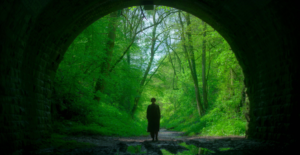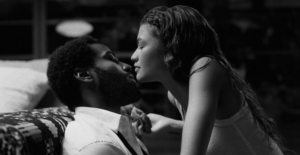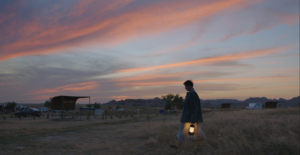
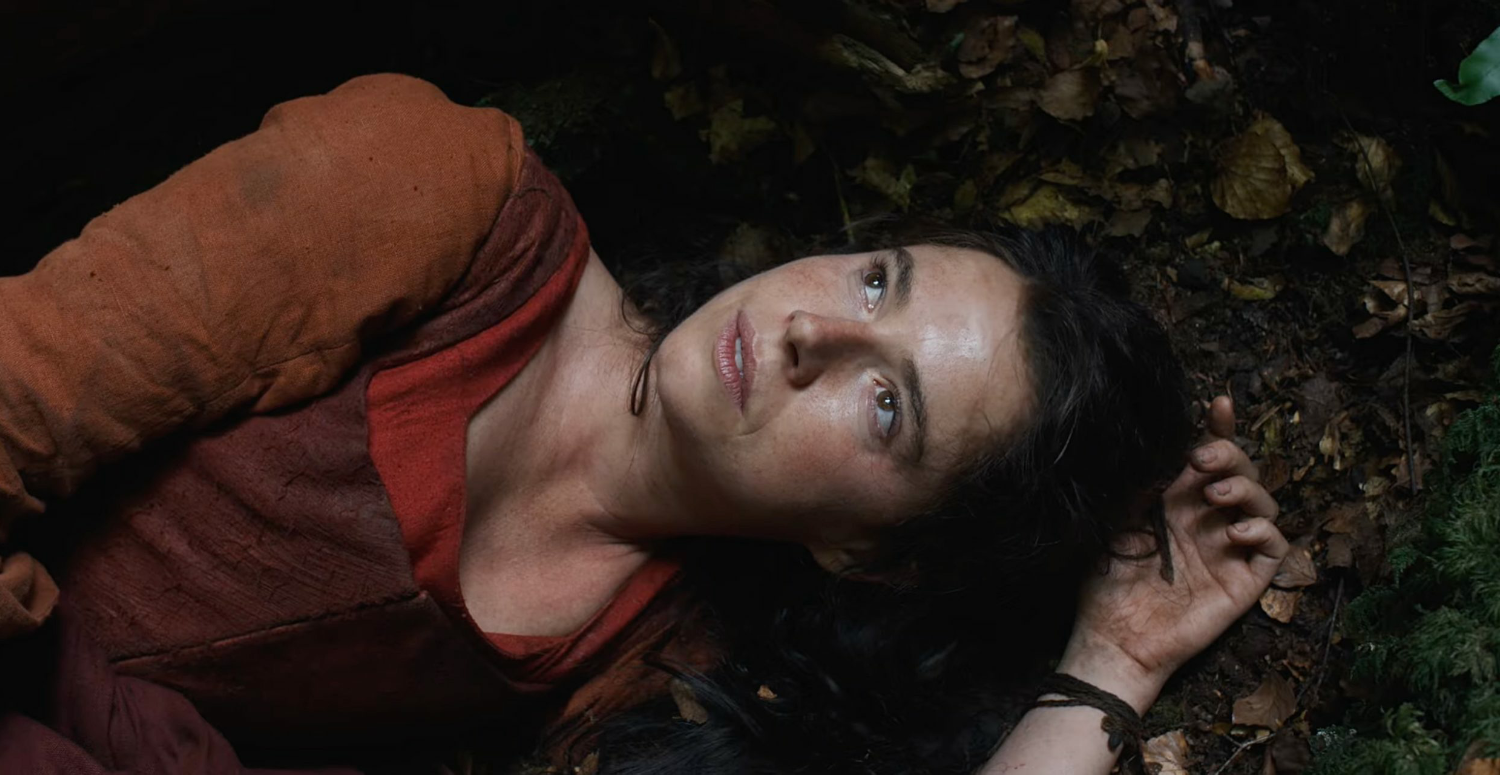
Avec « Hamnet », Chloé Zhao accroche la naissance d’une idylle, d’un amour enivrant. Elle filme avec un œil remarquable la discrétion des regards et les coins de bouches qui se plissent.
À la fin du 16e siècle, William, un instructeur de Latin sans le sou, tombe éperdument amoureux de Agnès, une jeune femme indépendante et en dehors des cadres sociaux de l’époque. Un charme réciproque qui plonge les deux protagonistes de la campagne anglaise dans une puissante histoire d’amour. Le couple se marie et donne naissance à trois enfants. Mais William est un insatiable, il ne trouve sa place qu’à Londres sur les planches des théâtres. Mais son rêve de dramaturge l’éloigne de sa famille et vient fissurer sa relation avec Agnès.
En confiant son texte au duo Jessie Buckley / Paul Mescal, la réalisatrice de « Nomadland » transporte son récit dans ce que le cinéma entrouvre de plus beau, le choc des sujets amoureux, un choc à la fois par le corps, le toucher et le souffle mais aussi par l’absence, car le sujet amoureux c’est celui qui attend. Elle explore ainsi dans une construction remarquable la solitude du corps amoureux et l’absence de corps. La thématique de l’absence que le cinéma et, par historicité, le théâtre ont exploré jusqu’aux moindres recoins.
Si le jeu l’emporte sur tout, c’est aussi grâce à la remarquable technicité de sa réalisatrice qui met l’ensemble des outils cinématographiques au service du jeu. Présente sur chaque stade de postproduction, Chloé Zhao travaille un subtil montage à contretemps et une ambiance sonore délicate qui vient lier chaque bout de séquence. Un ensemble technique qui porte le film en un semblant de pièce de théâtre que nous vivons en temps réel. Tout est fait pour ancrer dans le sol, dans ce cadre cathartique puissant que représente le théâtre et le cinéma par la même occasion.
Sacha Garcia
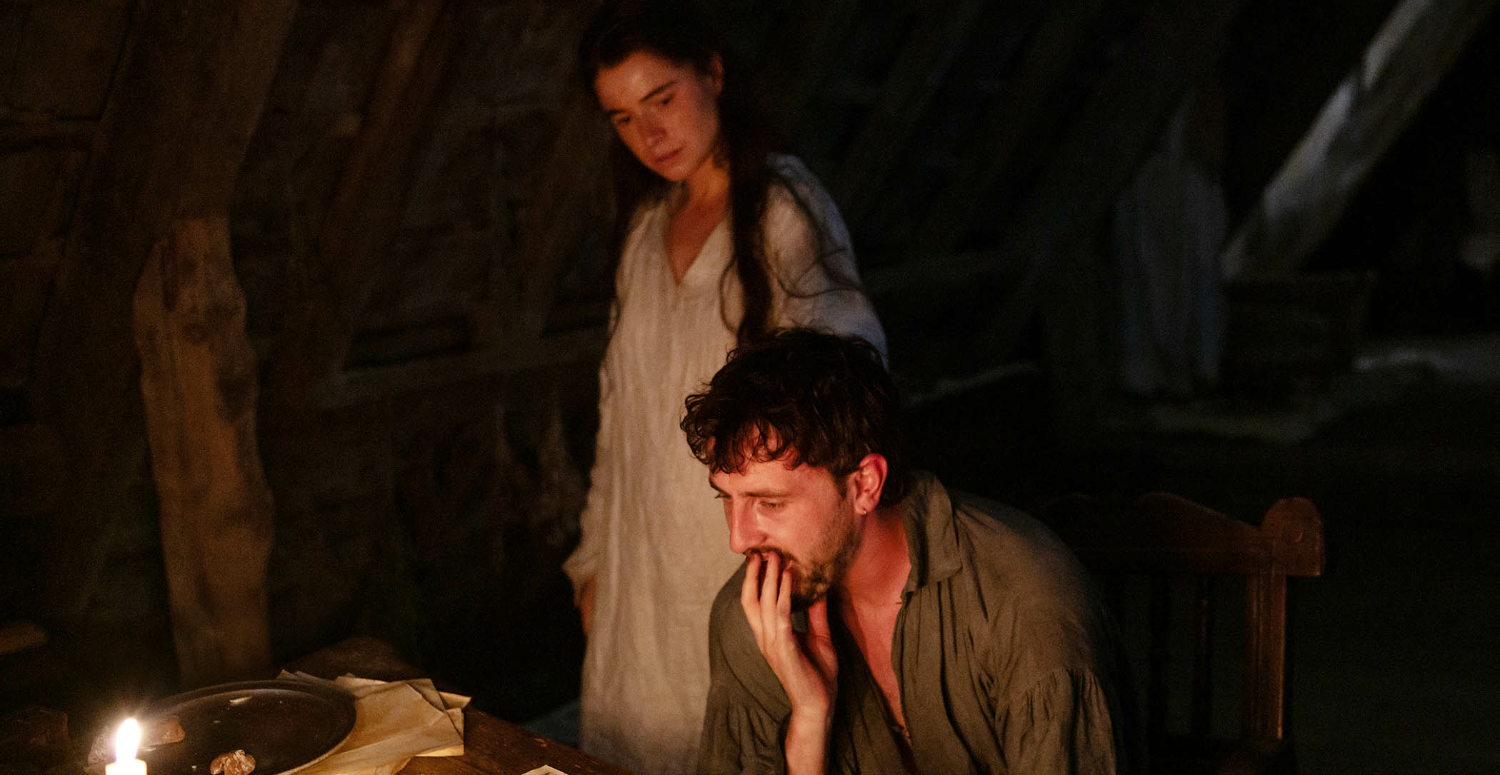
Chloé Zhao signe à nouveau un film profondément humain ancré dans une dimension fondamentalement naturaliste. Elle filme l’humain à hauteur de nature et connecte ses personnages à leur environnement dans une forte symbolique des couleurs où le bleu (l’intellect) renvoie dans les décors et les costumes à Will et au ciel – représentant son envie de quitter ce lieu, et son besoin de s’envoler – et le rouge (le cœur) reflète une Agnès attachée à ses racines, sa terre et sa famille. La somptueuse photographie somptueuse joue des clairs-obscurs et des décors d’époque pour brouiller la frontière entre le film historique qu’il apparaît être et le récit romancé et modernisé (dans la langue et le point de vue) qu’il est, omettant complètement la figure de dramaturge et d’homme célèbre qu’était en train de devenir Shakespeare, au point de ne jamais citer ni son nom de famille, ni celui de sa protagoniste Agnès (connue dans les livres d’histoire sous le nom d’Anne Hathaway). C’est le récit d’une famille, d’un couple, d’un amour dramatique. Le film s’ouvre ainsi sur une romance lumineuse, presque suspendue, avant de glisser imperceptiblement vers la tragédie, non par rupture brutale mais par un lent déplacement du regard. Jessie Buckley (Men ; The Lost Daughter ; Scandaleusement Vôtre) y crève l’écran dans une interprétation incarnant à nouveau de tout son être un personnage qui étoffe encore un peu plus sa riche palette de jeu.
Raphaël Sallenave
With “Hamnet”, Chloé Zhao depicts the birth of a romance, an intoxicating love affair. She captures with great sensitivity the discreet glances and the smiles that appear upon the lips.
At the end of the 16th century, William, a penniless Latin tutor, falls madly in love with Agnes, a young woman who is independent and outside the social norms of the time. The mutual attraction draws the two protagonists from the English countryside into a powerful love story. The couple marries and has three children. But William is insatiable, finding his place only in London on the theatre stage. However, his dream of becoming a playwright distances him from his family and strains his relationship with Agnes.
By entrusting her script to Jessie Buckley and Paul Mescal, the director of “Nomadland” takes her story into the most beautiful realm that cinema can offer: the collision of lovers, a shock felt through the body, touch, and breath, but also through absence, because the lover is the one who awaits. In a remarkable structure, she explores the loneliness of the loving heart and the absence of the body. This theme of absence that cinema and, historically, theater have explored in every detail.
If the acting prevails over everything else, it is also thanks to the remarkable technical skill of its director, who deploys all the tools of cinema for the benefit of the acting. Involved in every stage of production, Chloé Zhao crafts a subtle, offbeat edit and a delicate soundscape that ties each piece together. This technical approach makes the film feel like a play that we experience in real time. Everything is done to anchor it in the ground, in the powerful cathartic setting that theater and cinema represent at the same time.
Sacha Garcia
Chloé Zhao once again delivers a deeply human film rooted in a profoundly naturalistic dimension. She captures humanity on a par with nature and connects her characters to their environment through powerful color symbolism, where blue (the intellect) refers in the sets and costumes to Will and the sky – representing his desire to leave this place and his need to fly away – and red (the heart) reflects Agnès’ attachment to her roots, her land, and her family. The gorgeous cinematography draws on chiaroscuro and period sets to blur the line between the historical film it appears to be and the fictionalized and modernized narrative (in language and point of view) that it is, completely leaving out the figure of Shakespeare, the playwright and famous man he was becoming, to the point of never mentioning his last name nor that of its protagonist Agnes (known in history books as Anne Hathaway). It is the story of a family, a couple, and a dramatic love affair. The film thus opens with a luminous, almost suspended romance, before imperceptibly drifting towards tragedy, not through a sudden break but through a slow shift in perspective. Jessie Buckley (Men; The Lost Daughter; Wicked Little Letters) lights up the screen in a performance that once again channels her whole being into a character who adds yet another string to her already rich acting repertoire.
Raphaël Sallenave