
Le Retour du Projectionniste
Kinomexanikin Qayıdışı
2026
FR EN
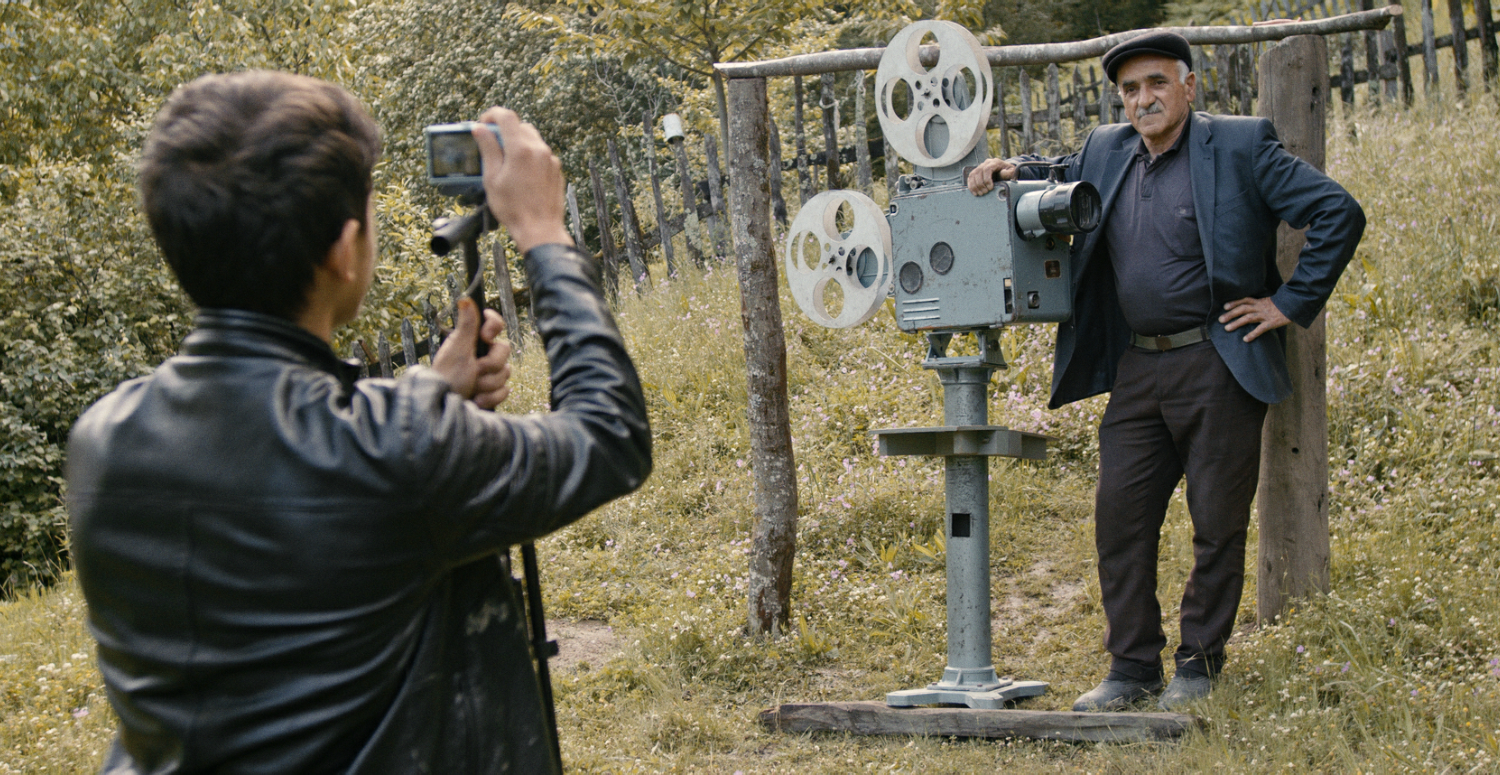
Quelque part dans les Monts Talych, aux confins méridionaux de l’Azerbaïdjan, se trouve le village reculé de Sım. C’est là que vit Samid, un homme âgé qui ne rêve que d’une chose : réhabiliter le petit cinéma communal en y projetant à nouveau des films. Accompagné du jeune Ayaz, étudiant en animation à Bakou, Samid va œuvrer à cette tâche, bravant l’isolement.
Tourné sur plus de deux ans par périodes de quelques jours, « Le Retour du Projectionniste » dresse le portrait de toute une communauté montagnarde à travers celui d’un homme solitaire, nostalgique de son métier. Perçu comme un excentrique par ses proches et ses voisins à cause de son insistance à vouloir reprojeter des films malgré toutes les embûches et les nombreux échecs, Samid va pourtant jusqu’au bout – et ce pour le plus grand plaisir du village.
Le récit est ainsi sincèrement touchant, parce qu’outre cette plongée dans l’hyper-ruralité de Sım où l’on découvre certains éléments des cultures azéries et talyches (notamment la fête de Norouz), l’histoire transmet la profonde et solide amitié qui lie Samid et Ayaz. Tous les deux sont unis par leur même passion pour le cinéma et collaborent sur plusieurs projets techniques et artistiques, de la réparation de projecteurs à la conception de films d’animation, sans oublier bien sûr la réouverture d’une salle de projection et tout ce que cela implique sur le plan matériel.
Bercé de nostalgie et d’espoir, le film est aussi ponctué de scènes marquantes, qu’elles soient comiques (les recherches de réseau Internet), étonnantes (la concertation des ‘Sages’), ou émouvantes (le voyage à Bakou). De sorte que des images et des instants restent en tête bien après le visionnage. Et ce qui est le plus fascinant avec ce long-métrage, c’est qu’en réalité, il ne s’agit même pas d’une fiction, alors que tout semble mis en scène à la perfection – du moins à hauteur des moyens dont disposait le réalisateur. « Le Retour du Projectionniste » constitue ainsi une ode et une mise en abyme du septième art qui rappelle que le cinéma rapproche et réunit.
Axel Chevalier
Somewhere in the Talych Mountains, on the southern border of Azerbaijan, lies the remote village of Sım. This is where Samid lives, an elderly man who dreams of only one thing: restoring the small community cinema so that films can be shown there once again. With the help of Ayaz, a young animation student from Baku, Samid sets about this task, braving the isolation.
Filmed over two years in periods of a few days at a time, “The Return of the Projectionist” portrays an entire mountain community through the story of a lonely man who is nostalgic for his profession. Perceived as eccentric by his family and neighbors because of his insistence on showing films again despite all the obstacles and numerous failures, Samid nevertheless sees his project through to the end – much to the delight of the village.
The story is genuinely touching because, in addition to taking us deep into the hyper-rural world of Sım, where we discover certain elements of Azeri and Talysh cultures (such as the Nowruz holiday), it conveys the deep and solid friendship between Samid and Ayaz. The two are bound together by their shared passion for cinema and collaborate on several technical and artistic projects, from repairing projectors to designing animated films, not to mention, of course, reopening a movie theater and everything that entails in terms of equipment.
Filled with nostalgia and hope, the film is also marked by memorable scenes, whether comical (searching for an internet connection), surprising (the deliberations of the ‘Wise’), or moving (the trip to Baku). As a result, images and moments linger in the mind long after viewing. And what is most fascinating about this film is that, in reality, it is not even fiction, even though everything seems to be perfectly staged – at least within the limits of the director’s available resources. “The Return of the Projectionist” is therefore both an ode to and a mise en abyme of cinema, reminding us that movies bring people together and unite them.
Axel Chevalier