
Running Man
The Running Man
2025
FR EN
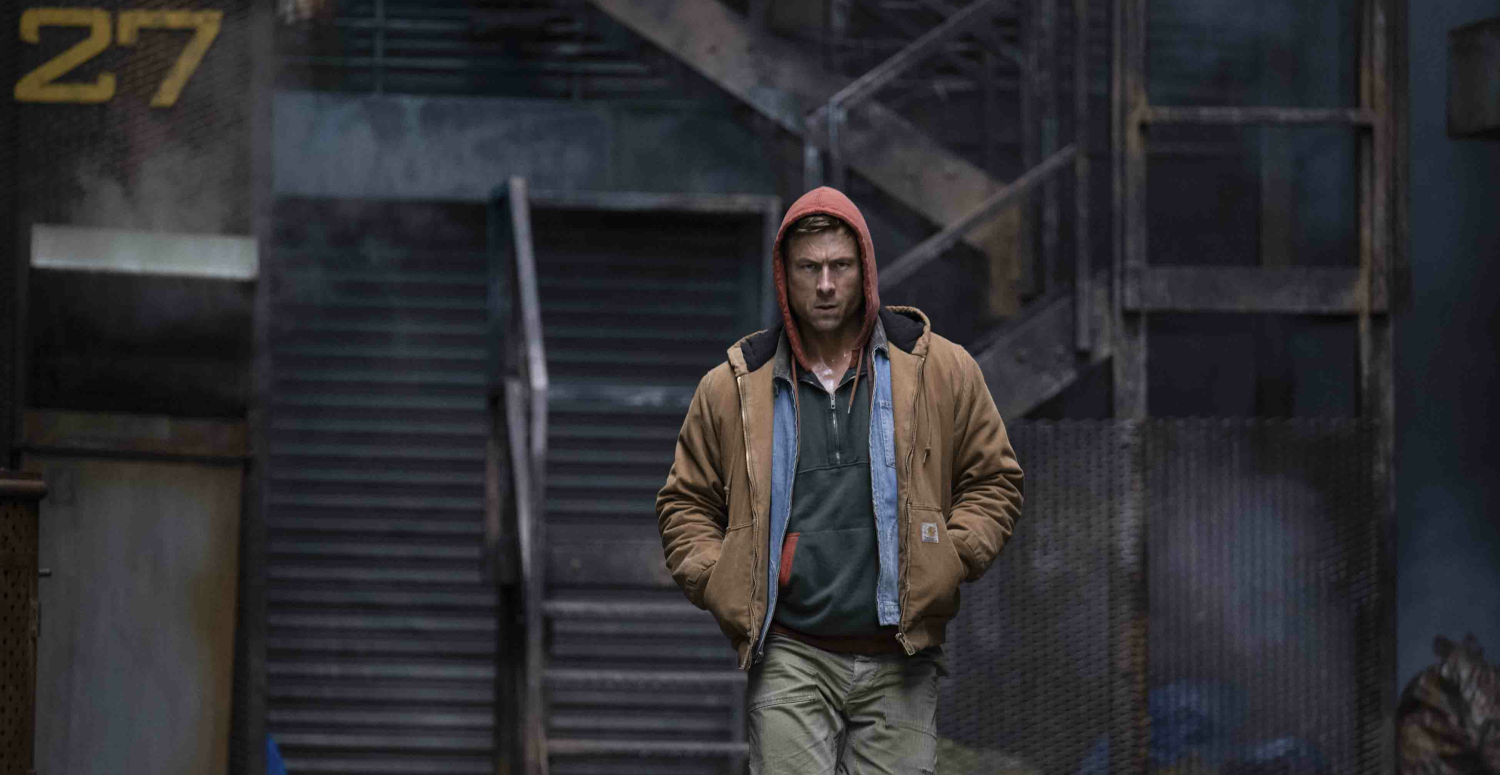
Ré-adaptant le roman de Stephen King (après le film avec Schwarzy de 1987), « Running Man » dépeint une Amérique dystopique entièrement régie par l’argent et le spectacle dans une course à l’audience mortelle jusque dans ses reality shows. Risquant sa vie dans un jeu de chasse à l’homme en direct, le héros est ici un good guy à la fois très vénèr et très altruiste qui ne peut plus trouver un emploi pour avoir aidé ses collègues à plusieurs reprises – quelle tare – qui évolue donc dans une société où une mega-corporation contrôle tout grâce à une sécurité et une surveillance généralisées et des divertissements bêtes et violents abrutissant sa population crédule.
Actualiser une telle histoire au moment où les États-Unis traversent une crise démocratique justement orchestrée par un showman rendait non seulement le sujet brûlant mais promettait un récit calibré hollywoodien à la fois musclé et spectaculaire mais aussi engagé et pertinent. Problème ? Si le concept narratif est de qualité, il n’est jamais véritablement exploité, et la dimension politique du film n’est malheureusement qu’effleurée. On est dans un univers d’anticipation très proche de la précédente adaptation ciné de Stephen King (Marche ou Crève) qui se contente seulement d’une vague caricature de son sujet pour conforter son spectateur dans un sentiment de supériorité morale quand l’intrigue aurait pu remettre en question nos comportements face aux divertissements indigents présentés dans le film. Résultat ? Malgré quelques bonnes scènes (notamment sur la fin), l’intrigue manque de logique et d’intérêt, les personnages (et leurs bons acteurs) manquent cruellement de substance, quand les méchants ne sont que des clichés, et l’ensemble reste donc assez insignifiant.
Mais encore plus problématique pour un blockbuster américain … il n’est qui plus est ni divertissant ni rentable ! La mise en scène d’Edgar Wright s’avère en effet clinquante et bruyante dans une photographie assez pauvre et des décors trop banals. Mais s’agissant en plus, du plus gros budget confié au cinéaste britannique, le film sera un nouveau trou financier pour Paramount qui vient d’être vendu après son démarrage catastrophique démontrant une surestimation combinée du potentiel au box-office par rapport au budget alloué pour la production ($110M) et le marketing, à la fois d’Edgar Wright, mais aussi de sa star Glen Powell, ainsi que de son auteur Stephen King. C’est d’autant plus dommage, quand on sait que ce réalisateur peut réussir de bons blockbusters (Baby Driver) et de meilleurs films (Shaun of the Dead). Si l’on pouvait donc s’attendre à plus impressionnant et subversif de sa part, cette nouvelle version (le cinéma américain se distinguant à nouveau pour son originalité cette année) de « Running Man » se révèle trop plate et générique.
Raphaël Sallenave
Re-adapting Stephen King’s novel (after the 1987 film starring Schwarzenegger), “The Running Man” depicts a dystopian America entirely ruled by money and entertainment in a deadly race for ratings, even in its reality shows. Risking his life in a live manhunt game, the hero here is a good guy who is both very angry and very selfless, unable to find a job because he has helped his colleagues on several occasions – what a flaw – and who therefore lives in a society where a mega-corporation controls everything through widespread security & surveillance and mindless & violent entertainments that dumb down its gullible population.
Updating such a story at a time when the United States is undergoing a democratic crisis precisely engineered by a showman not only made the subject highly sensitive but also promised a Hollywood-style narrative that was both powerful and spectacular, as well as engaging and relevant. The issue? While the story concept is strong, it is never truly explored, and the political dimension of the film is unfortunately barely touched upon. The film is set in a futuristic world very similar to Stephen King’s previous film adaptation (The Long Walk), which merely offers a vague caricature of its subject matter to comfort viewers with a sense of moral superiority, when the plot could have challenged our behavior towards the trashy entertainment presented in the film. The result? Despite a few good scenes (especially towards the end), the plot lacks logic and interest, the characters (and their talented actors) sorely lack substance, the villains are nothing more than clichés, and the whole thing remains fairly pointless.
But even more problematic for an American blockbuster… it is neither entertaining nor profitable! Edgar Wright’s direction is indeed flashy and noisy, with rather poor cinematography and overly mundane sets. But what’s more, with the British filmmaker’s biggest budget to date, the film will be another financial hole for Paramount, which has just been sold, after its terrible opening, demonstrating an overestimation of both Edgar Wright’s and his star Glen Powell’s as well as author Stephen King’s box office potential in relation to the budget allocated for production ($110 million) and marketing. This is all the more unfortunate given that this director is capable of making successful blockbusters (Baby Driver) and even better films (Shaun of the Dead). While we might have therefore expected something more impressive and subversive from him, this new iteration (with American cinema once again displaying its originality this year) of “The Running Man” proves to be far too dull and generic.
Raphaël Sallenave