

Un nouveau film de Paul Thomas Anderson que la Warner aborde comme un blockbuster (gros budget et matraquage médiatique) tout en réussissant à faire l’unanimité absolue entre presse et public … mais quelle est donc cette perle rare ?
En effet le réalisateur probablement le plus renommé du cinéma américain actuel, acclamé pour ses fresques et portraits troubles de personnages et de société que ce soit dans « There Will Be Blood », « The Master » ou « Phantom Thread », réalise ici son film à la fois le plus accessible et le plus génialement outrancier. Nouveau, gros pari de Warner cette année après « Mickey 17 », le studio (qui sera couvert financièrement par son excellente année au box-office commercial) lui alloue pour ce projet plus de $130M, soit 3 à 4 fois les budgets habituels du réalisateur. C’est donc une première financièrement pour Paul Thomas Anderson (PTA), mais aussi narrativement dans la mesure où il signe non seulement son unique film contemporain, mais surtout son premier film vraiment comique, agréable et divertissant autour de protagonistes nettement divisés entre ‘gentils’ et ‘méchants’ dans une superproduction qui mettra certainement tout le monde d’accord !
Comme souvent dans ses films, le cinéaste californien chronique la manière dont les bouleversements sociaux, politiques et économiques interagissent avec ses personnages, ici au travers d’une histoire d’ex-révolutionnaires à la fois distrayante et réflexive, mais aussi politique et drôle, ainsi qu’émouvante et spectaculaire. C’est en fait une adaptation très libre du roman « Vineland » de Thomas Pynchon dont il conserve la relation père/fille et le regard sur l’engagement politique tout en le transposant d’époque. Le livre explorait en effet le militantisme des années 1960 et ce qu’il en restait dans les années 1980, quand ici tout se déroule aux XXIe siècle dans une Amérique post et pré-Trump vue comme une guerre perpétuelle (à l’image du titre) qui fabrique ses propres opposants à coups de traumatismes. Au-delà des interactions entre ses personnages, c’est donc le récit de la tragique et sisyphéenne circularité de l’action politique, livrant l’une après l’autre, encore et toujours les mêmes batailles …
Dès ses premières séquences, le film nous happe avec trente minutes introductives absolument explosives qui présentent succinctement et efficacement ses personnages autour d’un trio principal composé d’abord de Teyana Taylor, Leonardo DiCaprio et Sean Penn, avant d’ouvrir une ellipse de plus de seize ans sur le personnage de la jeune Chase Infiniti (dont c’est le premier film). La suite du récit nous entraîne alors dans tellement de situations qu’à la fin, on semble avoir vécu les événements du prologue (réellement) plusieurs années auparavant sans pour autant que l’ensemble nous ait paru long, démontrant une véritable maîtrise dans le rythme, la structure et la durée du récit. PTA nous embarque en effet dans un univers haut en couleur où cohabitent des révolutionnaires libérateurs et libertaires, un club privé de suprémacistes blancs de Noël, un réseau clandestin de sensei, ou encore des bonnes sœurs fumeuses et guerrières. Si l’on peut considérer comme un des bémols du film, le manque de développement des US et coutumes de chacun de ces séduisants et atypiques groupes, il faut souligner que là n’est pas le cœur du récit qui tourne derrière tout ce côté flamboyant plus autour d’une relation familiale, d’abord de couple puis filiale.
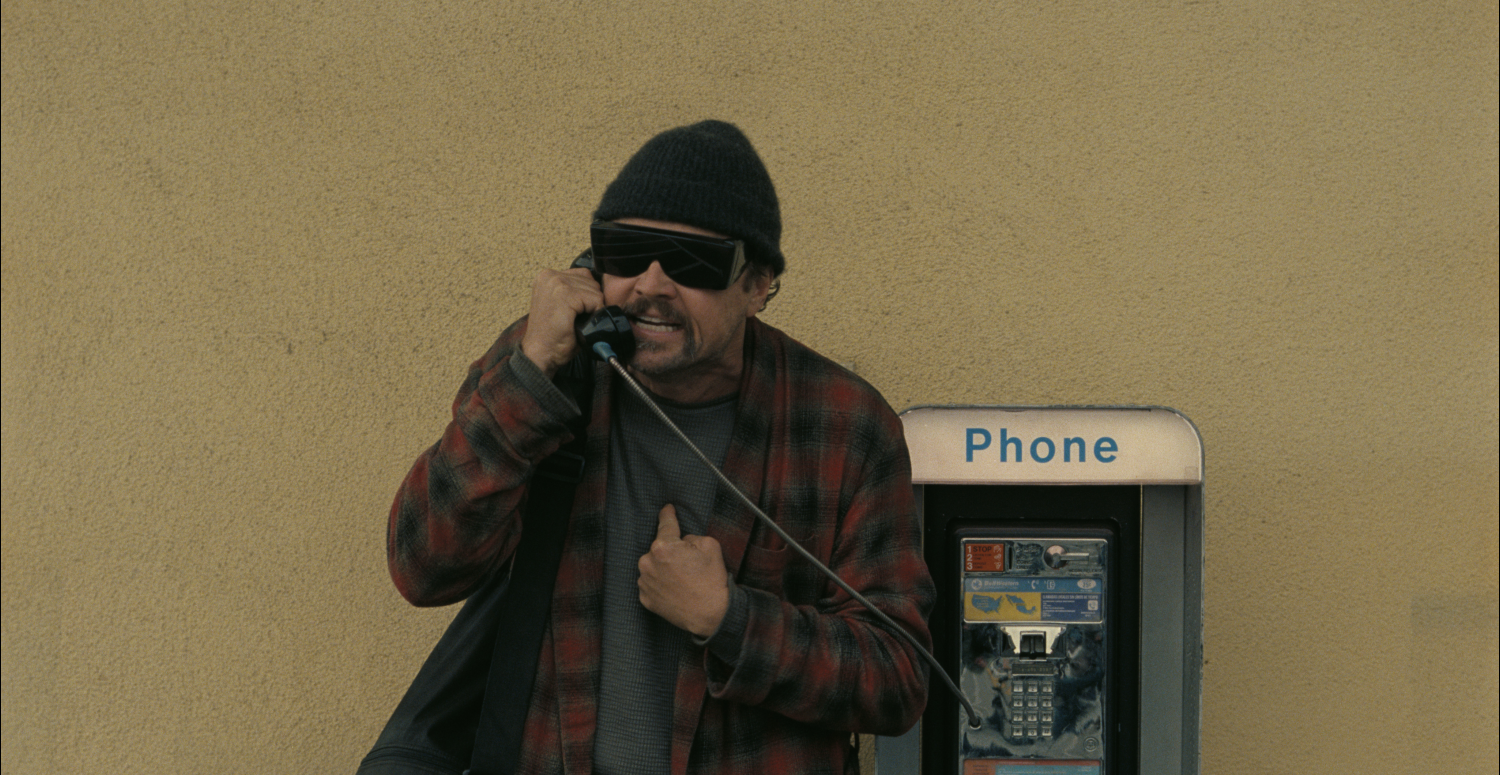
Une bataille après l’autre, un genre après l’autre, un ton après l’autre, le film mêle ainsi message politique, action et humour. Sans discourir sur la violence politique, PTA joue beaucoup sur une forme de tension comique surfant sur les vagues de la fresque tragique et celles de la farce haletante. Le résultat est assurément une comédie d’action dont les scènes jubilatoires sont avant tout portées par le duo Benicio del Toro & Leonardo DiCaprio (et sa dégaine de « Big Lebowski »), mais qui joue aussi sur l’ironie, le burlesque, et le second degré. De nombreux détails sont ainsi disséminés dans l’histoire, que ce soit dans le code d’entrée d’un club suprémacistes qui n’est autre que « Jingle Bell », ou le nom du groupuscule French 75, ainsi que celui de Perfidia dont on ne traduira pas le double sens en espagnol. Absolument mémorable en acolyte néonazi, le personnage de Sean Penn renferme également plein de clins d’œil, de sa coiffure (prémonitoire), à son nom très descriptif (pouvant signifier contracture de mâchoire ou tétanos), en passant par la médaille très sarcastique qu’il reçoit des forces de police du nom du premier Grand Vizir du KKK.

Mais « Une Bataille Après L’Autre » c’est aussi des courses-poursuites et de l’action filmé à contre-temps du tempo hollywoodien, sur pellicule avec de sublimes plans splendidement éclairés – notamment de nuit – suivant les personnages de manière fluide et calme au gré d’une musique et d’un montage rythmant le film d’un sentiment d’urgence, de folie et de danger perpétuel. Le long des tunnels, souterrains, et routes à vagues parcourus, quelques séquences hilarantes ou virevoltantes resteront peut-être plus en mémoire, mais on ne voit surtout pas passer les 2h40 d’un film qui réussit donc aussi à être divertissant. Superbement construit, interprété et mis en scène, c’est une œuvre survoltée, ingénieuse et percutante aux fortes résonances actuelles mais qui s’impose aussi comme le film le plus drôle de la filmographie de PTA (après « Licorice Pizza » qui était déjà plus agréable que ses précédents).
Sa carrière est ainsi peut-être en train de prendre un tournant avec ce film qui se distingue par son propos politique très marqué pour un film de studio. Rarement dans l’histoire d’Hollywood, autant d’argent n’avait en effet été alloué à une œuvre aussi frontalement politique, d’autant que le cinéaste a eu toute la latitude créative pour mener à bien son projet, rien que la durée d’un tel film montrant bien cette liberté artistique. En accordant son imaginaire au niveau du gigantisme hollywoodien, PTA rentre donc avec « Une Bataille Après L’Autre » dans le cercle très fermé des blockbusters d’auteurs. Mais y restera-t-il ? Contrairement à un Christopher Nolan ou un Denis Villeneuve, son film ne sera très probablement pas rentable (et pas de peu). Mais avec la réussite – toute relative – d’un tel film, PTA s’invitera certainement à la table des grands du cinéma américains qui comme Spielberg, Mann ou Scorsese ont eu le loisir d’obtenir des grands budgets pour des grands films !
Raphaël Sallenave
A new film by Paul Thomas Anderson that Warner Bros. is treating like a blockbuster (big budget and massive media exposure), while managing to achieve unanimous acclaim from both critics and audiences… what is this rare gem?
Indeed, the probably most prestigious director in American cinema today, acclaimed for his murky frescoes and portraits of characters and society in films such as “There Will Be Blood”, “The Master”, and “Phantom Thread”, here delivers his most accessible and brilliantly outrageous film to date. After “Mickey 17,” Warner Bros. is taking another big gamble this year (which will be covered financially by its excellent year at the commercial box office) by allocating more than $130 million to this project, in other words, three to four times the director’s usual budgets. So, this is a first for Paul Thomas Anderson (PTA) financially, but also narratively, as it’s not only his only contemporary film, but also his first truly funny, enjoyable, and entertaining film, with protagonists clearly divided between ‘good guys’ and ‘bad guys’ in a blockbuster that’s bound to win everyone over!
As is often the case in his films, the Californian filmmaker explores how social, political, and economic upheavals interact with his characters, here through a story of ex-revolutionaries that is both entertaining and thought-provoking, but also political and funny, as well as moving and spectacular. It is in fact a very loose adaptation of Thomas Pynchon’s novel “Vineland”, from which he takes the father/daughter relationship and the perspective on political commitment, while moving it to a different era. Indeed, the book explored the activism of the 1960s and what remained of it in the 1980s, whereas here everything takes place in the 21st century in a post- and pre-Trump America seen as a perpetual war (as reflected in the title) that creates its own opponents through trauma. Beyond the interactions between its characters, it is therefore the story of the tragic and Sisyphean circle of political action, fighting one battle after another, over and over again…
From its very first scenes, the film grabs us with thirty explosive opening minutes that succinctly and skillfully introduce its characters, centering on a main trio consisting at first of Teyana Taylor, Leonardo DiCaprio, and Sean Penn, before jumping forward more than sixteen years to portray the character of young Chase Infiniti (in her first film). The rest of the story then takes us through so many situations that, by the end, we feel as if we have (actually) lived through the events of the prologue several years earlier, and yet the whole thing doesn’t feel so long, demonstrating a sheer command of the pace, structure, and length of the plot. PTA then brings us into a colorful world where revolutionary liberators and libertarians, a white supremacist Christmas club, an underground network of sensei, and even smoking, warrior nuns all come together. While one of the film’s drawbacks could be the lack of exploration of each of these fascinating and original groups, it should be noted that this is not the heart of the story, which behind all this blazing drama revolves more around family relationships, first between a couple and then between a father and daughter.
One battle after another, one genre after another, one tone after another, the film blends political message, action, and humor. Without dwelling on political violence, PTA relies heavily on a sense of comic tension that rides the waves of tragic epic and breathless farce. The result is undoubtedly an action comedy whose exhilarating scenes are primarily carried by the duo Benicio del Toro & Leonardo DiCaprio (and his “Big Lebowski” look), but which also plays on irony, slapstick, and double meanings. Numerous details are thus scattered throughout the story, whether it be the entry code for a supremacist club, which is none other than “Jingle Bell,” or the name of the French 75 group, as well as that of Perfidia, whose double meaning in Spanish we will not translate. Absolutely memorable as a neo-Nazi acolyte, Sean Penn’s character is also full of clever nods, from his (foreshadowing) hairstyle to his very descriptive name Lockjaw, as well as the very sarcastic medal he receives from the police forces named after the first Grand Vizier of the KKK.
But “One Battle After Another” also features car chases and action sequences filmed at a pace that contrasts with Hollywood standards, on film with gorgeous, beautifully lit shots – especially at night – following the characters smoothly and calmly to music and editing that give the film a sense of urgency, madness, and perpetual danger. Along the tunnels, underground passages, and wavy roads, a few hilarious or dizzying sequences may prove most memorable, but above all, the 160 minutes of this film absolutely fly by, making it thoroughly entertaining. Brilliantly crafted, performed, and directed, it is therefore a high-energy, ingenious, and powerful work with strong contemporary resonance, that also stands out as the funniest film in PTA’s filmography (after “Licorice Pizza”, which was already more enjoyable than his previous ones).
His career may well be turning a corner with this film, which stands out for its strong political message, unusual for a studio film. In fact, rarely in Hollywood history has so much money been allocated to such a politically charged work, especially since the filmmaker had complete creative freedom to carry out his project, with the length of the film alone illustrating this artistic freedom. By taking his imagination to Hollywood’s level of gigantism with “One Battle After Another”, PTA enters the very exclusive club of auteur blockbusters. But will he remain there? Unlike Christopher Nolan or Denis Villeneuve, his film will most likely not be profitable (and not by a small margin). But with the relative success of such a film, PTA will certainly join the ranks of American cinema big shots such as Spielberg, Mann, or Scorsese, who have had the privilege to secure big budgets for big major films!
Raphaël Sallenave

