Gorgonà
2026
FR EN
Avec un tel titre, comment ne pas penser directement au mythe de Méduse ? Mais si « Gorgonà » fourmille de références à la mythologie grecque antique, celles-ci s’inscrivent dans un long-métrage artistiquement unique : un western post-apocalyptique féminin, entremêlant arts martiaux, romance et onirisme – tout ça. Et ça marche !
Pour son premier long-métrage, la plasticienne Evi Kalogiropoúlou propose une œuvre radicale au discours ouvertement politique et féministe. Dans une cité-État polluée, totalitairement patriarcale et dont la seule ressource est le pétrole, Maria est la protégée du chef absolu. Or, ce dernier, malade, prépare sa succession, et Maria, épaulée de l’envoûtante étrangère Eleni, compte bien renverser le système.
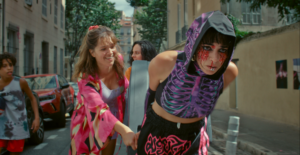
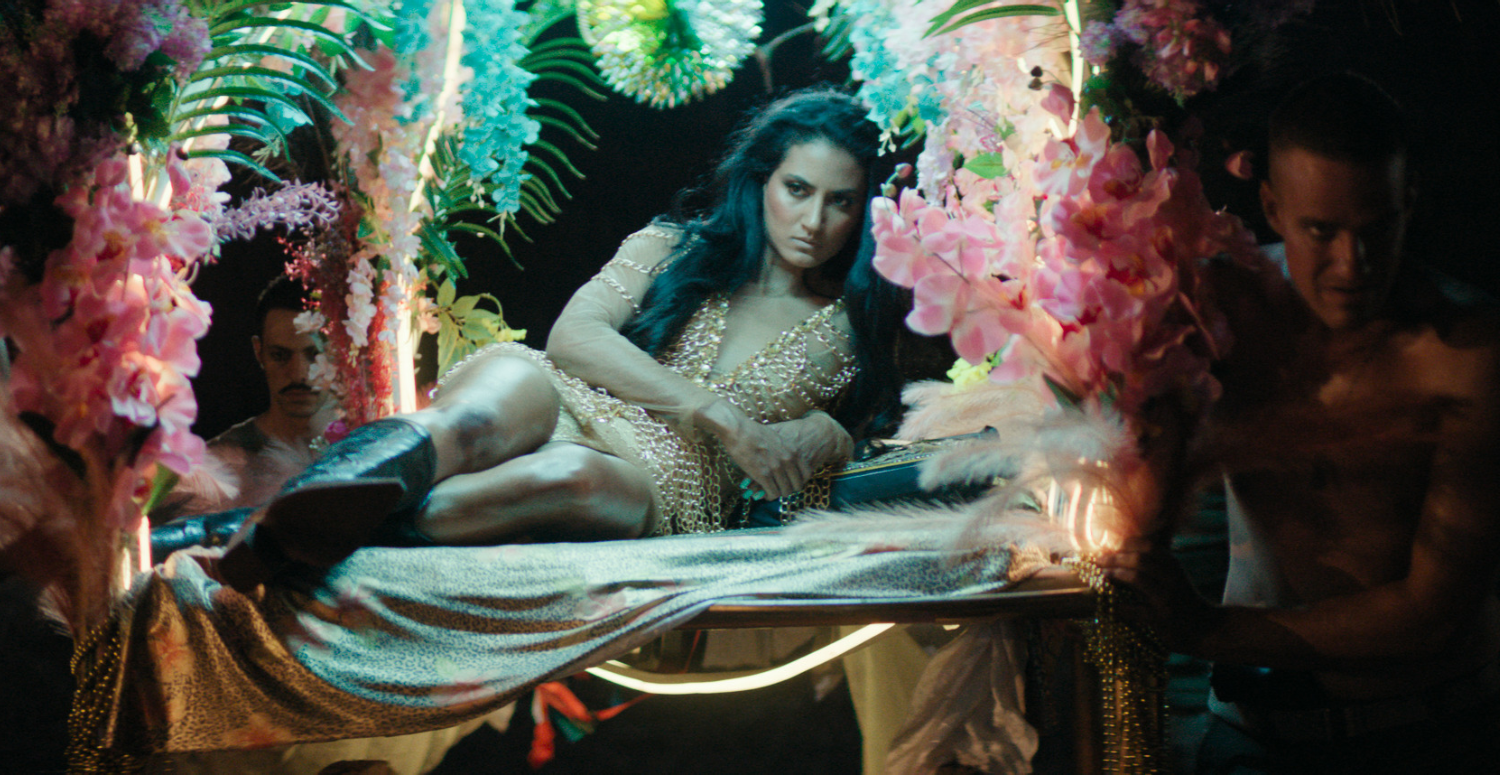
Rien que le choix des décors donne une atmosphère particulière : tourné à Éleusis, ville hautement religieuse de la Grèce antique et aujourd’hui partie de la conurbation industrielle et navale athénienne, « Gorgonà » se situe à la croisée des temps. Le film use d’esthétiques parfois vieillottes et nostalgiques (les scènes de chant), parfois kitsch et colorées (l’offrande et l’enterrement), ou à l’inverse modernes et dystopiques (les cérémonies et confrontations) – aussi musicalement avec des chansons de divers catalogues. Cependant le résultat ne fait pas fouillis et demeure au contraire parfaitement cohérent, grâce notamment aux pérégrinations réflexives, lascives et violentes de l’héroïne – et, indirectement, de son alliée – dans une cité en perdition environnementale, idéologique ou plus simplement humaine.
L’histoire ne se prive pas non plus de férocité et de véhémence, non seulement en dressant un portrait caricaturalement bestial des hommes et un, plus nuancé, des femmes aux prises d’une domination masculine que fondamentalement elles rejettent. Le duo de Maria la Gorgone et d’Eleni la Sirène incarne ainsi la puissance et la révolte au féminin sous leurs formes sexy, hypnotiques, magiques, impétueuses et fougueuses – le sexe étant une partie (peut-être trop) intégrante de l’intrigue. « Gorgonà » constitue somme toute un innovant et texturé film de vengeance qui crée et renouvelle par ailleurs son propre mythe.
Axel Chevalier
With a title like that, how can you not immediately think of the myth of Medusa? But while “Gorgonà” is full of references to ancient Greek mythology, these are woven into an artistically unique movie: a female-led post-apocalyptic Western that blends martial arts, romance, and dreamlike sequences – all of it. And it works!
For her debut feature film, visual artist Evi Kalogiropoulou delivers a radical work with an openly political and feminist message. In a polluted, totally patriarchal city-state whose sole resource is oil, Maria is the protégée of the absolute ruler. However, the ruler, who is ill, is preparing his succession, and Maria, supported by the enchanting stranger Eleni, intends to overthrow the system.
The choice of locations alone creates a unique atmosphere: filmed in Eleusis, a highly religious city in ancient Greece that is now part of the industrial and naval metropolitan area of Athens, “Gorgonà” is set at the crossroads of time. The film uses aesthetics that are at times old-fashioned and nostalgic (the singing scenes), at times kitschy and colorful (the offering and the funeral), or, on the contrary, modern and dystopian (the ceremonies and confrontations) – and this extends to the music as well, with songs drawn from various repertoires. However, the result is not a jumble but, rather, remains perfectly coherent, thanks in particular to the thoughtful, sensual, and violent wanderings of the heroine – and, indirectly, her ally – through a city in environmental, ideological, or simply human decline.
The story also does not shy away from ferocity and intensity, not only by painting a caricatured, bestial portrait of men and a more nuanced one of women grappling with male domination that they fundamentally reject. The duo of Maria the Gorgon and Eleni the Siren thus embodies feminine power and rebellion in their sexy, hypnotic, magical, impetuous, and fiery forms – with sex being an (perhaps overly) integral part of the plot. All in all, “Gorgonà” is an original and richly layered revenge film that also creates and reinvents its own myth.
Axel Chevalier