Rue Málaga
Calle Málaga
2026
FR EN
Pour son troisième long-métrage, Maryam Touzani poursuit sa quête de douceur, de tendresse et de beauté qui nous a tant fait fondre dans « Adam » et « Le Bleu du Caftan ». Toujours en collaboration avec son co-scénariste et producteur Nabil Ayouch et sa cheffe-opératrice Virginie Surdej, la réalisatrice et scénariste marocaine propose ici un film beaucoup plus intime et beaucoup plus personnel, dédié à sa grand-mère tangéroise née en Andalousie.
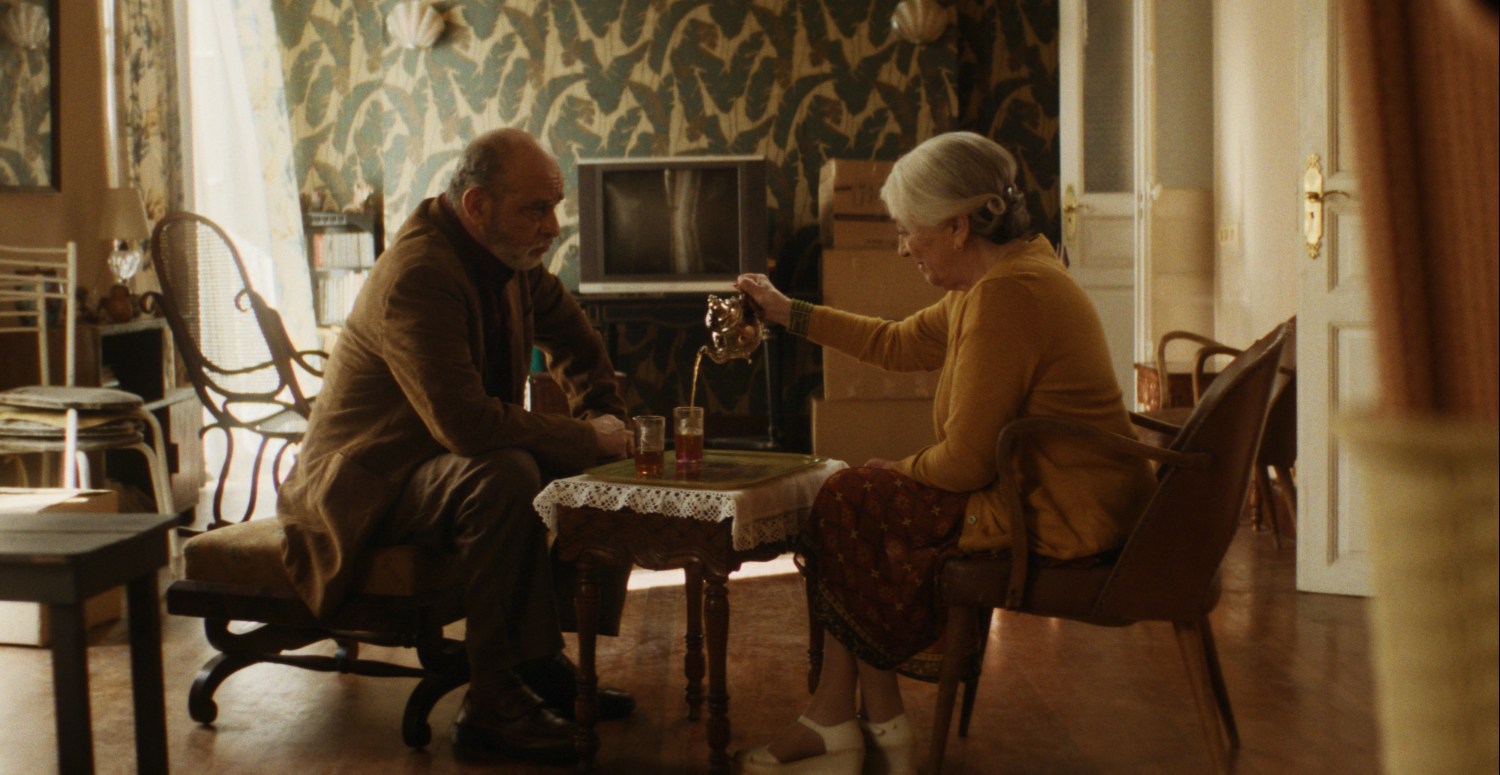
La Rue Málaga existe réellement à Tanger. Sa plaque est d’ailleurs encore écrite en trois langues – arabe, espagnol et français –, vestige d’une histoire multi-culturelle. Hispanophone, le film suit la vie paisible et émerveillée de María Ángeles, bientôt bouleversée par l’annonce brutale de la vente de son appartement par sa fille madrilène. D’abord résignée, elle décide de se battre pour garder son chez-soi qu’elle chérit tant.
Car la quasi-octogénaire est profondément ancrée dans sa ville, et elle subit ce changement imposé comme un arrachement. Traitant ainsi de l’attachement viscéral que l’on porte à un lieu, le récit met aussi en lumière une vieillesse qui n’est pas synonyme de fin de vie, bien au contraire. Par fragments (notamment via le rachat progressif de ses meubles vendus à l’improviste à un antiquaire), María Ángeles entreprend de renaître. Non seulement elle recrée des liens forts avec son quartier de façon ouvertement transgressive, mais elle redécouvre aussi des désirs et des plaisirs que la société ne souhaite plus lui permettre. En particulier l’amitié, l’amour et la sexualité.
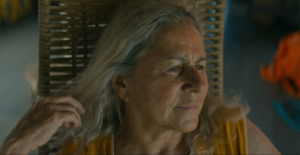
Le tout est raconté et mis à l’écran avec des couleurs, une sensibilité et une délicatesse extraordinaires. La caméra n’hésite donc pas à s’approcher très près du visage et du corps de María Ángeles pour y sublimer la beauté de son âge. Avec par ailleurs fluidité, le film oscille entre plusieurs tons qui renforcent une authenticité rarement vue pour une histoire de ce genre. Enfin, la fin, certes abrupte mais attendue, reste totalement ouverte, laissant libre cours à une interprétation que l’on espère, à l’instar du reste de l’intrigue, positive pour la suite de cette superbe éclosion.
Axel Chevalier
In her third feature film, Maryam Touzani continues her exploration of the tenderness, warmth, and beauty that so deeply moved us in “Adam” and “The Blue Caftan”. Once again collaborating with her co-screenwriter and producer Nabil Ayouch and her cinematographer Virginie Surdej, the Moroccan director and screenwriter delivers a much more intimate and personal film, dedicated to her grandmother from Tangier who was born in Andalusia.
Málaga Street actually exists in Tangier. In fact, its street sign is still written in three languages – Arabic, Spanish, and French – a remnant of a multicultural history. The Spanish-language film follows the peaceful and enchanted life of María Ángeles, which is soon turned upside down by the sudden announcement that her daughter in Madrid is selling her apartment. At first resigned, she decides to fight to keep the home she cherishes so dearly.
The nearly 80-year-old woman is deeply rooted in her city, and she experiences this imposed change as a wrenching loss. By exploring the visceral attachment one feels to a place, the story also highlights an old age that is far from a death sentence – quite the opposite. Bit by bit (especially through the gradual repurchase of her furniture, which had been sold unexpectedly to an antique dealer), María Ángeles sets out to be reborn. Not only does she rebuild strong ties with her neighborhood in a way that openly defies convention, but she also rediscovers desires and pleasures that society no longer wishes to allow her. In particular, friendship, love, and intimacy.
The entire story is told and brought to the screen with extraordinary color, sensitivity, and delicacy. The camera does not hesitate to get very close to María Ángeles’s face and body, capturing the beauty of her age. With fluidity, the film shifts between several tones that reinforce an authenticity rarely seen in a story of this kind. Finally, the ending – admittedly abrupt but expected – remains completely open, leaving room for an interpretation that we hope, like the rest of the plot, bodes well for the future of this beautiful blossoming.
Axel Chevalier